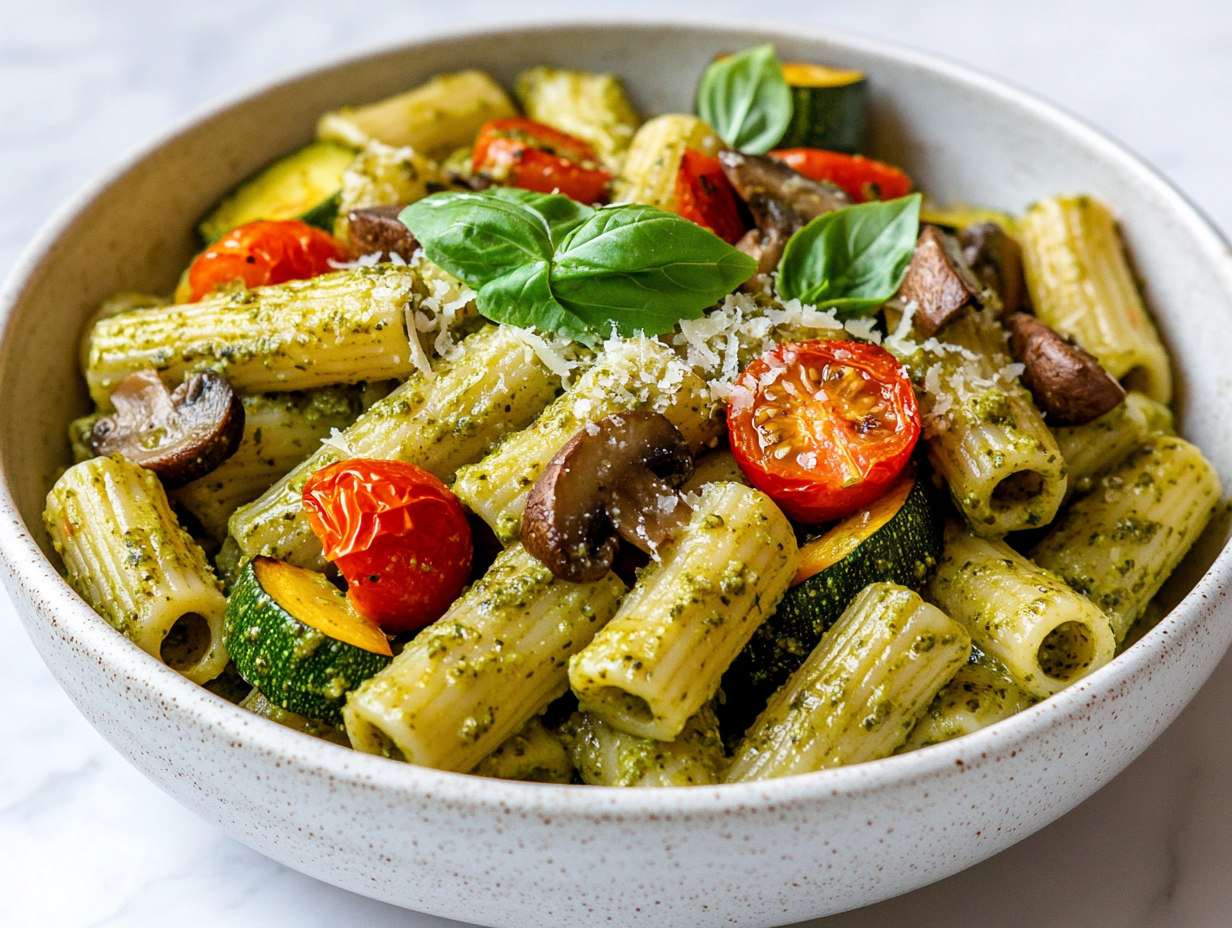
Vegan Pesto Pasta
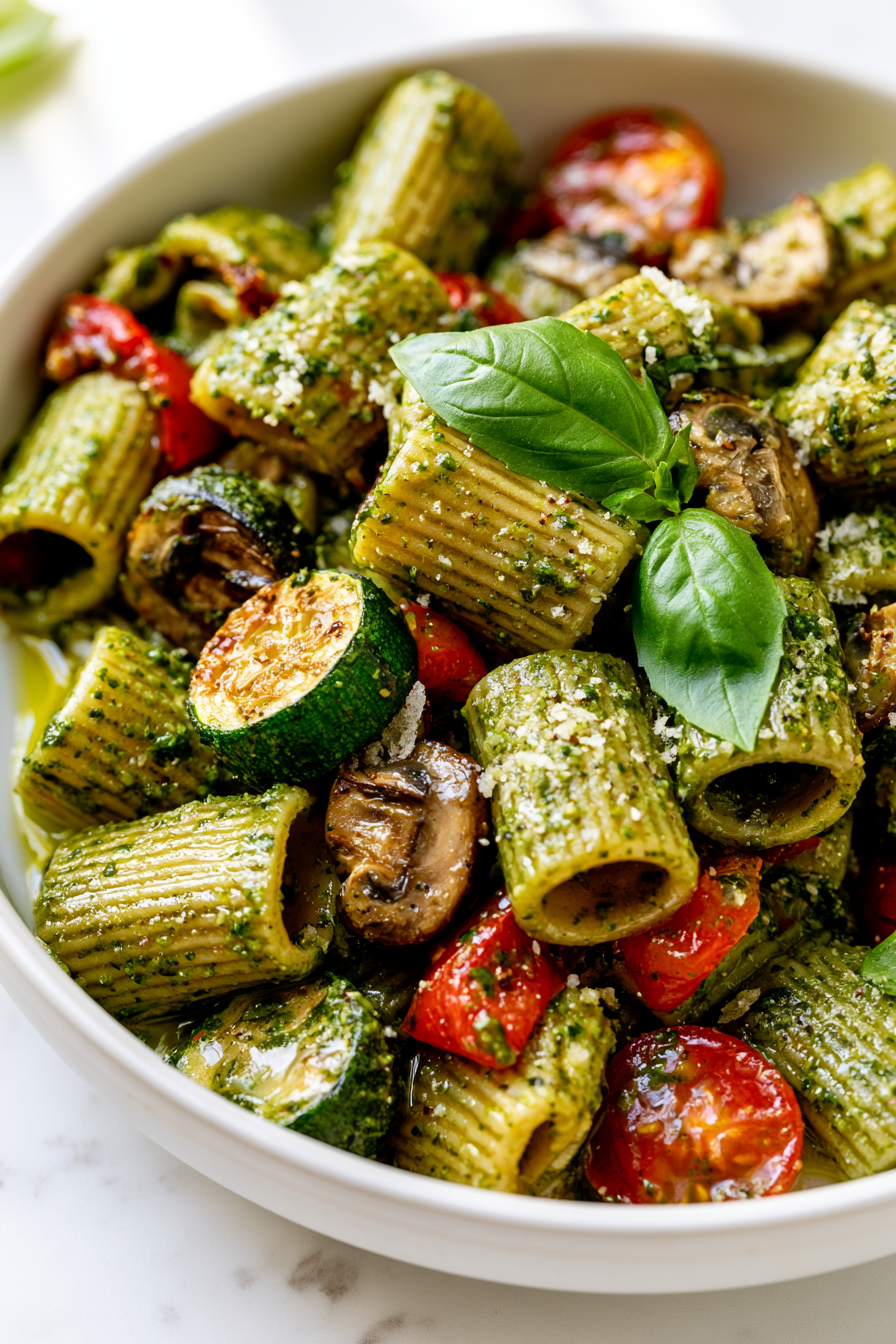
This Vegan Pesto Pasta Recipe is fresh, vibrant, and wonderfully easy to make. Tender pasta is tossed with homemade basil pesto, juicy cherry tomatoes, and a handful of roasted vegetables for a colorful, satisfying dinner that's full of bright Italian-inspired flavor. The creamy pesto comes together with basil, garlic, nuts, olive oil, lemon, and nutritional yeast for a delicious dairy-free sauce.
Print
Pin
Servings: 6
Equipment
- Food Processor
- Large Baking Sheet
- Colander
- Large mixing bowl
- Chef's Knife
Ingredients
For the Vegan Pesto
- 2 cups packed fresh basil leaves
- ⅓ cup raw walnuts or pine nuts
- 3 garlic cloves
- 3 tablespoons nutritional yeast
- 2 tablespoons fresh lemon juice
- ½ teaspoon fine sea salt
- ¼ teaspoon freshly ground black pepper
- ⅓ cup extra-virgin olive oil
For the Pasta and Vegetables
- 12 ounces rigatoni penne, or rotini
- 1 medium zucchini sliced into half-moons
- 8 ounces mushrooms sliced
- 1 red bell pepper chopped
- 10 ounces cherry tomatoes halved
- 1 tablespoon olive oil
- ½ teaspoon fine sea salt
- ¼ teaspoon freshly ground black pepper
- ¼ cup reserved pasta water as needed
- Fresh basil for serving
- Vegan Parmesan optional
Instructions
- Preheat the oven to 400°F. Add the zucchini, mushrooms, bell pepper, and cherry tomatoes to a large baking sheet. Toss with olive oil, salt, and black pepper until evenly coated.
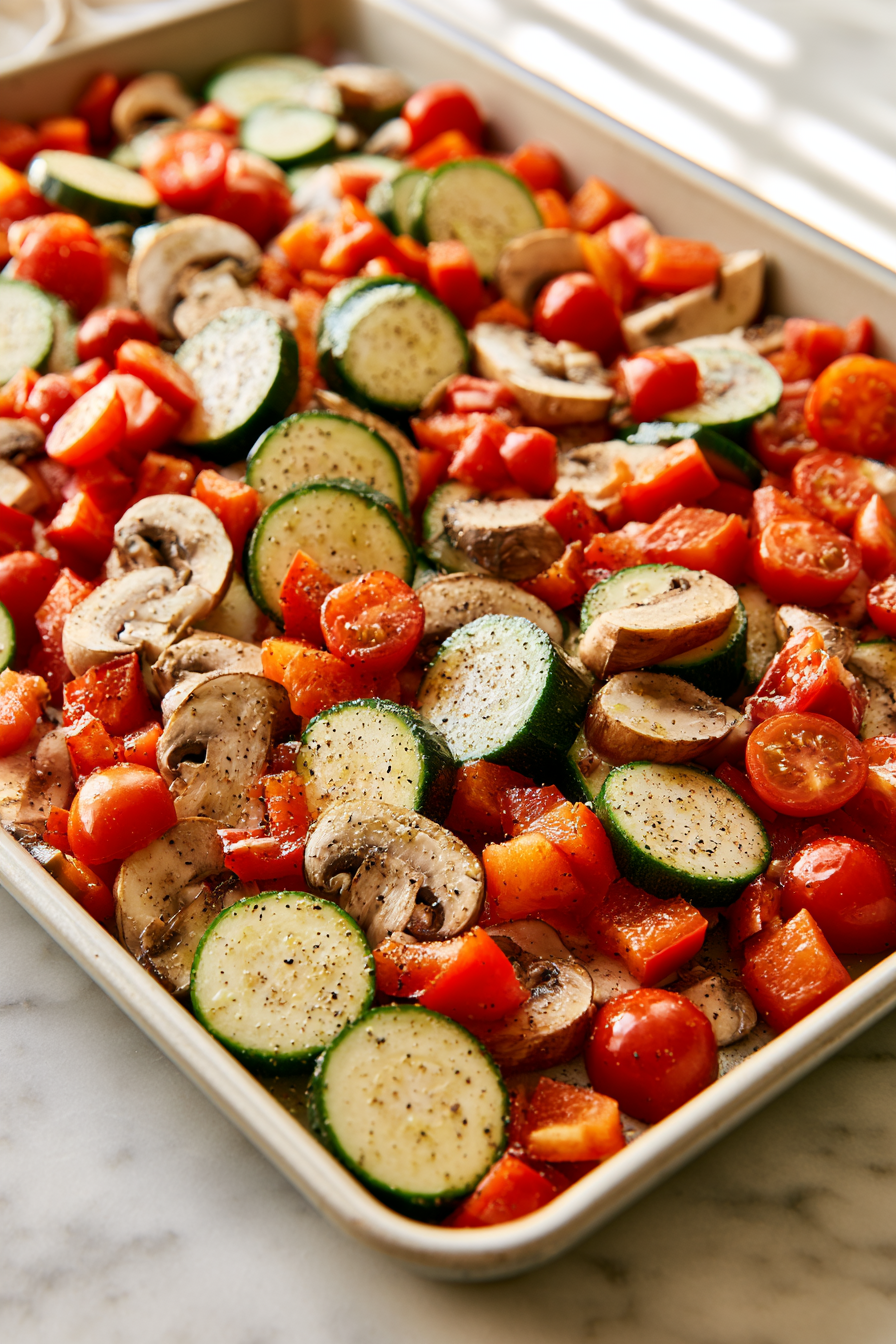
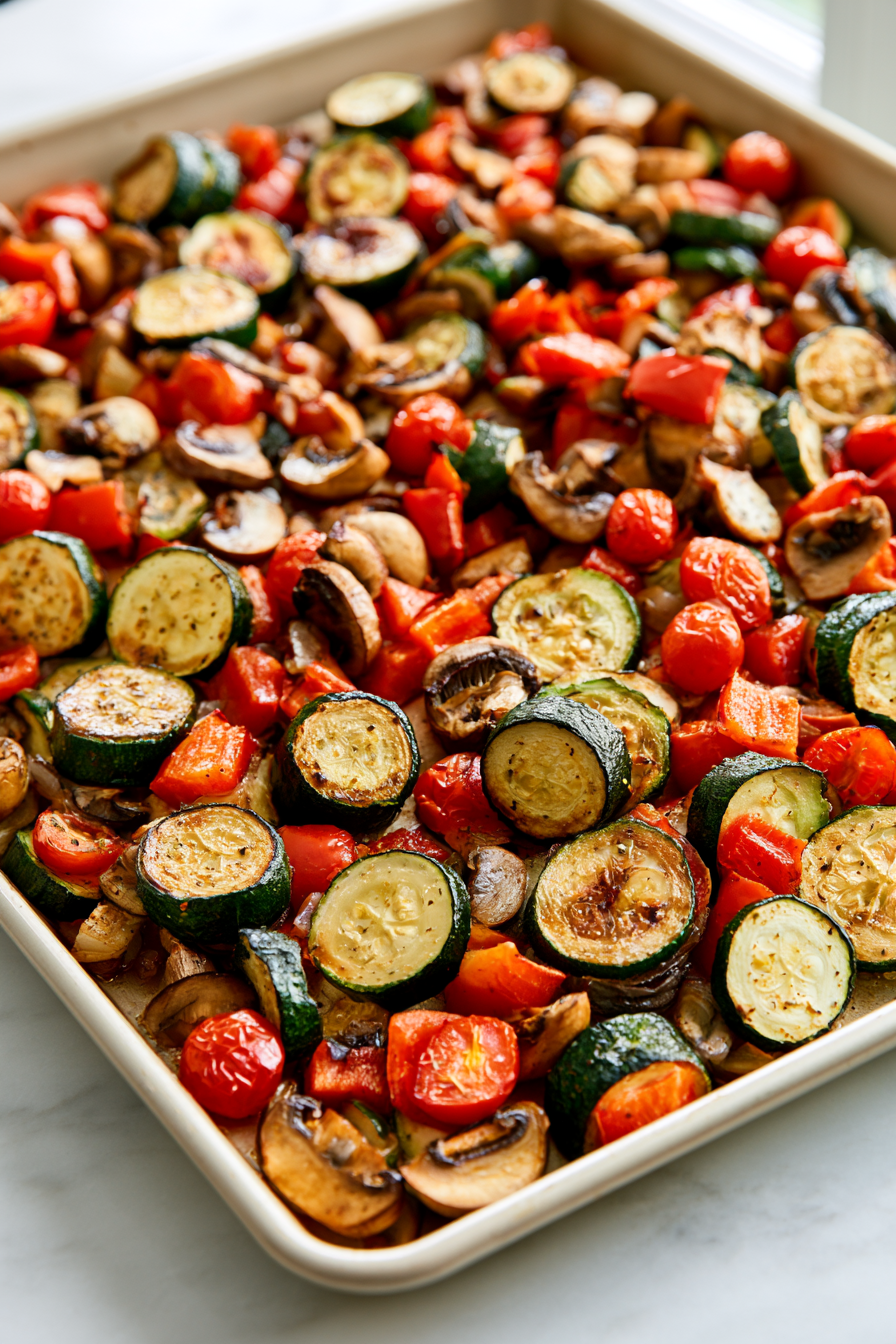
- Spread the vegetables into a single layer and roast for 20–25 minutes, stirring once halfway through, until tender and lightly browned around the edges.
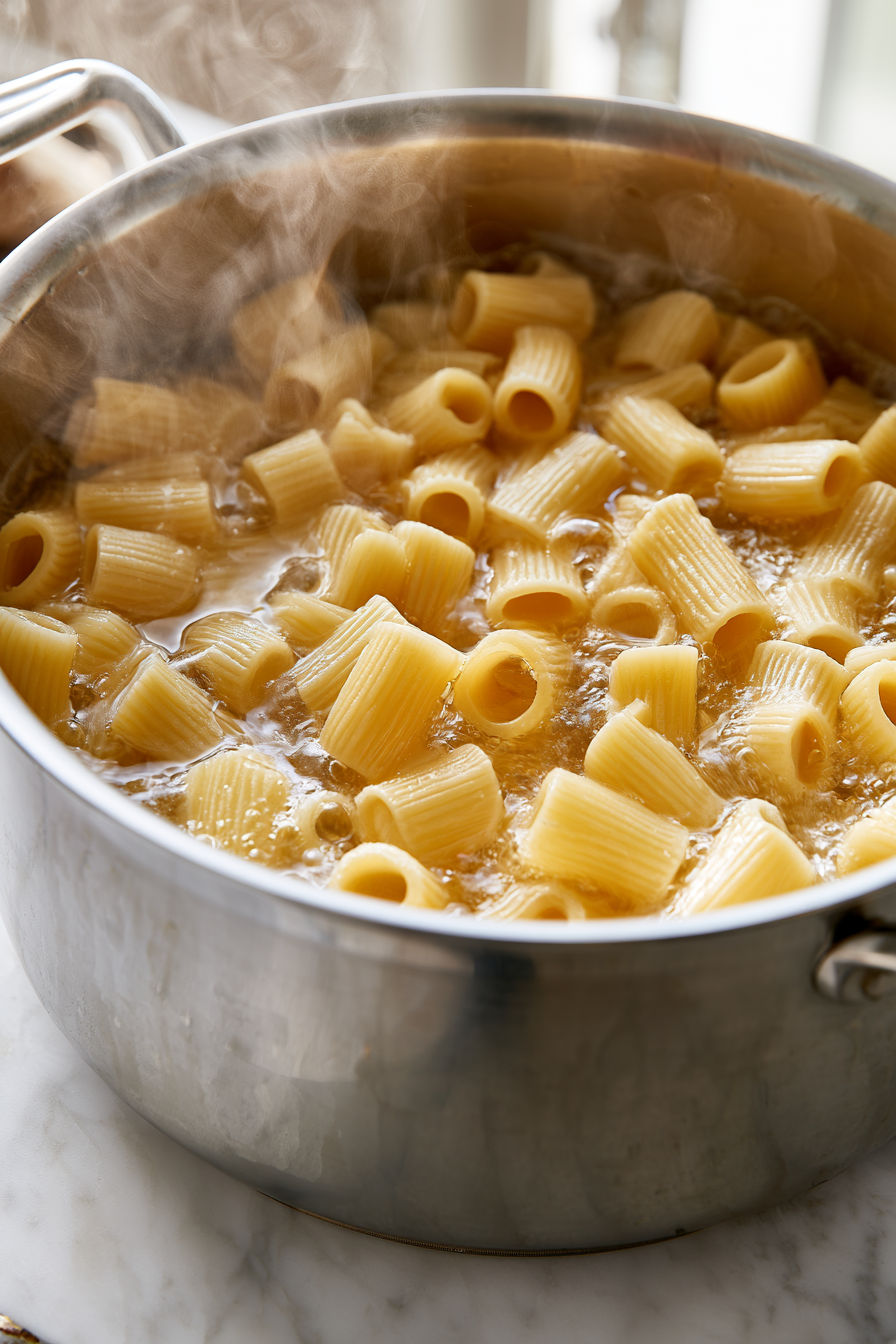
- While the vegetables roast, bring a large pot of generously salted water to a boil. Cook the pasta according to the package directions until al dente.
- While the pasta cooks, prepare the pesto. Add the basil, walnuts, garlic, nutritional yeast, lemon juice, salt, and black pepper to a food processor.
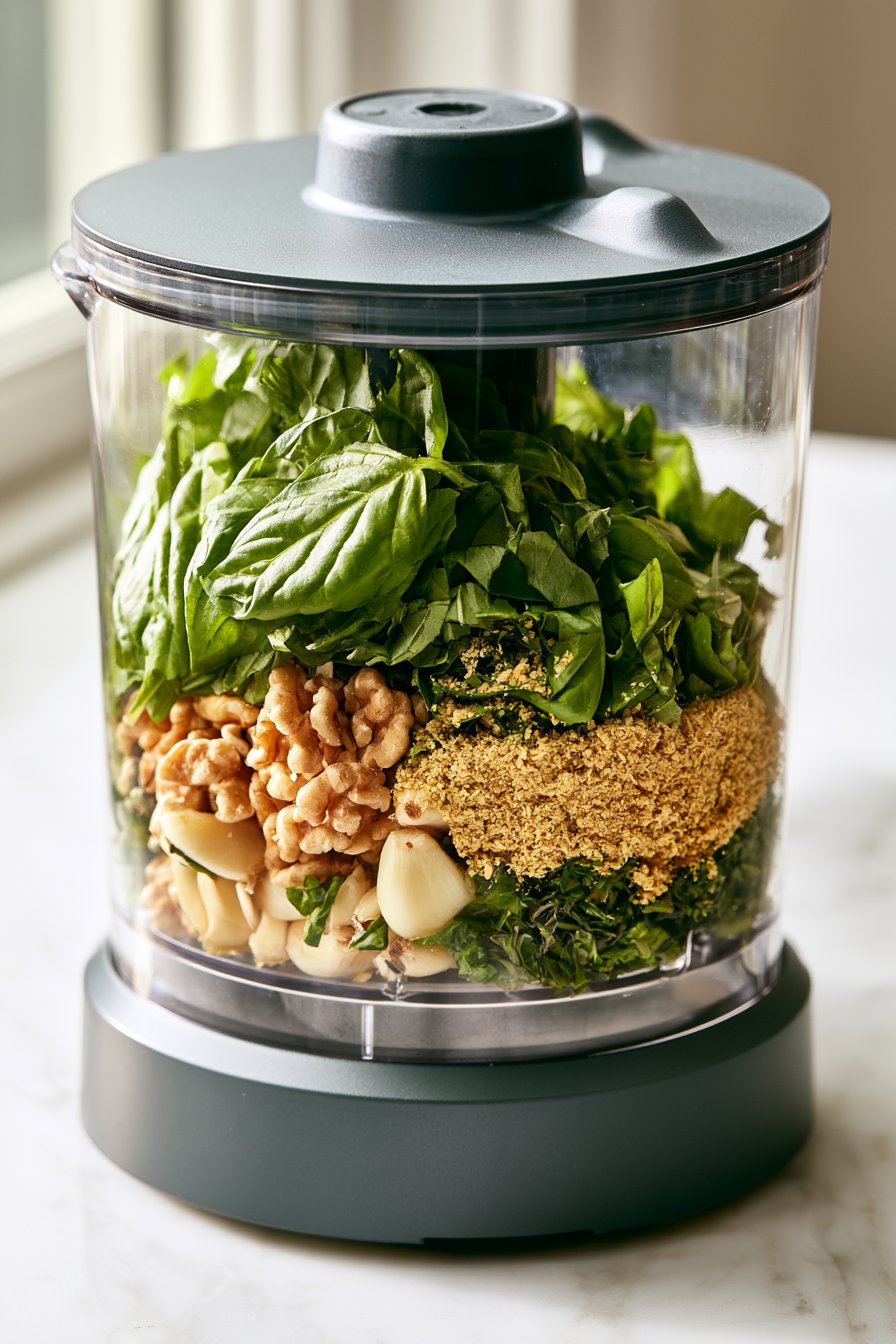
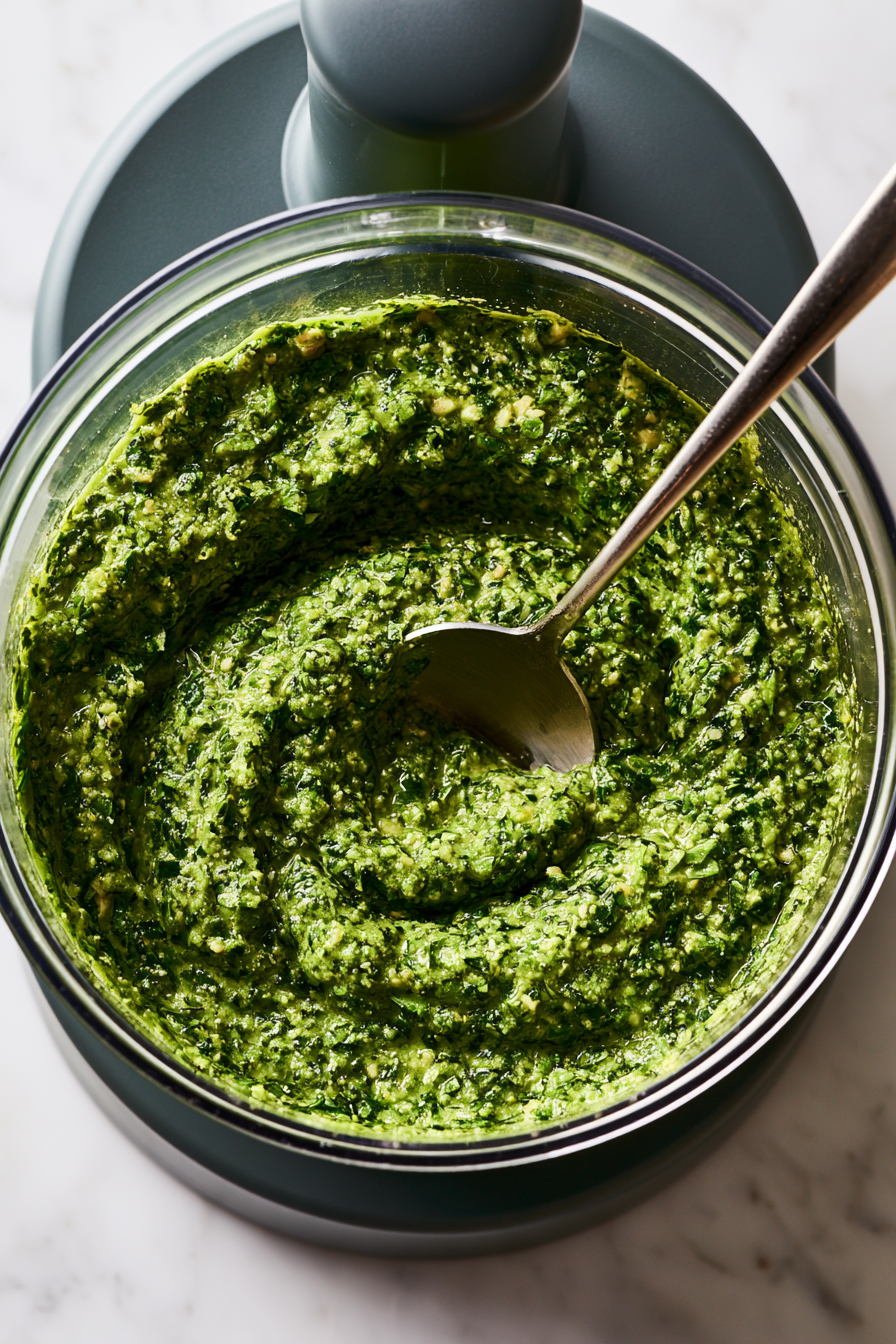
- Pulse several times until the ingredients are finely chopped. With the processor running, slowly drizzle in the olive oil until the pesto reaches a thick but spoonable consistency.
- Taste the pesto and adjust the salt, lemon juice, or black pepper as needed. For a thinner pesto, add another tablespoon or two of olive oil.
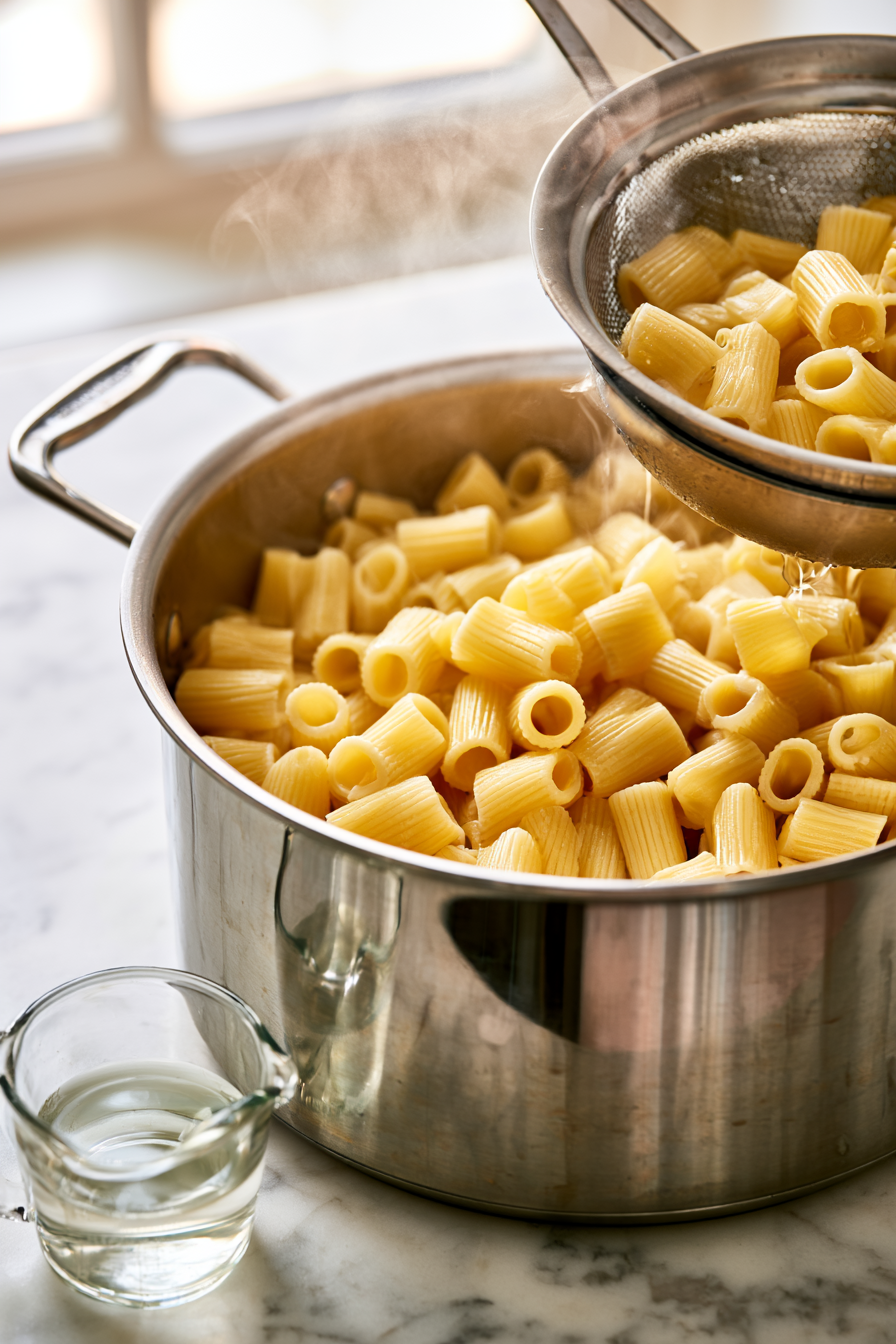
- Before draining the pasta, reserve about ¼ cup of the cooking water. Drain the pasta well and return it to the warm pot.
- Add the pesto and roasted vegetables to the pasta. Toss gently until the noodles are evenly coated and the vegetables are distributed throughout.
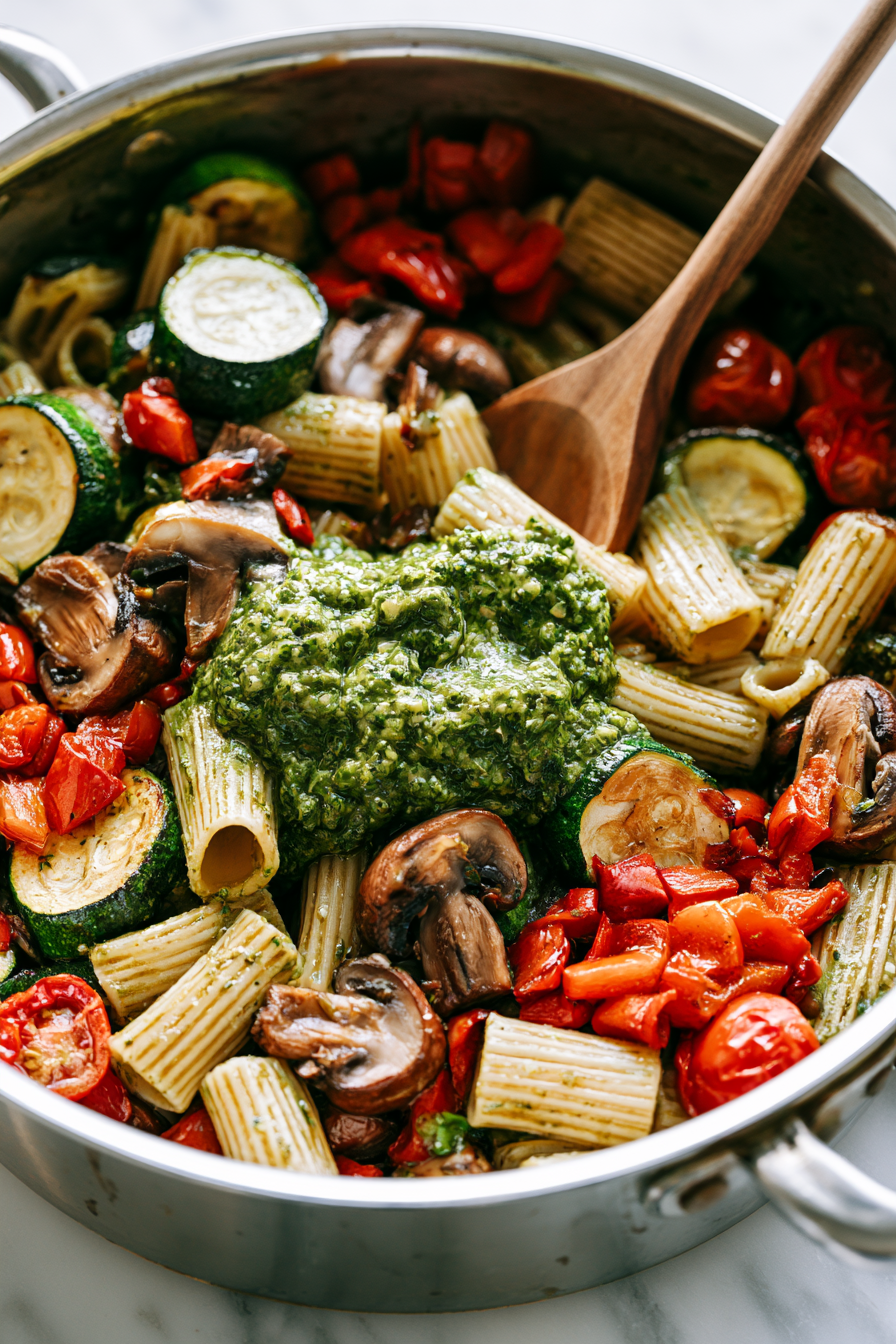
- Add a splash of reserved pasta water if the pesto seems too thick. Continue tossing until the sauce becomes glossy and clings to the pasta.
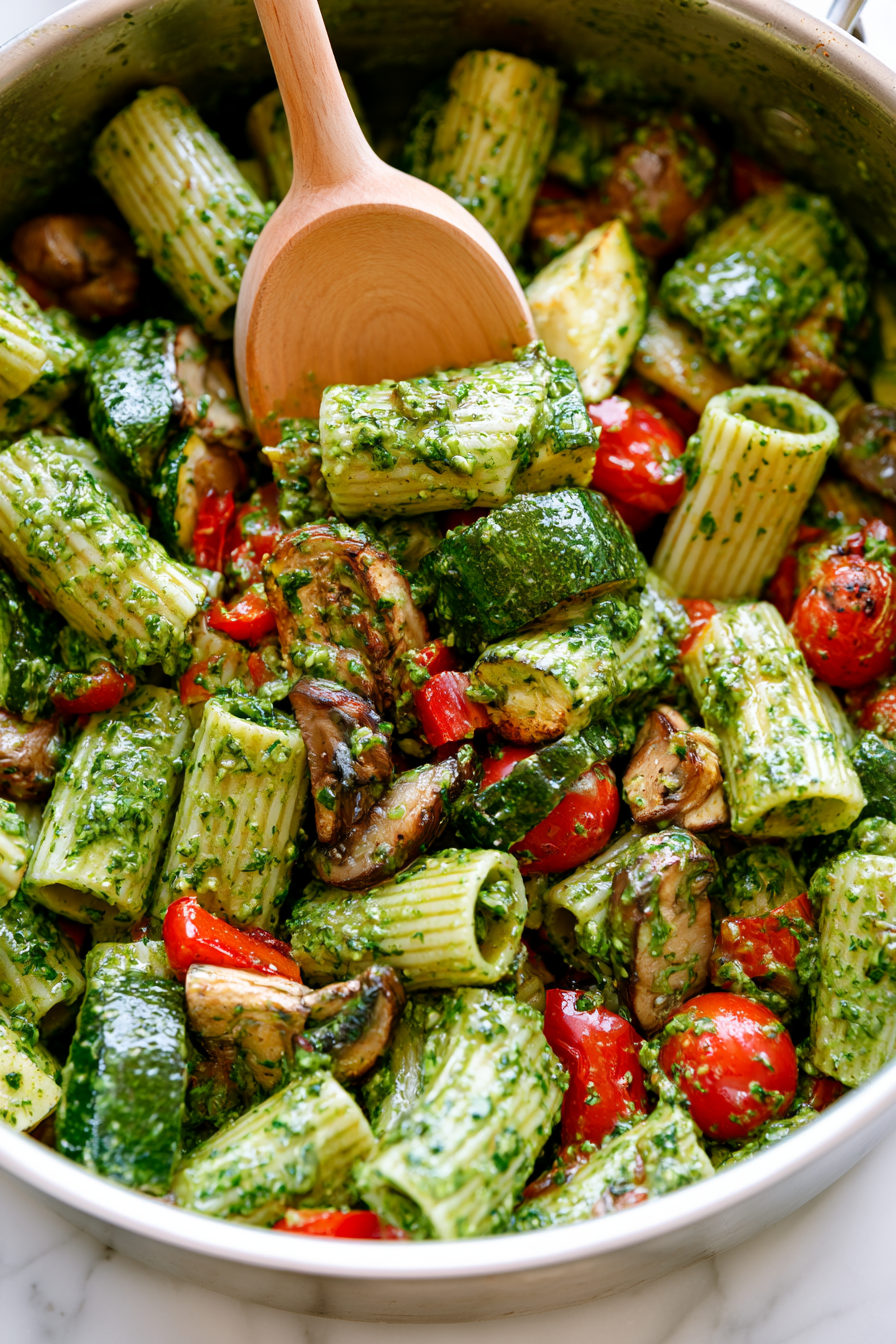
- Serve warm with fresh basil, vegan Parmesan, and an extra drizzle of olive oil if desired.
Notes
- Use fresh basil: Fresh, vibrant basil gives the pesto its best flavor. Avoid leaves that are wilted, dark, or bruised.
- Don't over-process the pesto: A food processor creates the ideal texture. Pulse until the ingredients are finely chopped and creamy rather than blending the pesto into a completely smooth paste.
- Toast the nuts: For deeper flavor, lightly toast the walnuts or pine nuts in a dry skillet for a few minutes before making the pesto. Let them cool before processing.
- Choose the right pasta: Short shapes such as rigatoni, penne, rotini, fusilli, and cavatappi work especially well because the pesto settles into the ridges and curves.
- Customize the vegetables: Broccoli, asparagus, cauliflower, spinach, or roasted eggplant can be substituted for any of the vegetables in the recipe.
- Nut-free option: Replace the nuts with sunflower seeds or hemp seeds for a nut-free pesto.
- Make ahead: The pesto can be prepared up to 3 days ahead and stored in an airtight container in the refrigerator. Keep a thin layer of olive oil over the surface to help preserve its fresh color.
- Storage: Refrigerate leftover pesto pasta in an airtight container for up to 3 days. Reheat gently in a skillet with a splash of water or plant-based milk.