
Buttermilk Cornbread Recipe
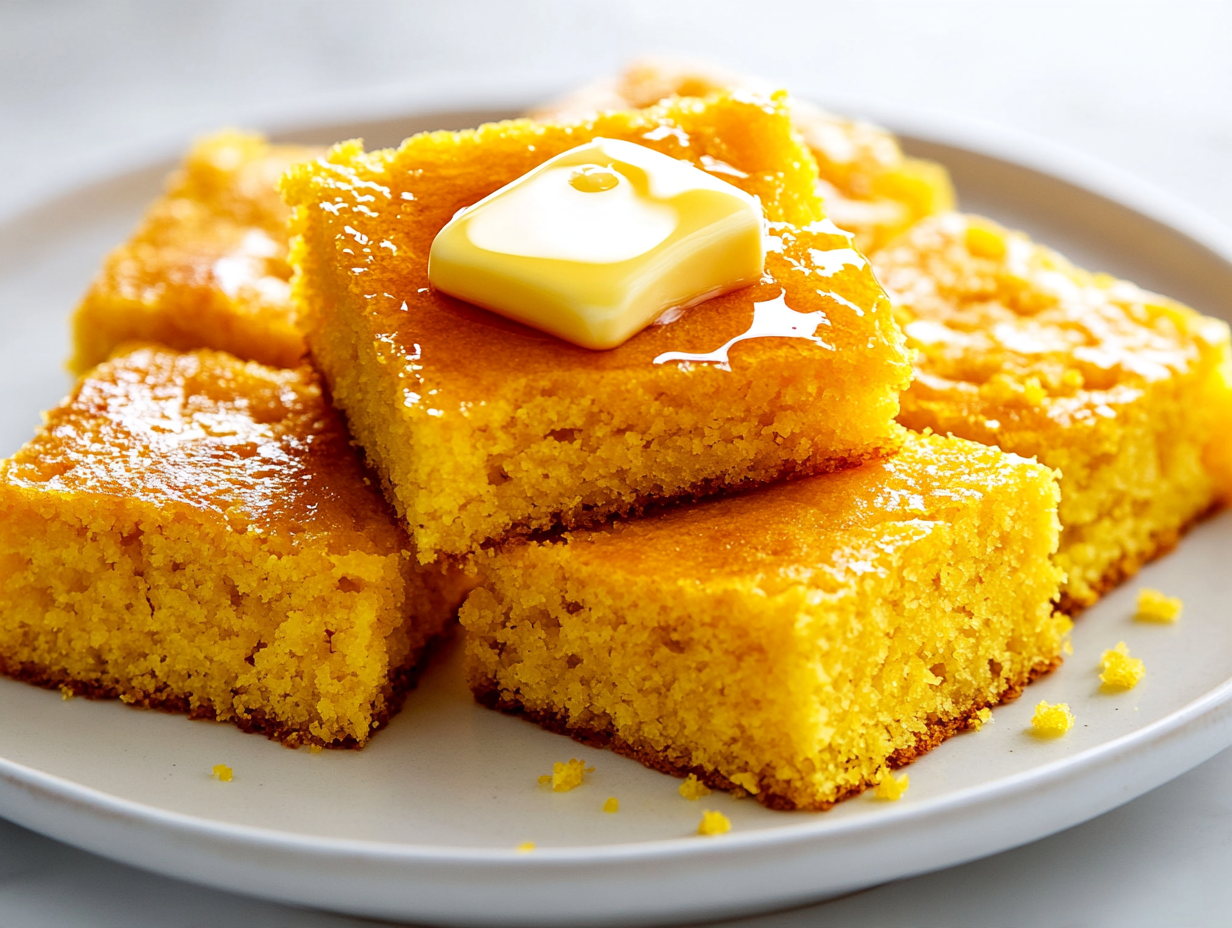
There is nothing quite like homemade buttermilk cornbread with a golden, crunchy crust and a soft, tender center. This classic Southern-style recipe combines cornmeal, buttermilk, butter, and a little sugar to create a delicious balance of savory flavor and subtle sweetness.
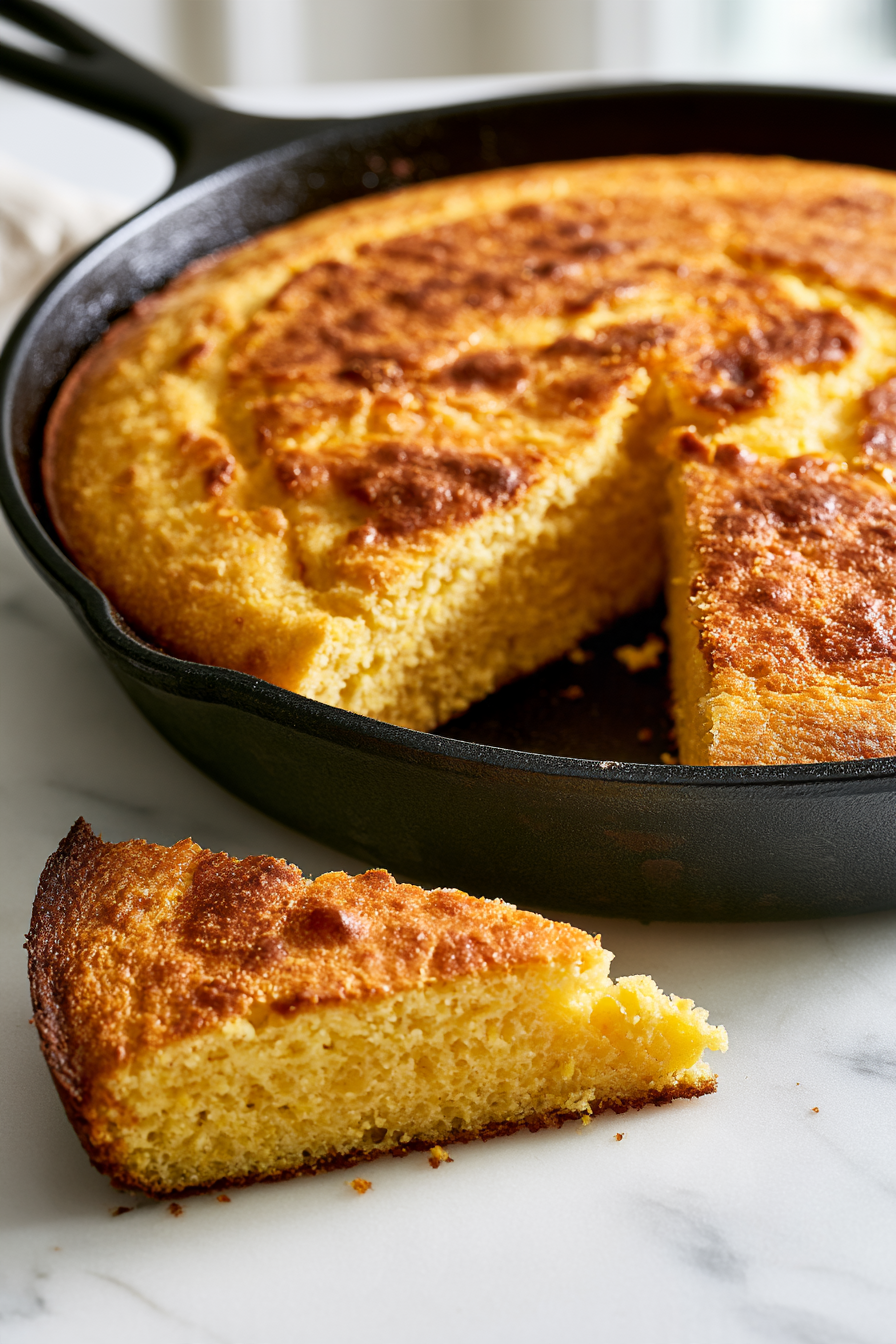
Baked in a hot cast-iron skillet, this buttermilk cornbread develops beautifully crisp edges while staying moist inside. It’s wonderful alongside chili, soups, barbecue, or Sunday dinner, and it holds its shape when cubed and added to homemade cornbread dressing.
Why You’ll Love This Homemade Buttermilk Cornbread
- Crispy golden edges: Preheating the cast-iron skillet helps create a delicious crust as soon as the batter hits the hot pan.
- Moist and tender center: Buttermilk, eggs, and melted butter work together to give the cornbread a soft texture.
- Classic Southern flavor: Cornmeal provides a hearty corn flavor, while a little sugar adds subtle sweetness.
- Easy pantry ingredients: You only need a handful of familiar baking ingredients to make this homemade bread.
- Perfect for dressing: The cornbread holds its structure when cubed, making it a useful base for homemade dressing.
- Versatile side dish: Serve it with chili, barbecue, soups, beans, or your favorite Southern comfort food.
Chef’s tip: Preheat your cast-iron skillet in the oven before adding the batter. Pouring the batter into a hot, oiled skillet helps create those crisp, golden edges that make homemade Southern cornbread so delicious.
Best Buttermilk Cornbread
Equipment
- Oven
- 10-inch cast-iron skillet
- Large mixing bowl
- Medium bowl
- Wooden spoon or stirring spoon
- Wire rack
Ingredients
- 2 tbsp vegetable oil
- 6 tbsp unsalted butter melted
- 1 tbsp granulated sugar
- 2 large eggs
- 2 cups buttermilk
- ½ tsp baking soda
- 2 tsp baking powder
- 2 cups cornmeal
- 1 cup all-purpose flour
- 1 tsp salt
Instructions
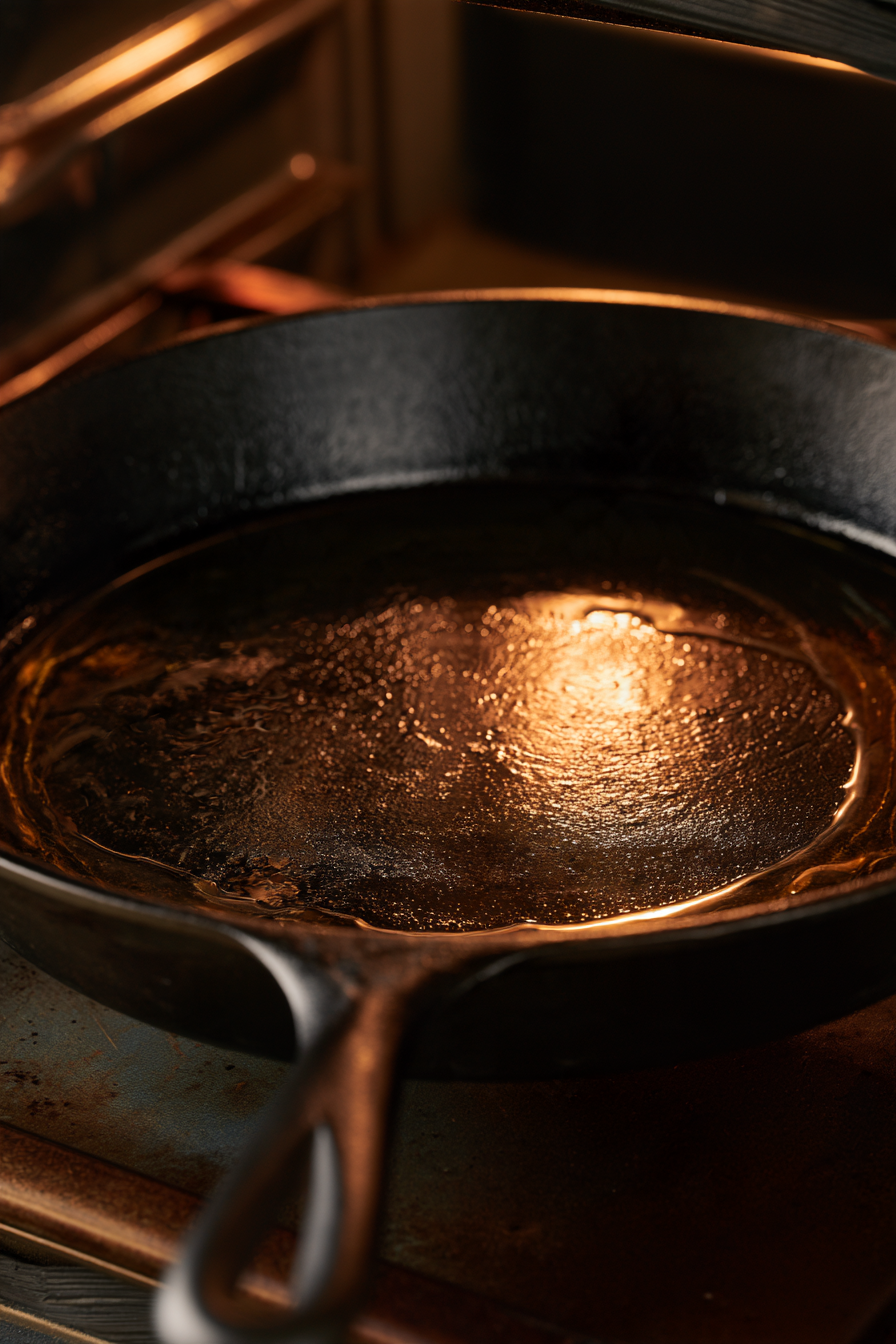
- Place the vegetable oil in a 10-inch cast-iron skillet and put the skillet in the oven. Preheat the oven to 450°F, allowing the skillet and oil to become very hot.
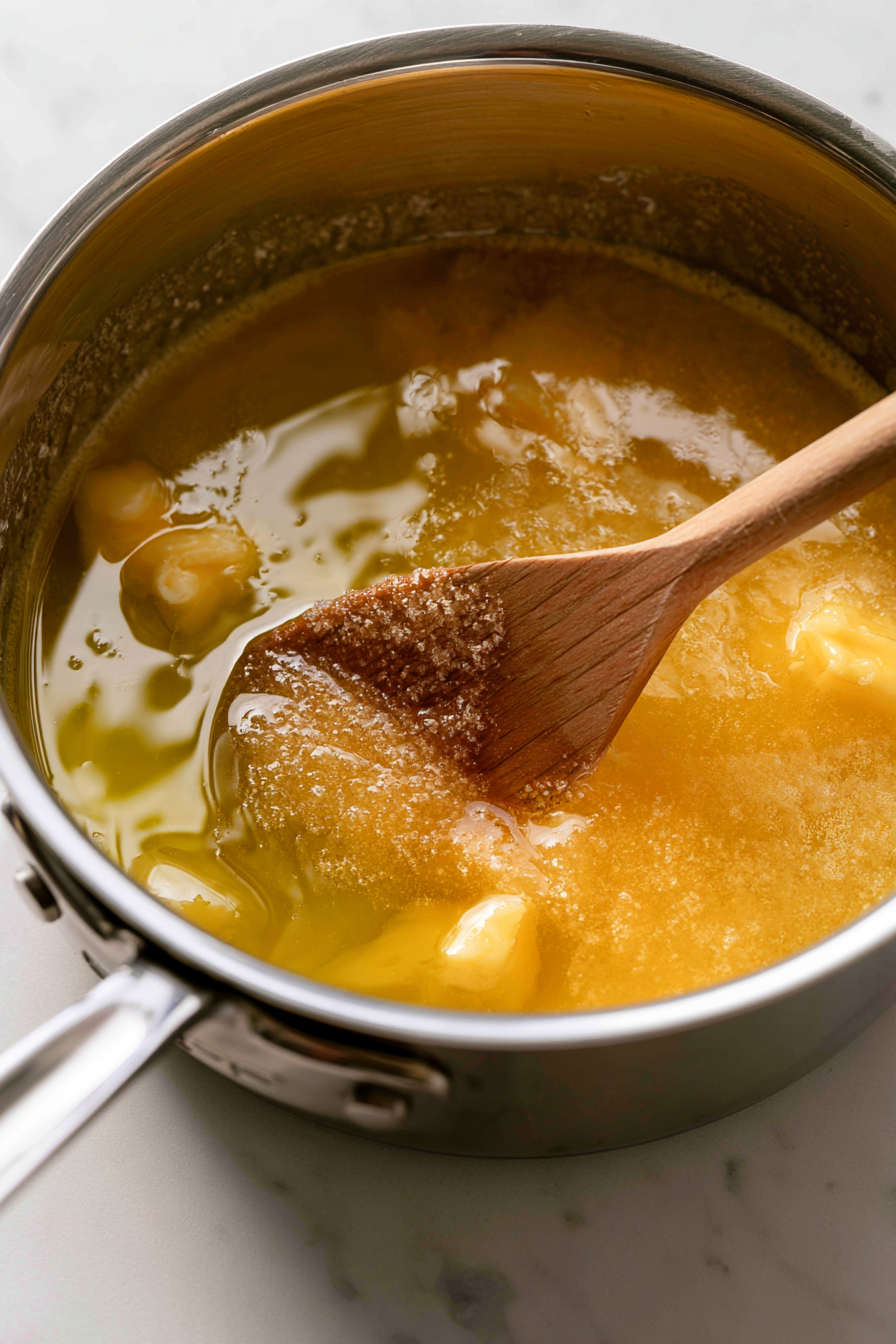
- Meanwhile, melt the butter over medium heat. Remove from the heat and stir in the sugar.
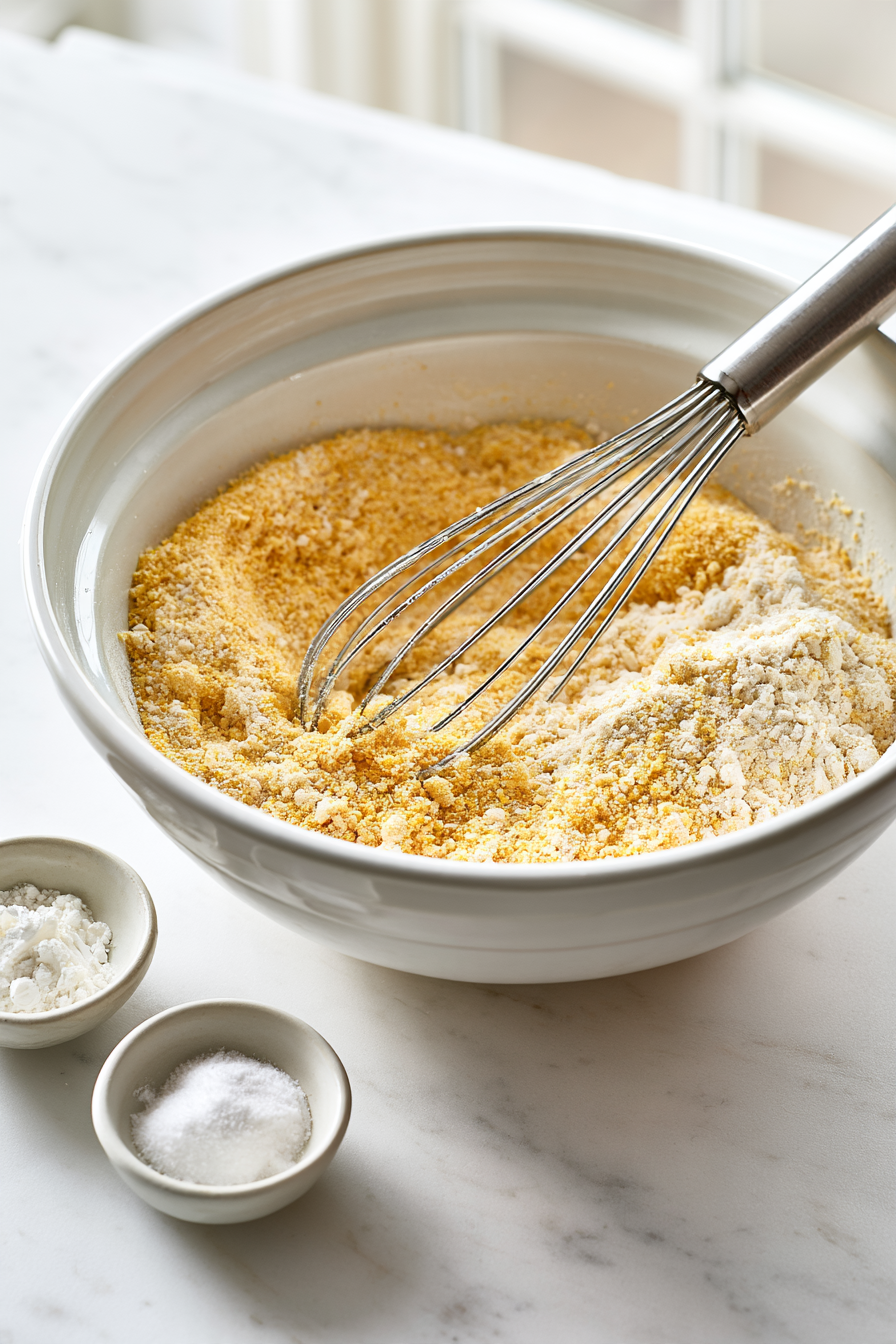
- In a large bowl, whisk together the cornmeal, flour, baking powder, baking soda, and salt.
- In a separate bowl, whisk together the buttermilk and eggs. Stir in the melted butter and sugar mixture until combined.
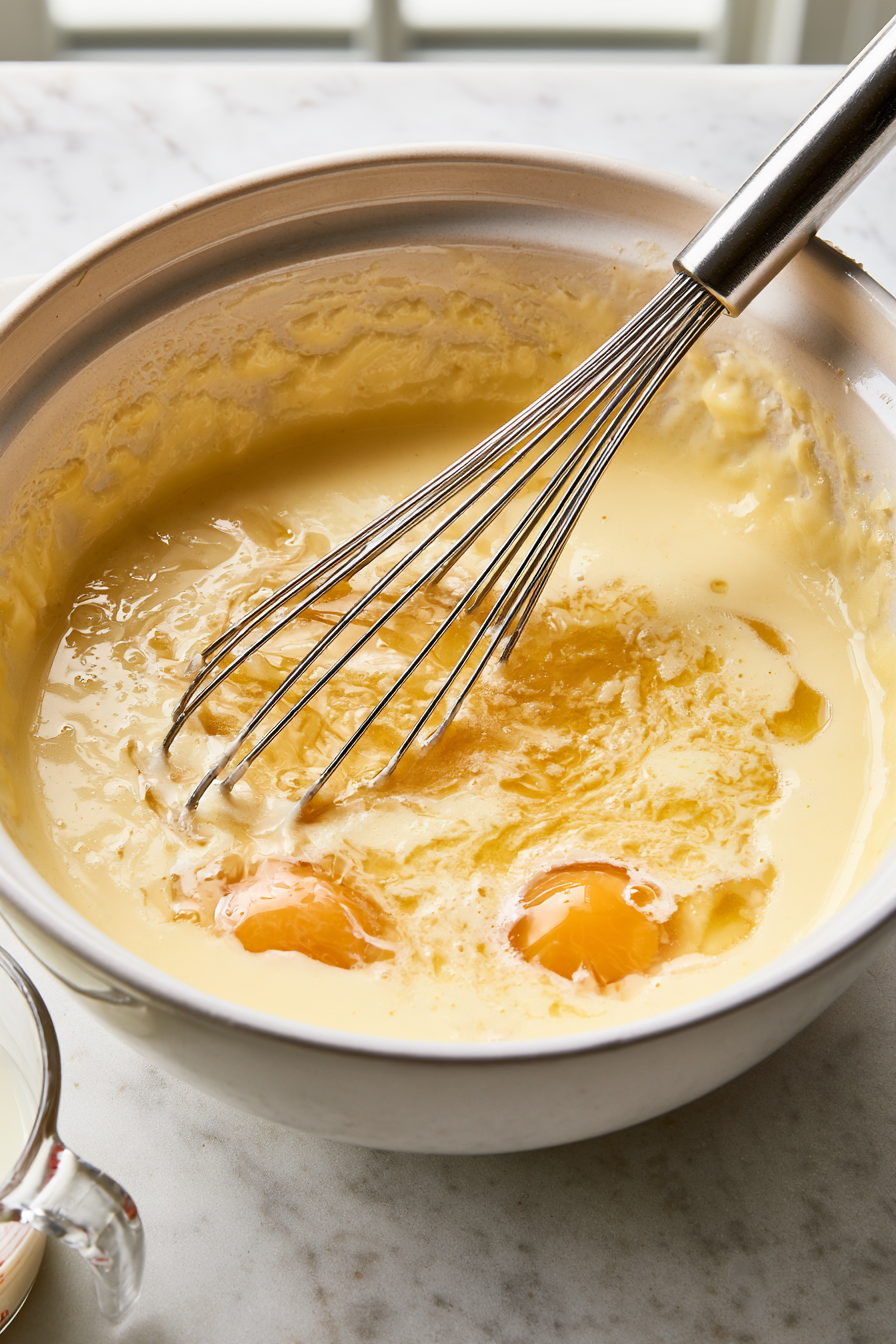
- Pour the wet ingredients into the dry ingredients and stir just until a smooth batter forms. Do not overmix.
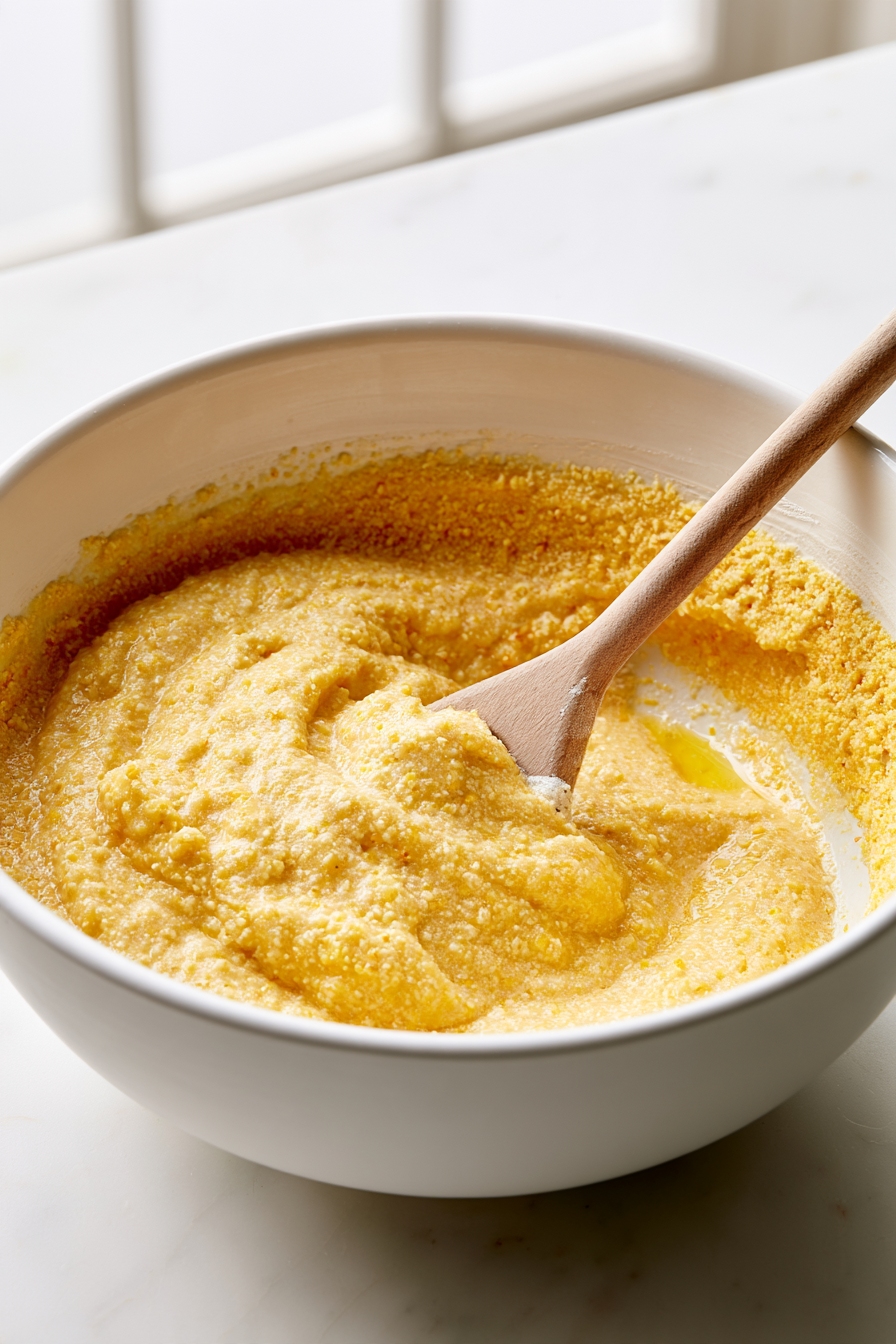
- Carefully remove the hot skillet from the oven. Pour the hot vegetable oil into the batter and stir quickly until incorporated.
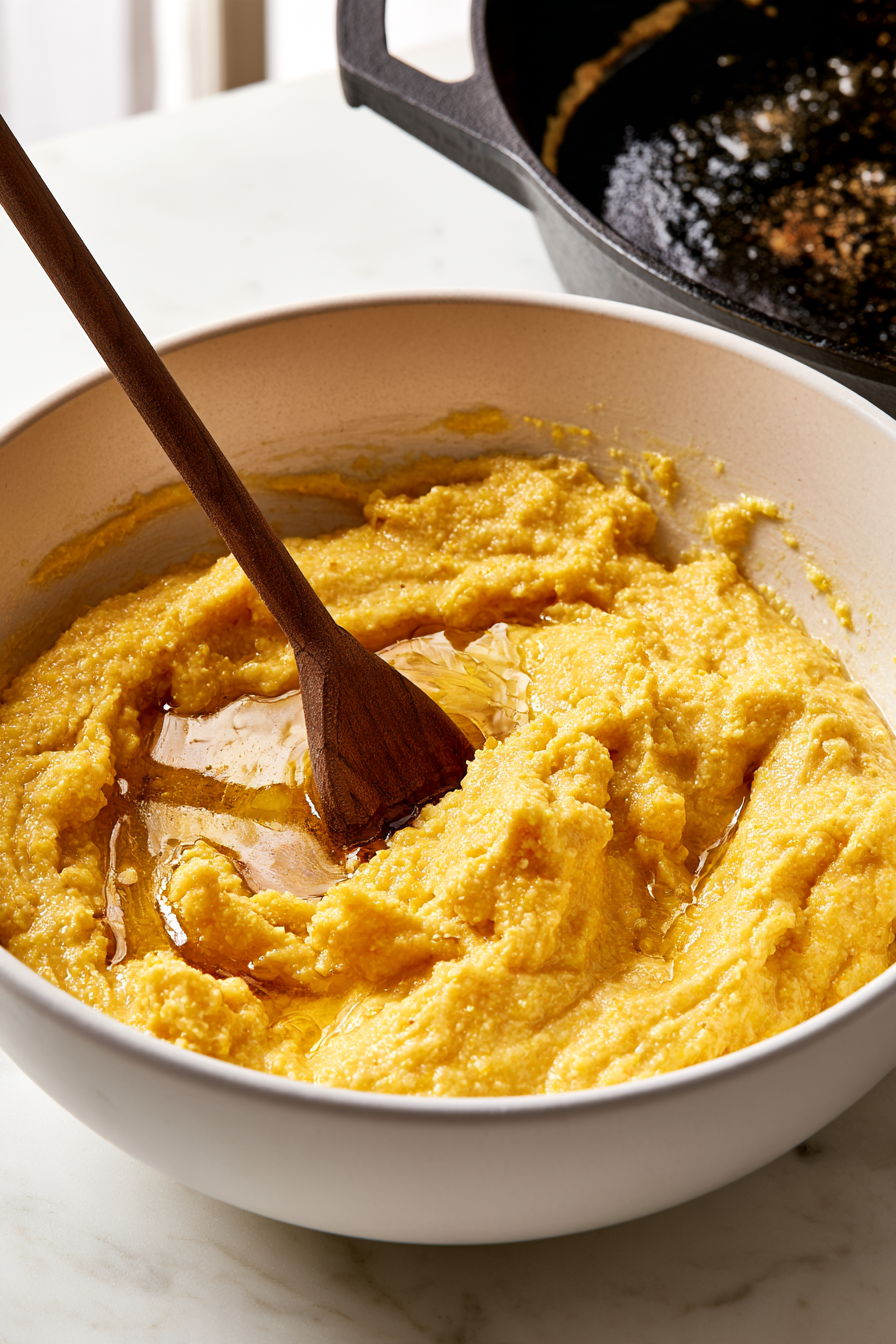
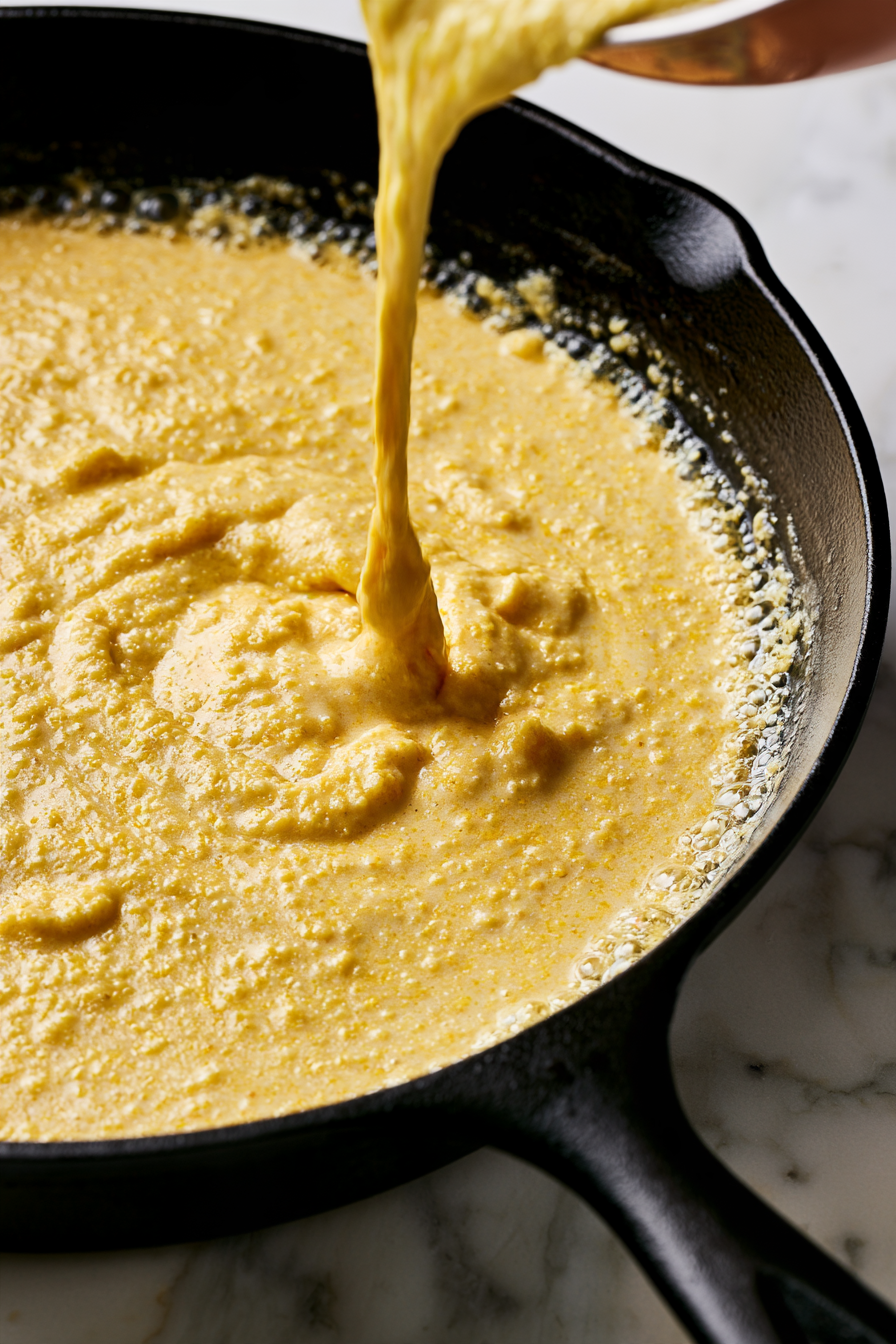
- Immediately pour the batter into the hot skillet. Do not stir the batter once it is in the skillet.
- Return the skillet to the oven and bake at 450°F for 22–25 minutes, or until the top is golden brown and a toothpick inserted into the center comes out clean.
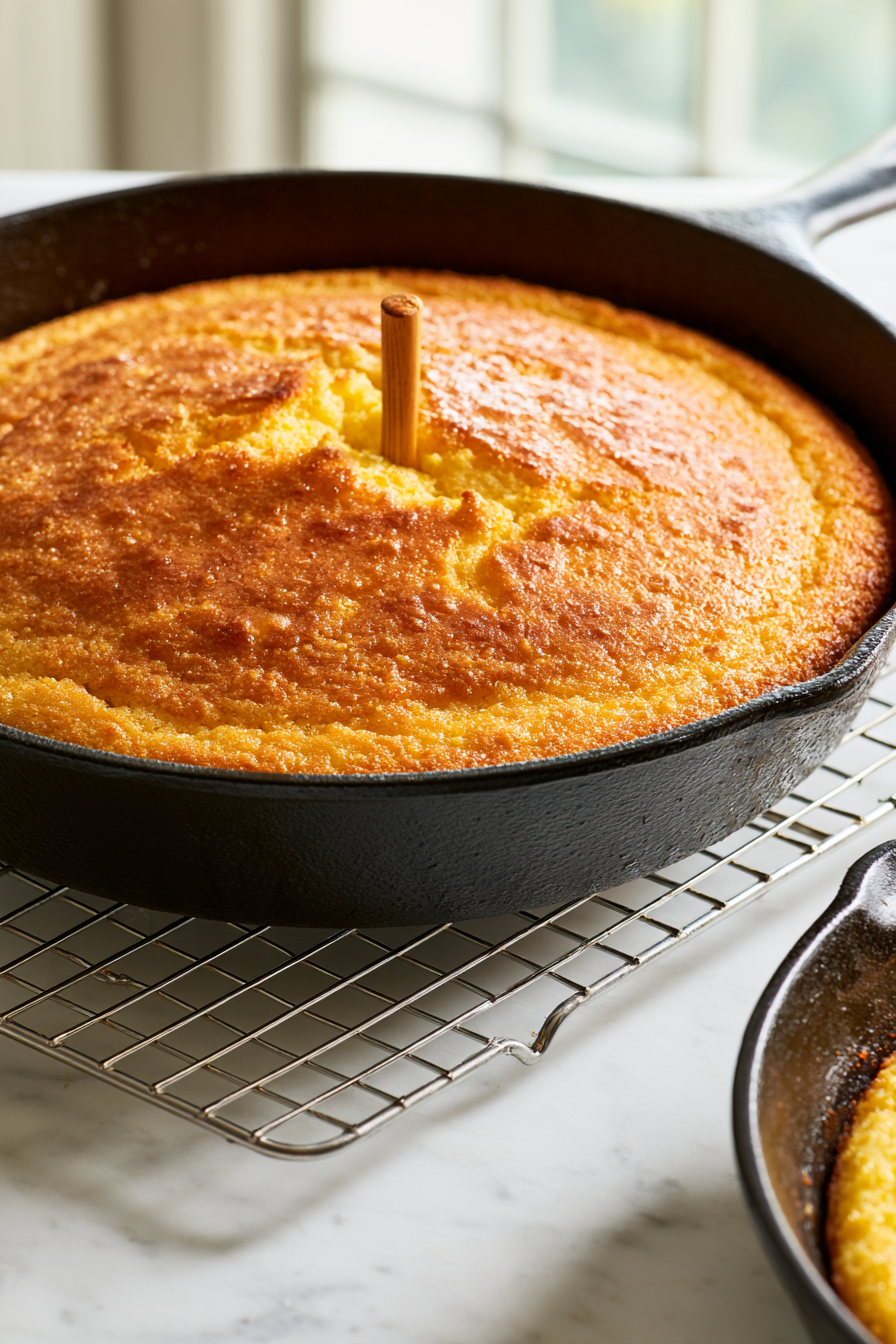
- Carefully remove the cornbread from the skillet and transfer it to a wire rack. Let it cool for about 5–10 minutes before slicing and serving.
Notes
- A 10-inch cast-iron skillet is important for developing the crisp, browned crust.
- Make sure the skillet is very hot before adding the batter.
- Pouring the hot oil from the skillet into the batter helps create the characteristic crisp edges.
- Do not overmix the batter; stir only until the ingredients are combined.
- For dressing, allow the cornbread to cool completely before cutting it into cubes. Serve warm for the best texture.
Nutrition
Nutritional Facts
| Nutrient | Amount |
|---|---|
| Calories | 284 kcal |
| Total Fat | 12 g |
| Carbohydrates | 39 g |
| Protein | 5 g |
Common Problems and How to Fix Them
- Dry cornbread: Measure the cornmeal and flour carefully, and avoid baking longer than necessary. The buttermilk and butter help keep the center tender.
- Crumbly slices: Make sure the eggs and buttermilk are measured correctly. They help bind the cornmeal mixture and give the bread structure.
- Soft rather than crispy edges: Make sure the cast-iron skillet is thoroughly preheated before adding the oil and batter.
- Dense cornbread: Check that your baking powder and baking soda are fresh. Expired leavening agents may prevent the batter from rising properly.
- Uneven browning: Spread the batter evenly in the skillet and position the pan in the middle of the oven.
- Cornbread sticks to the skillet: Make sure the skillet is properly seasoned and coated with hot oil before pouring in the batter.
Easy Variations for Homemade Buttermilk Cornbread
- Honey buttermilk cornbread: Replace the white sugar with honey for a slightly different sweetness and a warm flavor.
- Jalapeño cornbread: Add finely chopped jalapeños to the batter for a little heat.
- Cheddar cornbread: Fold shredded sharp cheddar cheese into the batter for a savory, cheesy variation.
- Southern savory cornbread: Reduce or omit the sugar for a more traditional savory flavor.
- Sweet corn cornbread: Add a handful of drained sweet corn kernels for extra texture and natural sweetness.
- Herb cornbread: Mix in chopped fresh rosemary, thyme, or parsley for an aromatic twist.
- Skillet honey butter cornbread: Serve warm slices with softened butter and a drizzle of honey for a simple finishing touch.
Recipes to Serve With Buttermilk Cornbread
- Fried Chicken
- Vegan Chili
- Roasted Green Beans
- Creamy Macaroni and Cheese
- Slow Cooker Maple Baked Beans
How to Store and Reheat Buttermilk Cornbread
- Room-temperature storage: Let the cornbread cool completely, then place it in an airtight container. Keep it at room temperature for up to 2 days.
- Refrigeration: Store leftover cornbread in an airtight container in the refrigerator for up to 5 days.
- Freezing: Wrap individual slices tightly or place them in a freezer-safe container. Freeze for up to 2–3 months for best quality.
- Reheating: Warm slices in a 325°F oven for several minutes until heated through. You can also microwave individual portions briefly.
- Using leftovers for dressing: Cut the cooled cornbread into cubes and let them dry slightly before using them in your favorite dressing recipe.
Frequently Asked Questions
1. What does buttermilk do in cornbread?
Buttermilk adds moisture, a pleasant tang, and tenderness. Its acidity also reacts with baking soda, helping the cornbread rise while contributing to its soft texture.
2. Can I make buttermilk cornbread without a cast-iron skillet?
Yes. You can use an oven-safe baking dish or cake pan. However, a cast-iron skillet helps create the crisp, golden crust that makes this recipe special.
3. Why should the skillet be hot before adding the batter?
A hot skillet helps the batter begin cooking immediately when it touches the pan. This creates crisp edges and helps develop the characteristic texture of Southern skillet cornbread.
4. Can I use regular milk instead of buttermilk?
Buttermilk is recommended for its acidity and flavor. If you don’t have any, you can make a substitute by adding 1 tablespoon of lemon juice or white vinegar to a measuring cup and filling it with regular milk to the 1-cup mark. Let it sit for about 5–10 minutes. Repeat as needed for the recipe’s 2 cups.
5. How do I know when buttermilk cornbread is done?
The top should be golden brown, and a toothpick inserted into the center should come out clean or with a few moist crumbs. Avoid waiting until the bread becomes dry.
6. Can I make buttermilk cornbread ahead of time?
Yes. Bake it in advance, allow it to cool completely, and store it in an airtight container. You can warm it briefly before serving.
7. Can I use this cornbread for dressing?
Absolutely. This recipe is especially useful for dressing because the bread holds its structure when cubed. Allow it to cool completely before cutting it into pieces.
8. Why is my cornbread crumbly?
Cornbread can become crumbly if there isn’t enough moisture or binding from the eggs and buttermilk. Incorrect flour measurements or overbaking can also affect its texture. Measure carefully and avoid baking longer than necessary.

Hi, I’m Austin. Every recipe you’ll find here is carefully tested, photographed, and created to help you cook with confidence…..
know more


