Roasted Sweet Potato Grits Recipe
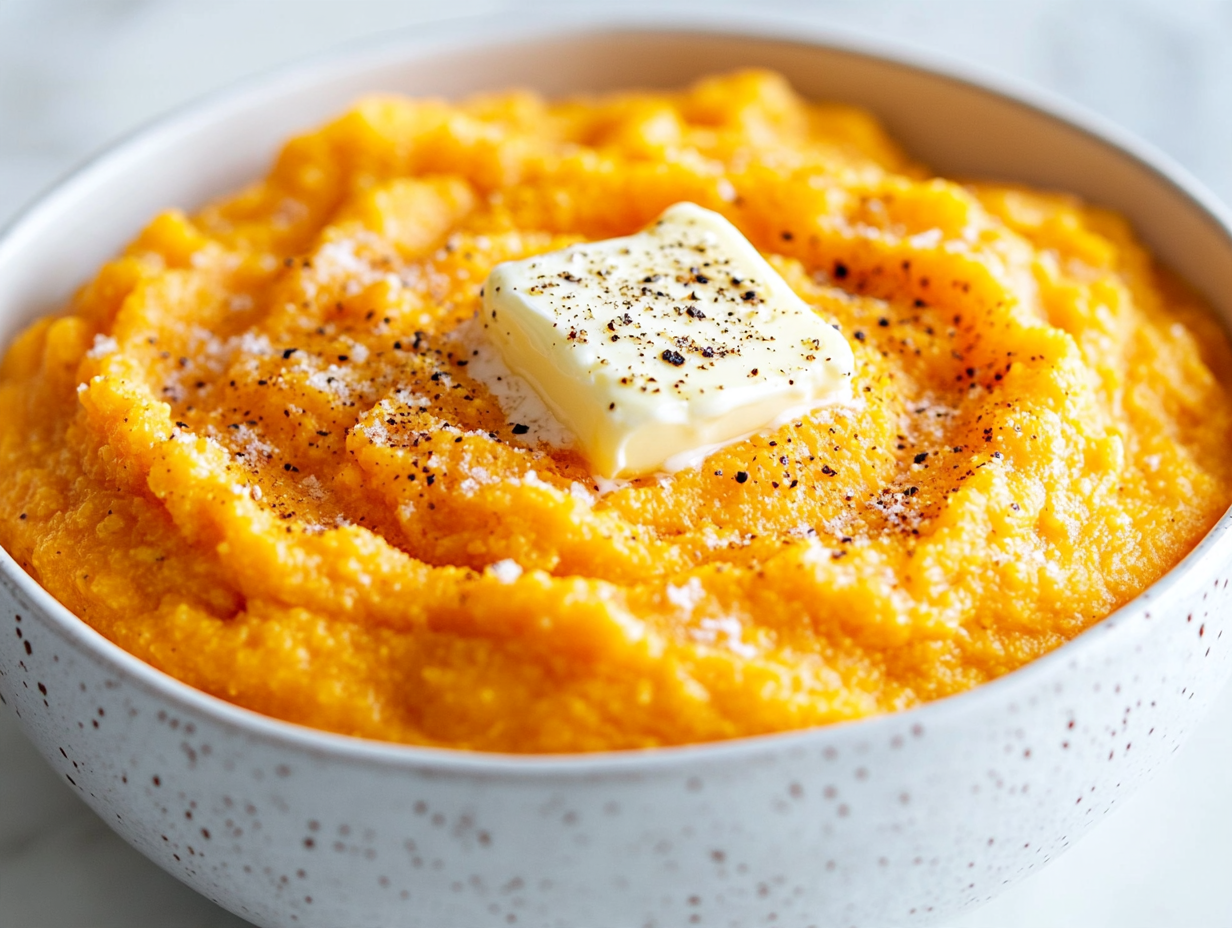
These Roasted Sweet Potato Grits are creamy, buttery, and full of naturally sweet, earthy flavor. Stone-ground grits are slowly simmered in chicken broth and whole milk, then blended with tender roasted sweet potato for a smooth, comforting Southern-style side dish.
What makes this recipe special is the combination of textures and flavors. The sweet potato adds a lovely natural sweetness, while butter, salt, and black pepper keep everything balanced. Serve these grits with shrimp, fried catfish, roasted vegetables, or eggs for a cozy breakfast or dinner.
What Makes These Sweet Potato Grits So Good?
- Naturally sweet and savory: Roasted sweet potato adds gentle sweetness that pairs beautifully with buttery, seasoned grits.
- Creamy texture: Whole milk, chicken broth, and butter create a rich consistency without making the dish overly heavy.
- Southern comfort food: Stone-ground grits give this recipe its traditional Southern character.
- A little something different: Sweet potatoes bring color, flavor, and a seasonal twist to everyday grits.
- Easy to customize: You can use vegetable broth for a vegetarian version or adjust the seasoning to suit your taste.
- Great for any meal: Serve them for breakfast, brunch, or as a comforting side dish at dinner.
Roasted Sweet Potato Grits
Equipment
- Large saucepan
- Medium bowl
- Fine-mesh sieve
- Immersion blender
Ingredients
- 1 large sweet potato about 1 pound
- 3 cups unsalted chicken broth
- 1½ cups whole milk
- 1 cup stone-ground white or yellow grits
- 4 tablespoons unsalted butter plus more for serving
- Kosher salt to taste
- Freshly ground black pepper to taste
Instructions
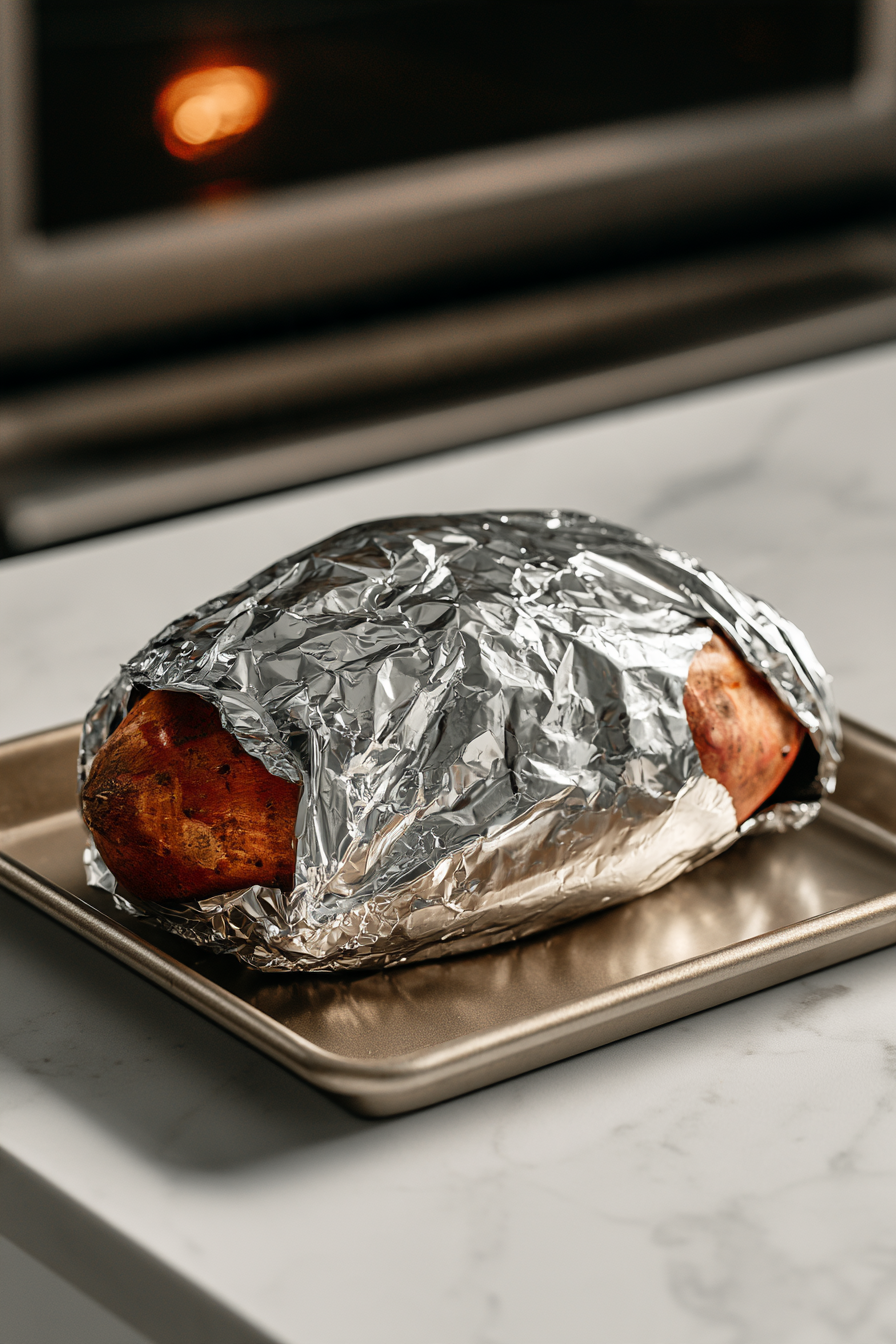
- Roast the sweet potato: Preheat the oven to 400°F. Wrap the sweet potato tightly in foil and place it on a small baking sheet. Roast for 35–45 minutes, or until completely tender. Let cool slightly.
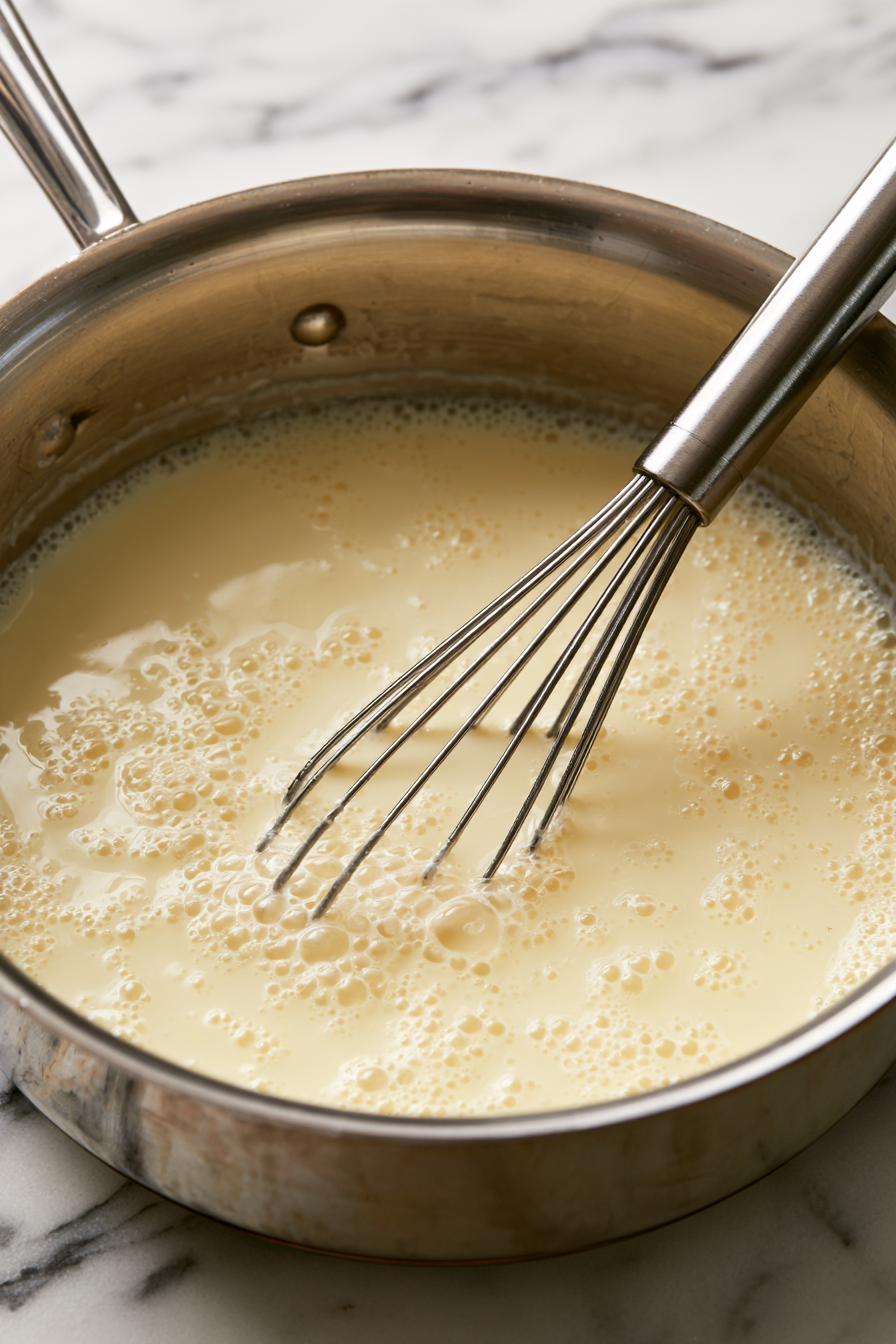
- Heat the liquids: Bring the chicken broth and milk to a gentle simmer in a large saucepan over medium heat.
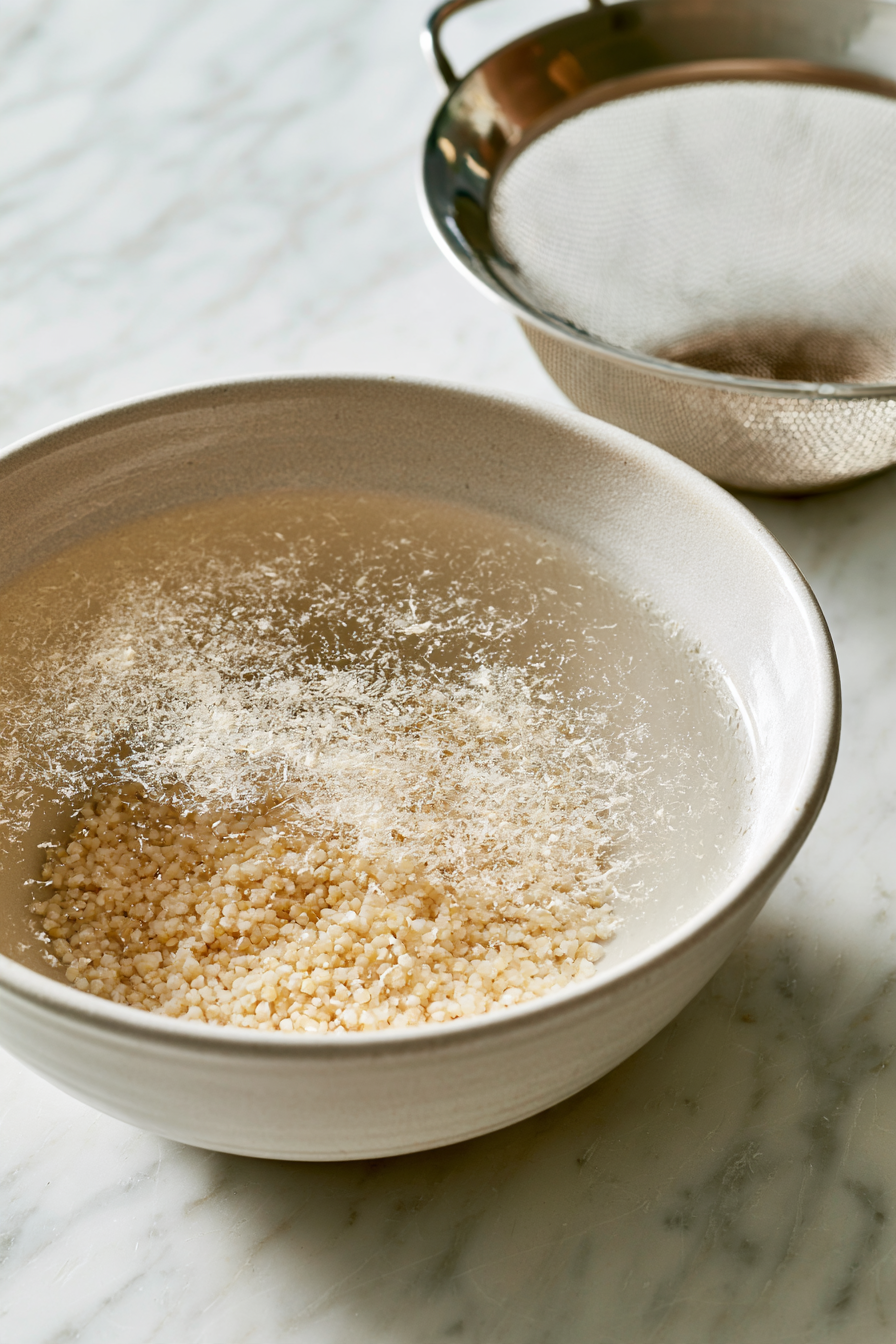
- Rinse the grits: Place the grits in a bowl and cover with cool water. Gently swish them to loosen the chaff, skim it from the surface, and drain through a fine-mesh sieve. Repeat twice more.
- Cook the grits: Whisk the rinsed grits into the simmering broth mixture, making sure there are no lumps. Cook for 25–30 minutes, whisking often, until thick and creamy with a slight bite.
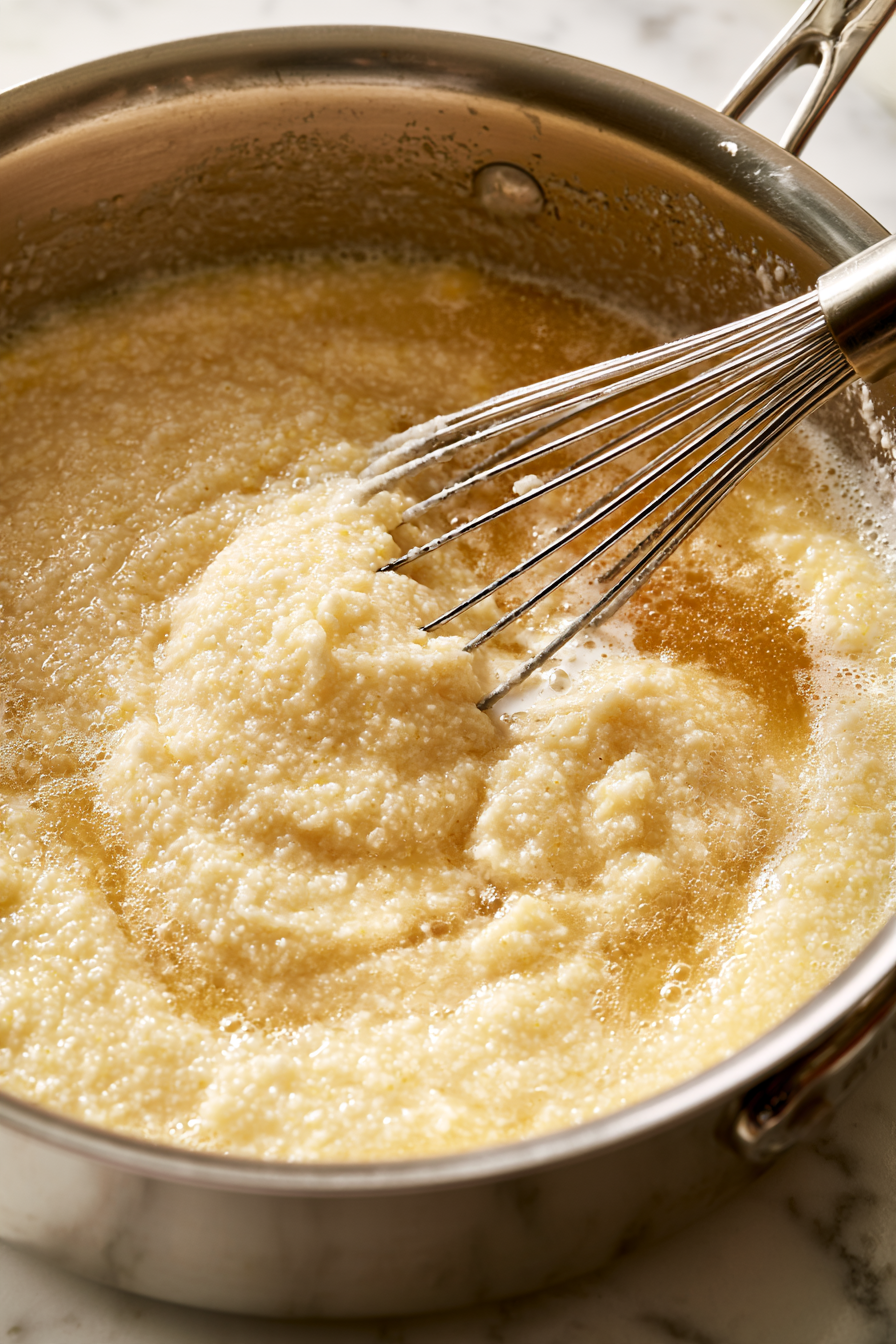
- Add the sweet potato: Peel the cooled sweet potato and mash the flesh until smooth. Add about 2 cups of sweet potato to the grits and blend with an immersion blender until creamy and fully incorporated.
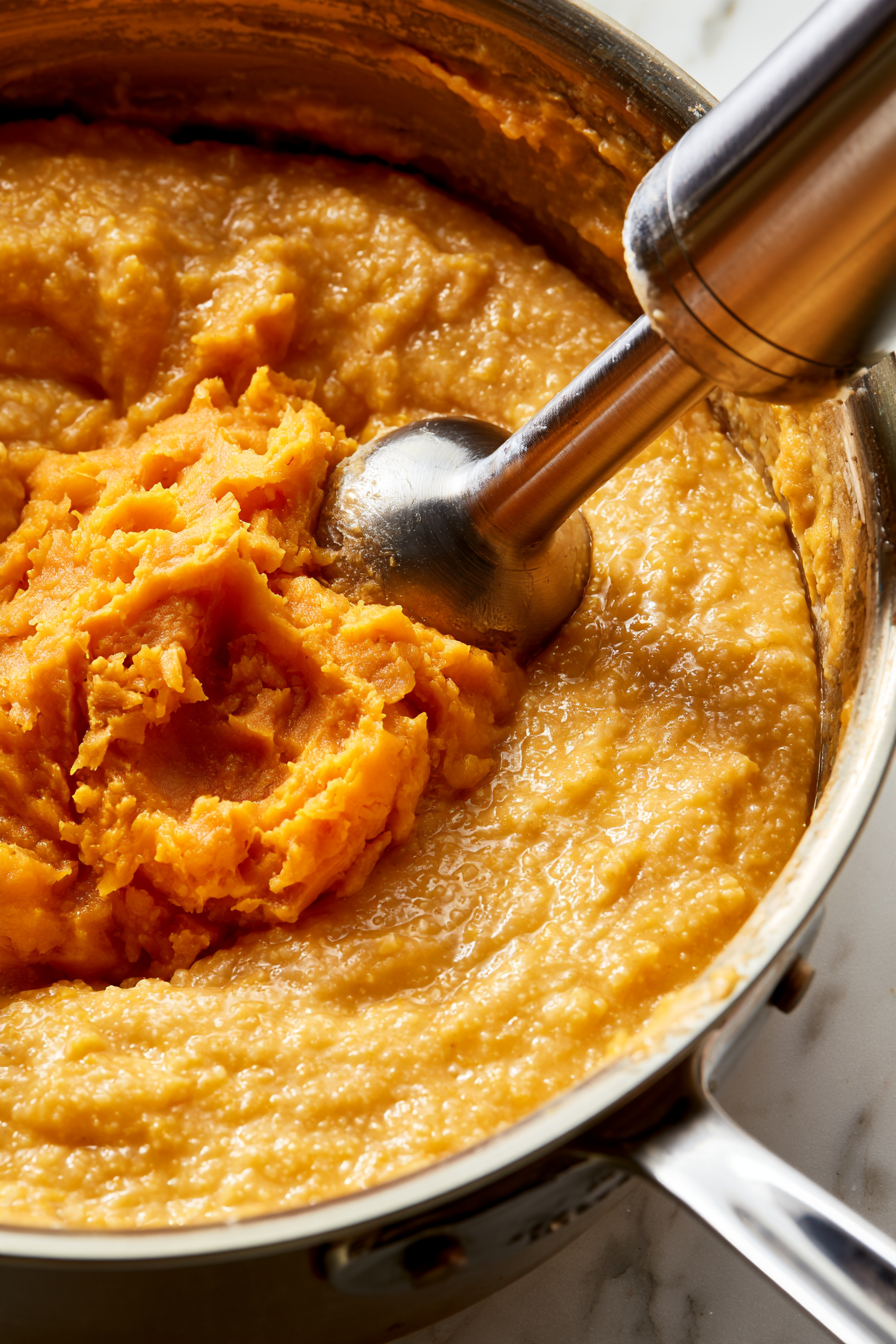
- Finish: Stir in the butter and season with kosher salt and freshly ground black pepper to taste.
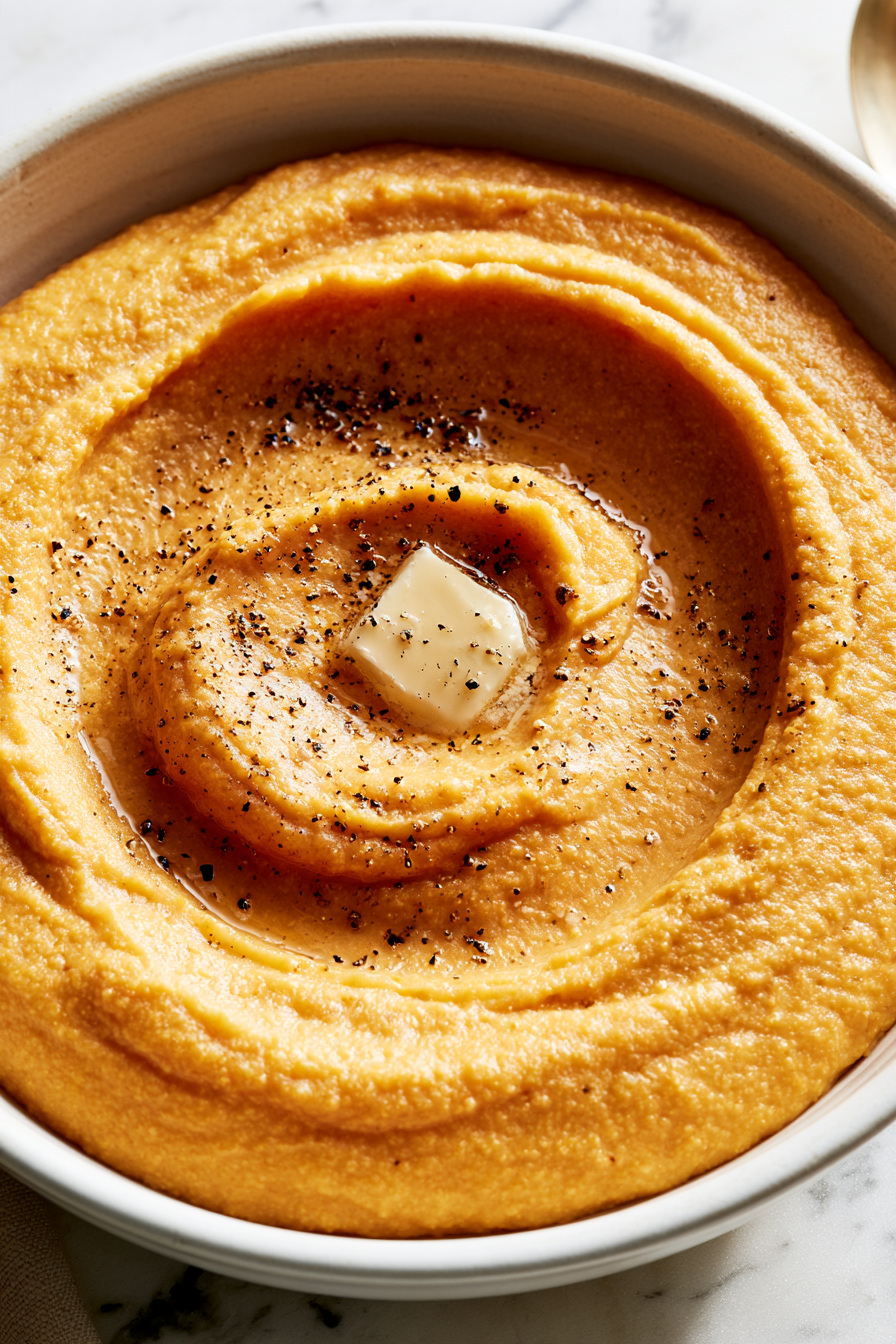
- Serve: Spoon the grits into a shallow serving bowl and top with an extra pat of butter and a little black pepper, if desired.
Notes
- Stone-ground grits give the best texture and flavor for this recipe.
- Don’t skip rinsing the grits; it removes excess chaff and helps produce smoother grits.
- An immersion blender creates the creamiest texture, but you can carefully use a standard blender if needed.
- The grits will continue to thicken as they stand. Add a splash of warm milk or broth if they become too thick.
- For a vegetarian version, substitute vegetable broth for the chicken broth.
Nutrition
How to Get Smooth, Creamy Stone-Ground Grits
Stone-ground grits need a little more attention than quick-cooking varieties, but the texture is worth it. Rinsing them helps remove loose chaff, while whisking them into gently simmering liquid helps prevent lumps from forming.
Keep the heat moderate and whisk frequently as they cook. They should gradually become thick and creamy while retaining a slight bite. Once the sweet potato is added, an immersion blender helps combine everything into a smooth, consistent mixture.
Common Mistakes and How to Fix Them
- Grits turn out lumpy: Whisk them gradually into the simmering broth and milk instead of adding them all at once.
- Grits become too thick: Stir in a splash of warm milk or broth until they reach your preferred consistency.
- Grits taste gritty: They may need more cooking time. Continue cooking until the texture is creamy with only a slight bite.
- Sweet potato leaves lumps: Mash the roasted flesh thoroughly before adding it to the grits, then blend until smooth.
- Grits stick to the saucepan: Keep the heat moderate and whisk frequently, paying attention to the bottom of the pan.
- Flavor tastes too mild: Adjust the kosher salt and freshly ground black pepper after adding the sweet potato and butter.
Variations
- Vegetarian sweet potato grits: Replace the chicken broth with vegetable broth for a vegetarian-friendly version.
- Cheesy sweet potato grits: Stir in shredded cheddar cheese for a richer, savory finish.
- Garlic sweet potato grits: Add roasted garlic for a deeper savory flavor.
- Spicy sweet potato grits: Add a pinch of cayenne pepper or red pepper flakes for gentle heat.
- Herb-infused grits: Finish with fresh thyme or chopped parsley for an aromatic touch.
- Brown butter sweet potato grits: Use browned butter instead of regular melted butter for a nutty flavor.
- Extra creamy grits: Stir in a little additional warm milk when serving if you prefer a softer consistency.
Serving Suggestions
Storage
- Refrigerator: Transfer leftover grits to an airtight container and refrigerate promptly.
- Keep portions small: Divide larger batches into shallow containers to help them cool more quickly.
- Expect thickening: Grits naturally become firmer as they cool, so don’t be surprised if leftovers look much thicker.
- Reheating: Warm gently in a saucepan over low heat, stirring frequently.
- Restore the texture: Add a splash of warm milk or broth while reheating to loosen the grits and bring back their creamy consistency.
Frequently Asked Questions
1. What type of grits should I use for this recipe?
Stone-ground white or yellow grits work best. They have a hearty texture and a richer corn flavor that pairs nicely with roasted sweet potato.
2. Why do I need to rinse stone-ground grits?
Rinsing helps remove loose chaff and other particles from the grits. This extra step helps create a smoother finished texture.
3. Can I use quick-cooking grits instead?
You can, but quick-cooking grits have a different texture and require less cooking time. Follow the package instructions and adjust the liquid as needed.
4. Can I roast the sweet potato ahead of time?
Yes. Roast it in advance, let it cool, and refrigerate it until you’re ready to prepare the grits. Mash the flesh before adding it to the saucepan.
5. Can I use vegetable broth instead of chicken broth?
Absolutely. Vegetable broth is an easy substitute and makes the recipe vegetarian-friendly.
6. Why do my grits become thick after cooking?
Stone-ground grits continue absorbing liquid as they stand, so thickening is completely normal. Stir in a little warm milk or broth to loosen them.
7. Do I need an immersion blender?
An immersion blender makes it easier to incorporate the sweet potato evenly. You can also carefully use a standard blender, working in batches if necessary.
8. Can I make these sweet potato grits less sweet?
The recipe doesn’t include added sugar. The sweetness comes naturally from the roasted sweet potato, so you can balance it with kosher salt and freshly ground black pepper to suit your taste.

Hi, I’m Austin. Every recipe you’ll find here is carefully tested, photographed, and created to help you cook with confidence…..
know more