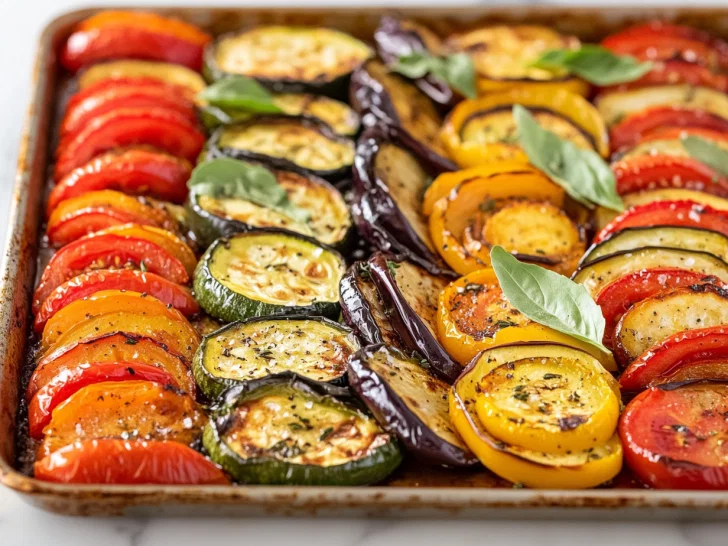
Sometimes, the best way to enjoy a vegetable medley is to let it roast in a hot oven, where all the flavors intensify and mingle. No fuss, no fussing over layers, just a simple tray and a good eye for doneness. It’s the kind of dish that feels like a warm hug, in the middle of a busy week.
What I love about sheet pan ratatouille is that it’s a no-cleanup miracle, with every vegetable getting a little bit of love in the heat. Plus, it’s adaptable—use what’s in season or what’s languishing in your fridge. It’s honest cooking, with enough charm to serve to guests or to keep for yourself during a lazy weekend.
The secret to a perfectly balanced, caramelized ratatouille—done on a single sheet pan—embracing the chaos of roasted veggies.
Why I Keep Coming Back to This Dish
- I love how roasting transforms humble vegetables into something almost decadent.
- There’s a quiet satisfaction in tossing everything onto one pan and letting the oven do its magic.
- This dish feels like a celebration of summer produce, even in the dead of winter.
- I’ve served this at dinner parties, and it always wins over even the pickiest eaters.
A personal story behind the recipe
One rainy afternoon, I had a fridge full of vegetables that needed using up quickly. Roasting them together seemed like the easiest way to make something comforting and flavorful without fuss. The smell of garlic and herbs wafting through the oven was intoxicating, reminding me of childhood kitchen memories. It’s become a go-to recipe when I want something satisfying but simple, and I love that it’s endlessly adaptable.
A bit of history and fun facts about ratatouille
- Ratatouille originates from Provence, France, where vegetables are often roasted to enhance natural sweetness.
- The name ‘ratatouille’ comes from the Occitan word ‘ratatolha,’ meaning ‘to toss or stir up.’
- Traditionally, ratatouille is made on stovetop, but roasting brings out a richer flavor.
- Using a sheet pan simplifies the process, making it accessible even for busy weeknights.
Ingredient qualities and tweaks
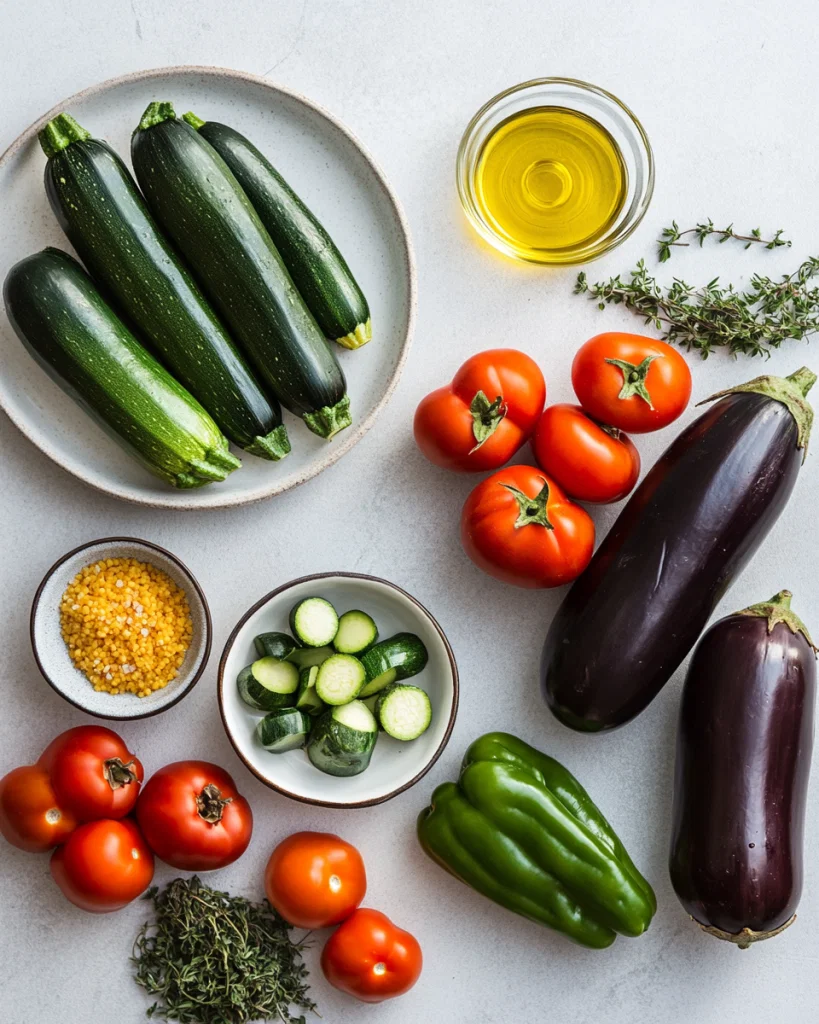
- Zucchini: I love its tender, slightly spongy texture, but it can get watery. Salt early to draw out moisture.
- Eggplant: Its creamy interior becomes smoky and rich when roasted, especially with a dash of salt. If bitter, salt slices for 15 minutes first.
- Bell peppers: Their sweet, smoky aroma develops as they roast, turning soft and caramelized. Use colorful peppers for visual pop.
- Tomatoes: Juicy and bright, they add a fresh tang. Use ripe tomatoes for maximum flavor, or substitute with sun-dried for intensity.
- Garlic: Roasts to a mellow, sweet note, blending beautifully into the vegetables. Use less if you dislike a strong garlic flavor.
Spotlight on key ingredients
Eggplant: Its velvety flesh soaks up flavors and turns smoky when roasted. Salt early to prevent bitterness.:
- Zucchini: Its mild flavor and tender texture make it a versatile base. Watch for it releasing water as it roasts.
- Use firm, fresh zucchini for best bite. Slice uniformly to ensure even cooking.
Bell peppers: Their sweet aroma intensifies with roasting. Use a mix of colors for visual appeal.:
- Tomatoes: Juicy and fragrant, they bring a bright, tangy note. Ripe, in-season tomatoes are best.
- Their skin blisters slightly, releasing sweet juices that mingle with herbs.
Substitutions for different diets and flavor profiles
- Dairy-Free: Swap butter for olive oil. Keeps the dish vegan and maintains that rich, fruity oil flavor.
- Herb Variations: Use fresh thyme or rosemary instead of basil for a woodier note.
- Spice it up: Add red pepper flakes or smoked paprika for a smoky kick.
- Vinegar: Splash with balsamic or sherry vinegar after roasting for depth.
- Cheese: Top with a sprinkle of grated Parmesan or crumbled feta for added richness.
Equipment & Tools
- Large rimmed sheet pan: Provides space for vegetables to roast evenly.
- Sharp knife: Ensures clean, uniform slices.
- Mixing bowls: Toss and coat vegetables evenly.
- Silicone spatula or tongs: Gently toss vegetables without breaking delicate slices.
Step-by-step guide to perfect sheet pan ratatouille
- Preheat oven to 200°C (400°F).
- Chop zucchini, eggplant, bell peppers, and tomatoes into uniform 1/4-inch slices.
- Toss all vegetables with olive oil, minced garlic, chopped herbs, salt, and pepper.
- Spread vegetables in an even layer on a large, rimmed sheet pan. Don’t overcrowd.
- Roast for 25-30 minutes, tossing halfway through. Look for caramelized edges and tender slices.
- Check for doneness: edges should be darkened, veggies soft, and fragrant.
- Remove from oven, sprinkle with fresh herbs and a squeeze of lemon if desired.
- Let sit for 5 minutes to meld flavors.
- Serve warm, garnished with additional herbs or a drizzle of good olive oil.
Let the roasted vegetables rest for 5 minutes. Finish with fresh herbs, a squeeze of lemon, and a drizzle of olive oil before serving.
How to Know It’s Done
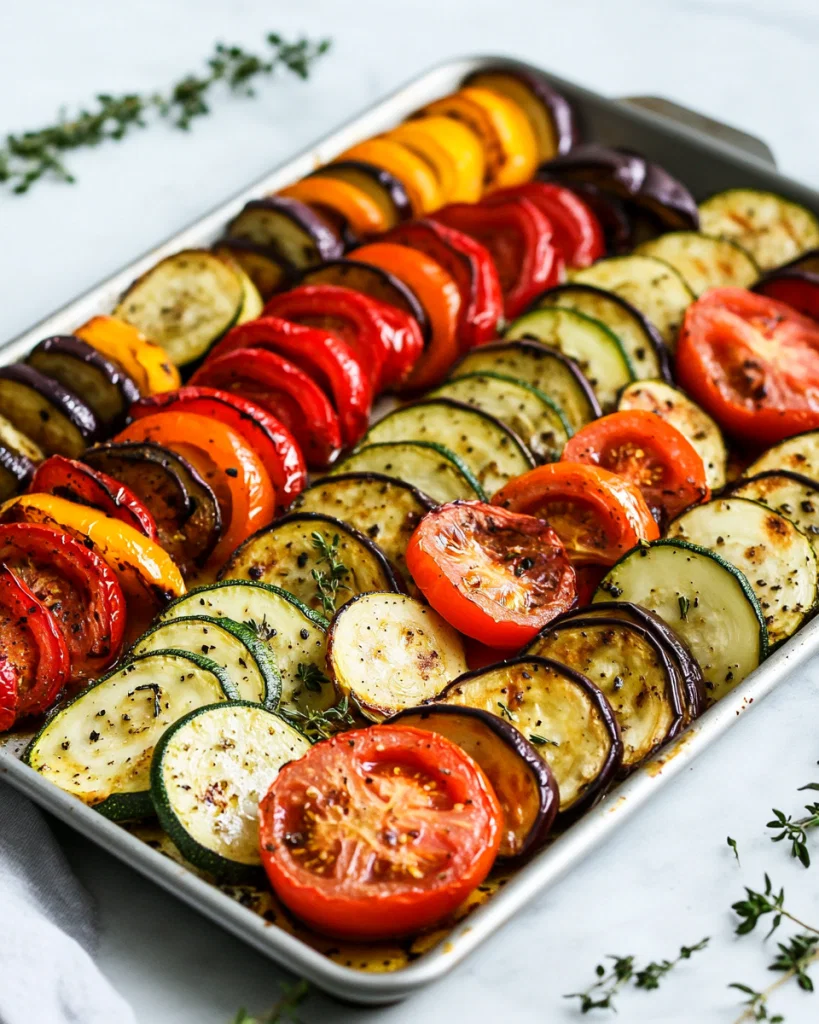
- Vegetables are tender and slightly caramelized.
- Edges are darkened but not burnt.
- A fragrant, smoky aroma fills the kitchen.
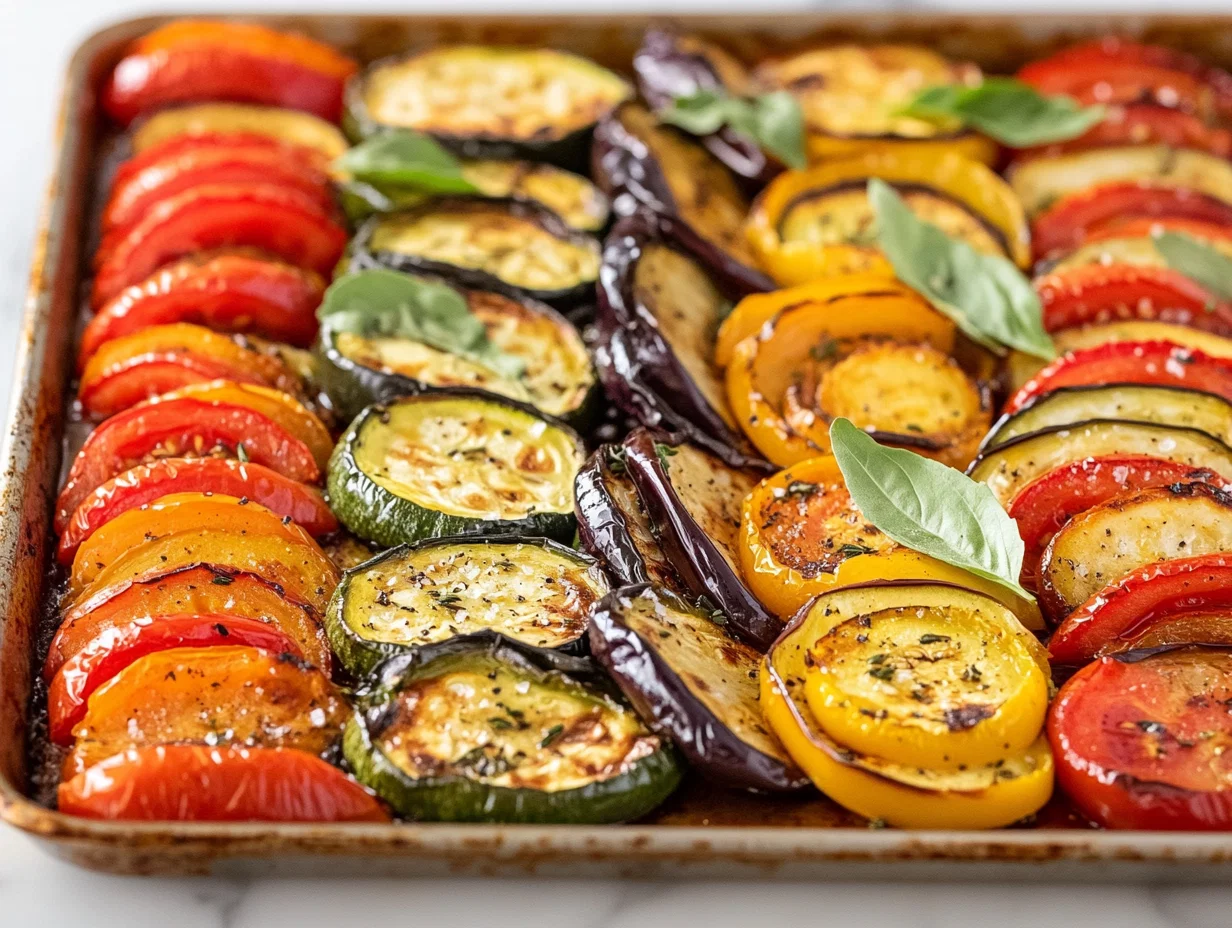
Sheet Pan Ratatouille
Equipment
- Large rimmed sheet pan
- Sharp Knife
- Silicone spatula or tongs
Ingredients
- 1 large zucchini firm, sliced into 1/4-inch rounds
- 1 medium eggplant cut into 1/4-inch slices, salted for 15 min if bitter
- 2 bell peppers preferably different colors, sliced into strips
- 3 ripe tomatoes sliced into 1/4-inch rounds
- 3 cloves garlic minced
- 2 tablespoons olive oil for tossing vegetables
- 1 teaspoon dried herbs basil, thyme, or oregano, chopped
- to taste salt and pepper
- fresh herbs for garnish basil or parsley, chopped
Instructions
- Preheat your oven to 200°C (400°F). Line your large sheet pan with parchment paper for easy cleanup.
- Prepare all vegetables by slicing zucchini, eggplant, bell peppers, and tomatoes into uniform 1/4-inch slices. If using eggplant, salt the slices and let sit for 15 minutes to draw out bitterness, then rinse and pat dry.
- In a large mixing bowl, toss the sliced vegetables with minced garlic, chopped herbs, olive oil, salt, and pepper until evenly coated. Use a silicone spatula or tongs to gently mix and coat everything well.
- Spread the coated vegetables in an even layer on the prepared sheet pan, giving each piece space to breathe and caramelize as they roast. Avoid overcrowding for the best texture.
- Place the pan in the oven and roast for about 25-30 minutes. After the first 15 minutes, gently toss or turn the vegetables to promote even caramelization and prevent sticking.
- Check for doneness: the edges should be darkened and slightly crispy, while the vegetables remain tender and fragrant. The smell of roasted garlic and herbs should fill your kitchen.
- Remove the pan from the oven and sprinkle generously with freshly chopped herbs. For an extra touch, squeeze a little lemon juice over the vegetables to brighten the flavors.
- Allow the ratatouille to rest for 5 minutes so the flavors can meld. Serve it warm, garnished with more herbs if desired, and enjoy the rustic, caramelized goodness.
Nutrition
Tips & tricks for roasting vegetables
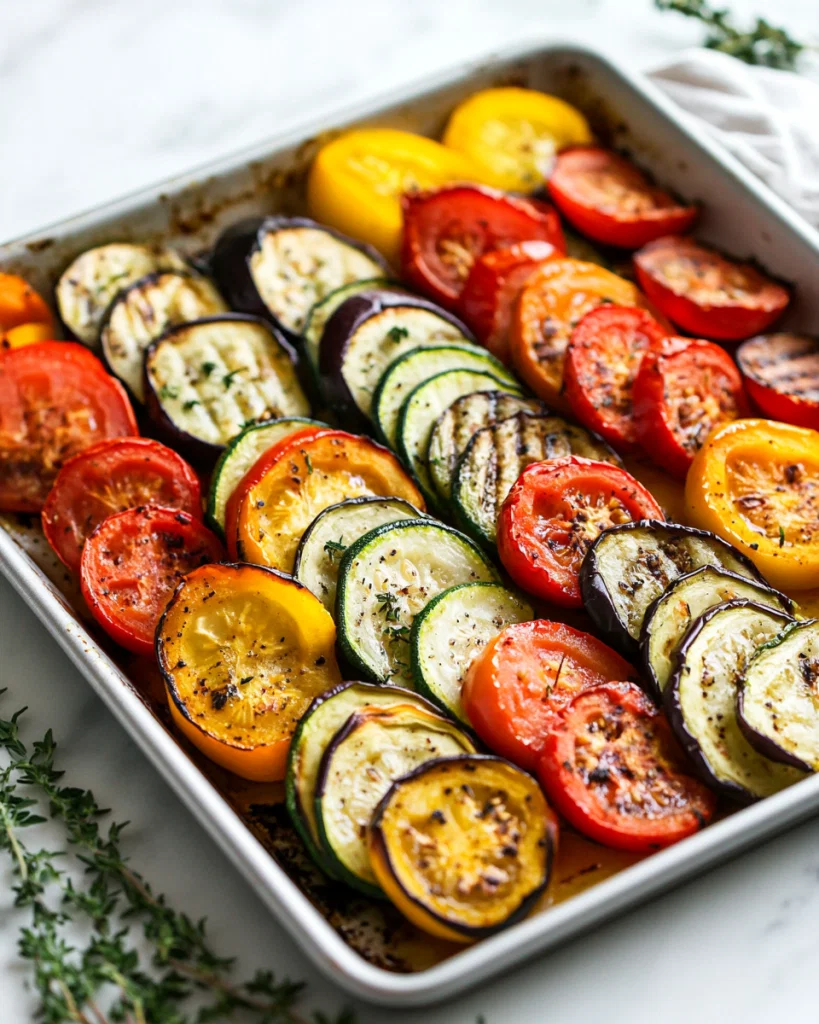
- Use a HOT oven—200°C/400°F—to promote caramelization.
- Ensure even slices to promote uniform cooking.
- Toss vegetables halfway to get even charring.
- Add herbs or lemon juice after roasting for freshness.
- Don’t overcrowd the pan—give vegetables space to crisp.
Common mistakes and how to fix them
- FORGOT TO TOSS VEGETABLES BEFORE ROASTING? → Toss in oil and herbs, then spread evenly on pan.
- DUMPED TOO MUCH OIL? → Use less next time; excess oil can cause sogginess and smoke.
- OVER-TORCHED EDGES? → Reduce oven temp slightly or check earlier to prevent burning.
- VEGGIES ARE TOO SOFT? → Roast at a slightly lower temp or cut slices thicker for more bite.
Quick fixes for common roasting mishaps
- When veggies stick, splash with a bit of water and cover briefly to release steam.
- If edges burn, turn down oven or move pan to a lower rack.
- Patch over overcooked bits with fresh herbs or a squeeze of lemon.
- Shield spots with foil if they start to blacken.
- Rescue a soggy batch by reheating at high heat to re-crisp.
What to Serve With Sheet Pan Ratatouille
Make-ahead and storage tips
- Chop vegetables ahead of time; store in airtight container in fridge for up to 24 hours.
- Roasted dish can be refrigerated up to 3 days. Reheat in a 180°C (350°F) oven for 10 minutes until warmed through.
- Flavors deepen after a day, becoming more integrated.
- Serve hot or at room temperature; reheating brings back that roasted aroma and tender texture.
10 Practical Q&As for Sheet Pan Ratatouille
1. What size sheet pan works best?
Use a large, rimmed sheet pan—around 30×40 cm or 12×16 inches. It gives enough space for veggies to roast evenly.
2. How thick should the vegetables be sliced?
Slice the vegetables uniformly, about 1/4 inch thick. Even slices cook at the same rate and look prettier.
3. What oven temperature is ideal?
Preheat the oven to 200°C (400°F). Hot oven helps vegetables caramelize and develop that smoky sweetness.
4. Should I season before roasting?
Toss the vegetables with olive oil, herbs, and salt before roasting. It brings out their natural flavor and keeps them from drying out.
5. How long do I roast?
Roast for about 25-30 minutes, tossing once halfway through. Veggies should be tender with slightly charred edges.
6. How do I know when it’s ready?
Check for doneness: veggies should be soft, edges caramelized, and smell fragrant. A slight char adds flavor.
7. How to toss without breaking veggies?
Use a spatula to toss veggies gently. Avoid breaking delicate pieces like zucchini.
8. Why rest the dish?
Let the ratatouille rest for 5 minutes after roasting. It helps flavors meld and veggies reabsorb juices.
9. Can I serve cold?
Serve hot or at room temperature, drizzled with fresh herbs or a splash of vinegar. It’s versatile.
10. How to store and reheat?
Leftovers keep well in the fridge for up to 3 days. Reheat in the oven for best texture.
This dish reminds me that sometimes, simplicity is all I need. No complicated sauces or fuss—just roasted vegetables with their natural sweetness and a hint of smoky char. It’s one of those recipes that feels like a little victory in the kitchen.
And honestly, once you get the hang of roasting your veggies this way, you’ll keep coming back to it. It’s a canvas for flavor—herbs, spices, a splash of acid—that can turn a humble tray of leftovers into something memorable. Just make sure to savor that first bite—the one where everything is perfectly caramelized and tender.