
Red Wine Braised Brisket Recipe
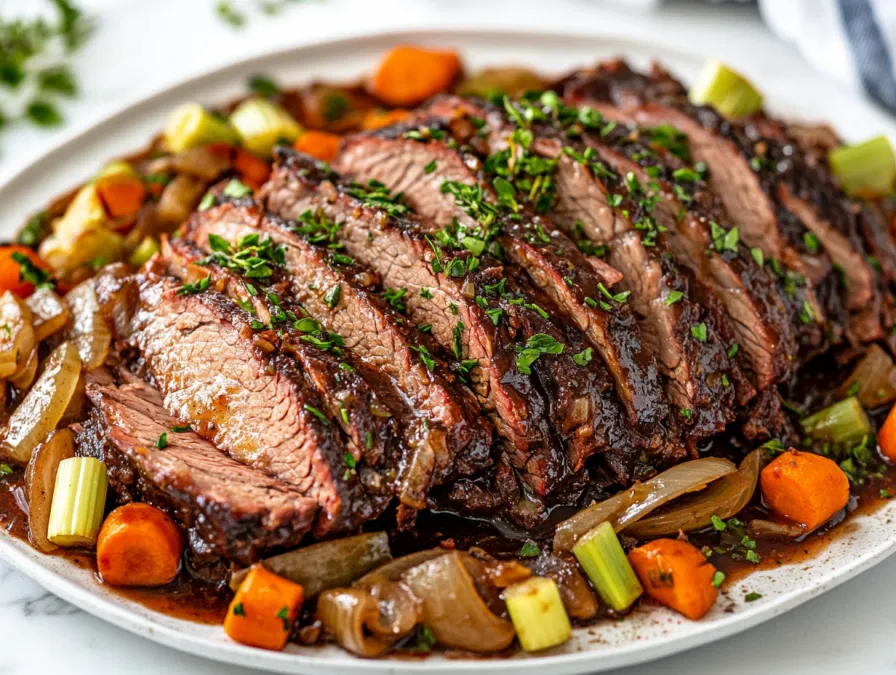
When I’ve been running around all day, I notice it most when I finally stop moving. That slow heaviness shows up before I even think about dinner.
A little of that is part of life, but when it sticks with me, I reach for recipes that don’t ask much in return.
Something slow, steady, and comforting.
That’s when I turn to red wine braised brisket. It cooks gently, fills the kitchen with deep, warm smells, and takes its time without needing mine.
Just a quiet, simple way to make a meal that settles the whole day down.
What I enjoy most is how the wine, onions, and herbs blend together into something rich without being heavy.
And if you want a dinner that feels soothing and still tastes special, this is one worth trying.
Why I Make This So Often?
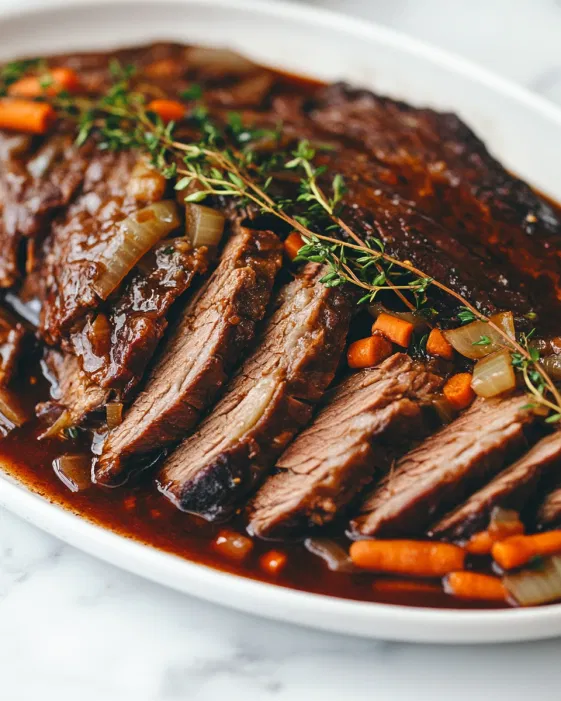
I like how this recipe lets me slow down.
Once the brisket sears, the rest of the work is just waiting while it cooks low and steady.
The meat turns tender every time, soft enough to pull apart with a fork. The sauce thickens on its own and takes on all the flavor from the pot.
I also enjoy how reliable it feels. Even if I switch the vegetables or herbs, it always turns out comforting.
And leftovers are even better the next day. The flavors settle, deepen, and taste richer after resting in the fridge.
Savory Red Wine Braised Brisket Recipe
Equipment
- Large Dutch oven or heavy pot
- Tongs
Ingredients
Brisket
- 3–4 lbs Beef brisket
- Salt and pepper to taste
- 2 tbsp Olive oil
Vegetables & Aromatics
- 2 Onions sliced
- 4 Garlic cloves smashed
- 2 Carrots chopped
- 2 Celery stalks chopped
Braising Liquid
- 2 cups Red wine
- 2 cups Beef broth
- 2 tbsp Tomato paste
- 2 Bay leaves
- 1 tsp Thyme
- 1 tsp Rosemary
Optional
- Fresh parsley for serving
Instructions
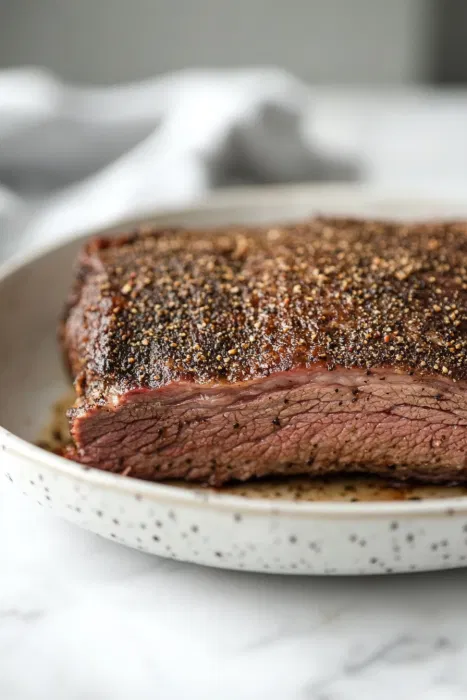
- Season the BrisketCover the meat with salt and pepper on all sides.
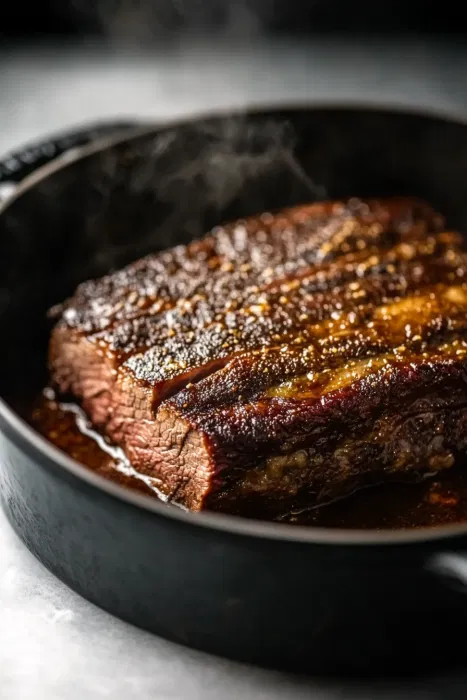
- Sear the MeatIn a hot pot with oil, brown the brisket until each side gets a deep golden crust.
- Sauté the VegetablesRemove the meat, then cook the onions, carrots, celery, and garlic until soft.
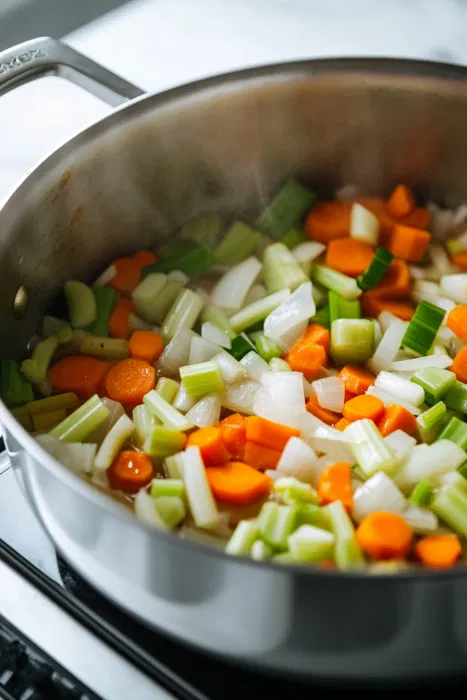
- Build the BaseStir in tomato paste, thyme, rosemary, and bay leaves until everything smells rich.
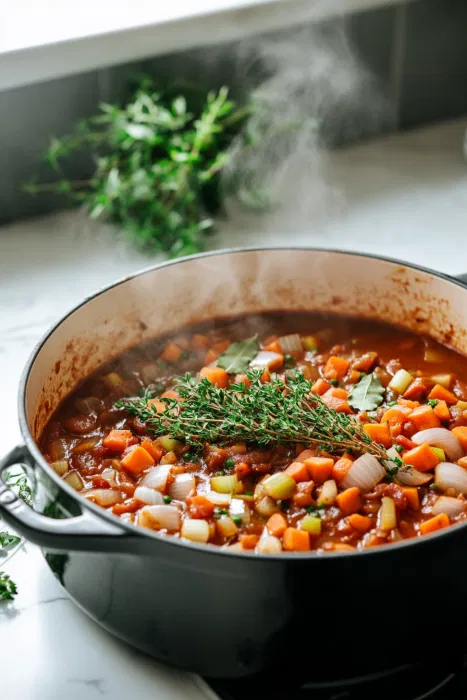
- Add Wine and BrothPour in the wine and broth, scraping the bottom to lift all the browned bits.
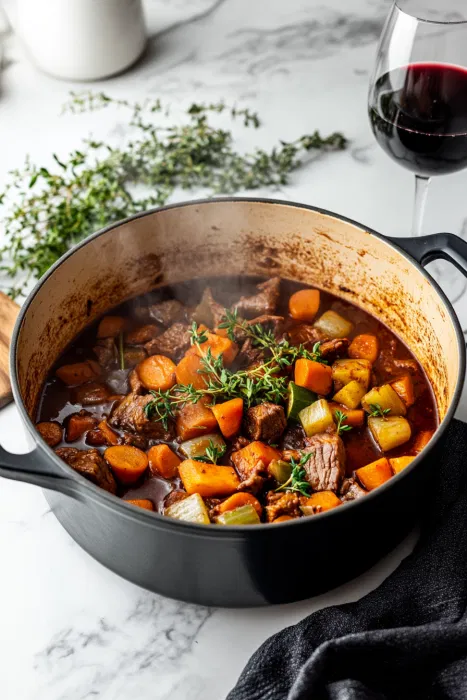
- Return the BrisketThe meat goes back in, fat side up, nestled into the vegetables.
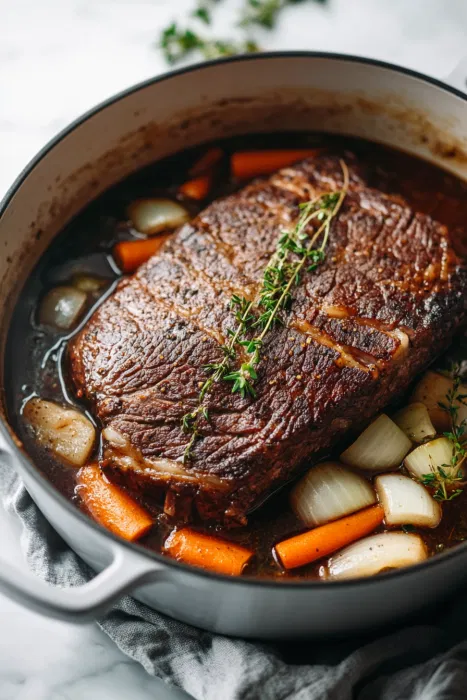
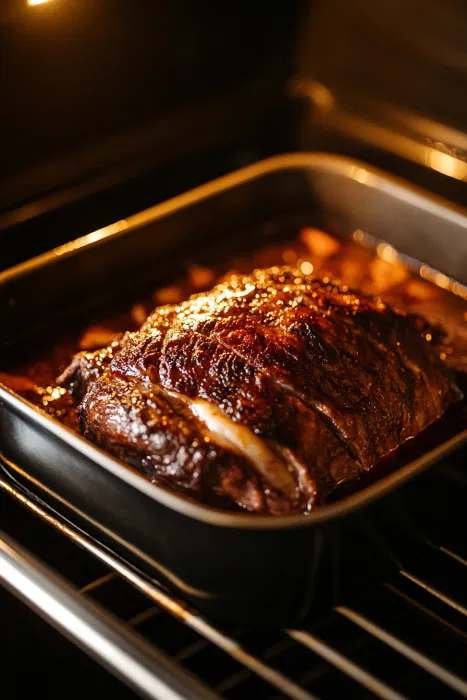
- Slow BraiseCover the pot and bake it at 325°F for 3½–4 hours unti a fork slides into the thickest part with little resistance.
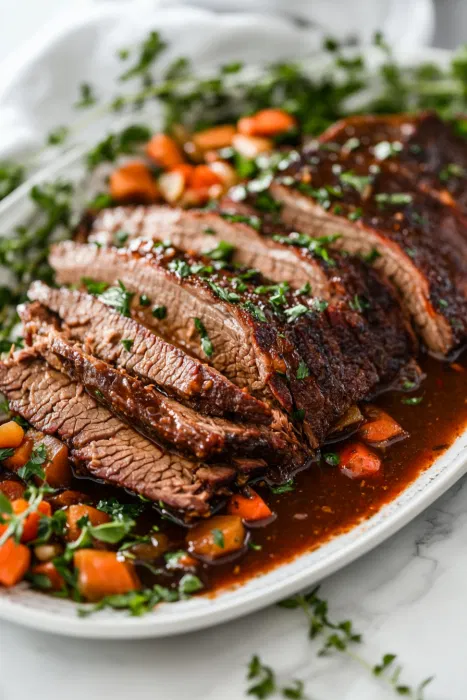
- SliceLet it rest, slice it against the grain, and strain the sauce if desired and simmer it for 10–15 minutes until slightly thickened before serving.
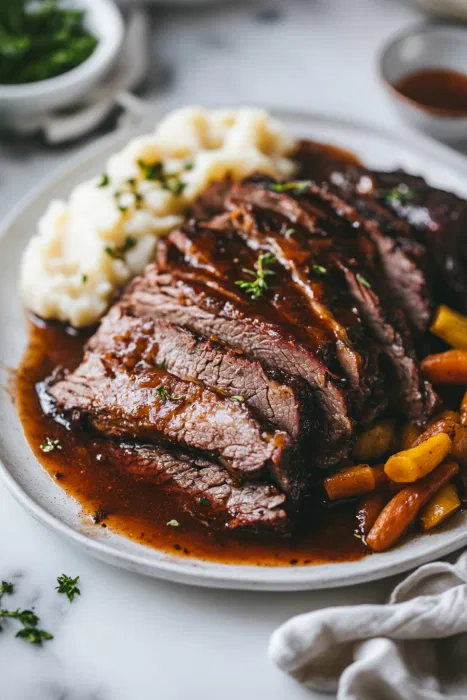
- Serving StepServe it with mashed potatoes, roasted vegetables, or buttered noodles to soak up the sauce.
Nutrition
Tips for the Best Braised Brisket
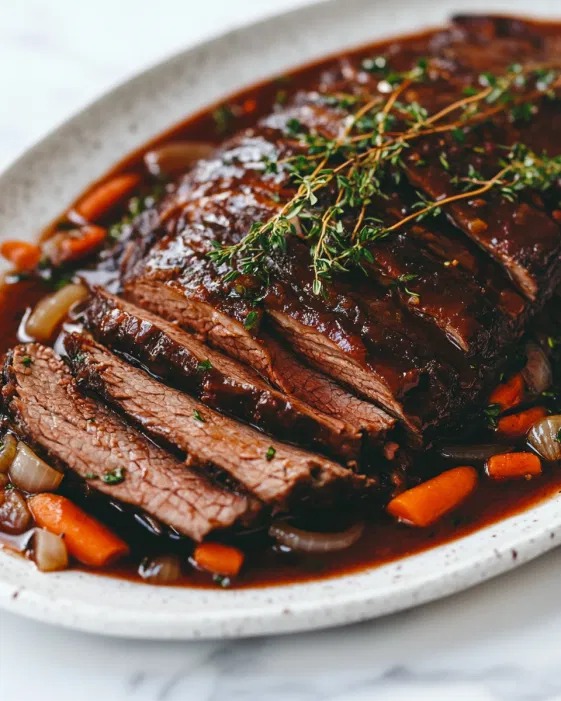
A few small details can make a big difference when making brisket. Since this cut of meat needs time to become tender, focusing on the little steps before and after braising helps create the best texture and flavor.
- Sear the brisket properly.
Don’t rush this step. A deep golden crust adds richness to the final sauce and gives the brisket a deeper, more developed flavor. - Cook it low and slow.
Brisket needs gentle heat and plenty of time for the connective tissue to break down. Keep the oven temperature steady and avoid increasing the heat to speed up cooking. - Keep the liquid at the right level.
The braising liquid should come about halfway up the brisket, not completely cover it. This allows the meat to stay flavorful while still developing a concentrated sauce. - Rest before slicing.
Allow the brisket to rest for 15–20 minutes after cooking. This helps the juices settle back into the meat and makes slicing much easier. - Slice against the grain.
Look for the direction of the muscle fibers and cut across them. This creates shorter fibers and makes each slice more tender. - Make it ahead for even better flavor.
Brisket often tastes even better the next day. The sauce has more time to develop, and the meat absorbs even more of the surrounding flavors after resting.
What to Serve with Red Wine Braised Brisket?
- Roasted Vegetables Medley
- Boiled Cabbage
- Potato Gnocchi
- Spaghetti Stuffed Garlic Bread
- Mashed Potatoes
Make-Ahead Tips
- Cook it a day ahead.
If you have the time, prepare the brisket one day before serving. This allows the meat to absorb more flavor from the red wine sauce. - Store it in the cooking liquid.
Keep the brisket covered and refrigerated with the sauce. The liquid helps prevent the meat from drying out while it rests. - Remove excess fat before reheating.
After chilling, the fat will rise and solidify on the surface of the sauce. Remove the excess before warming for a cleaner, richer sauce. - Reheat slowly for the best texture.
Warm the brisket gently in the sauce over low heat or in a covered oven-safe dish until heated through. Avoid high heat, which can dry out the meat.
Conclusion
Every time I make this brisket, I’m reminded how comforting slow cooking can be.
The meat softens, the sauce grows richer, and the whole meal comes together without any rush.
It’s warm, and always feels right on the table. And when I slice into it and taste that deep red wine sauce, I know exactly why it stays in my weekly rotation.
A simple cut of meat, a little time, and a lot of comfort, that’s all this recipe needs.

Hi, I’m Austin. Every recipe you’ll find here is carefully tested, photographed, and created to help you cook with confidence…..
know more