Chicken Panang Curry Recipe
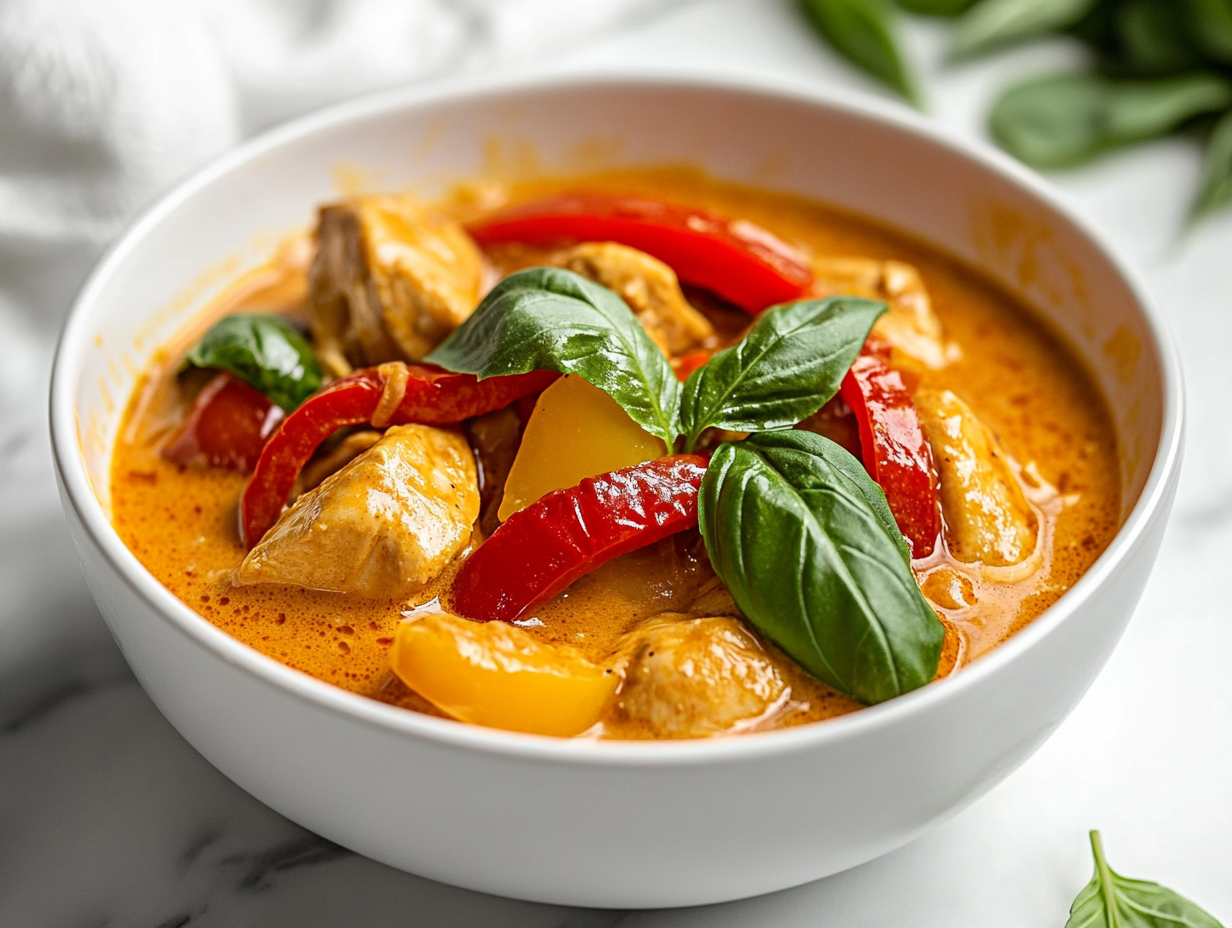
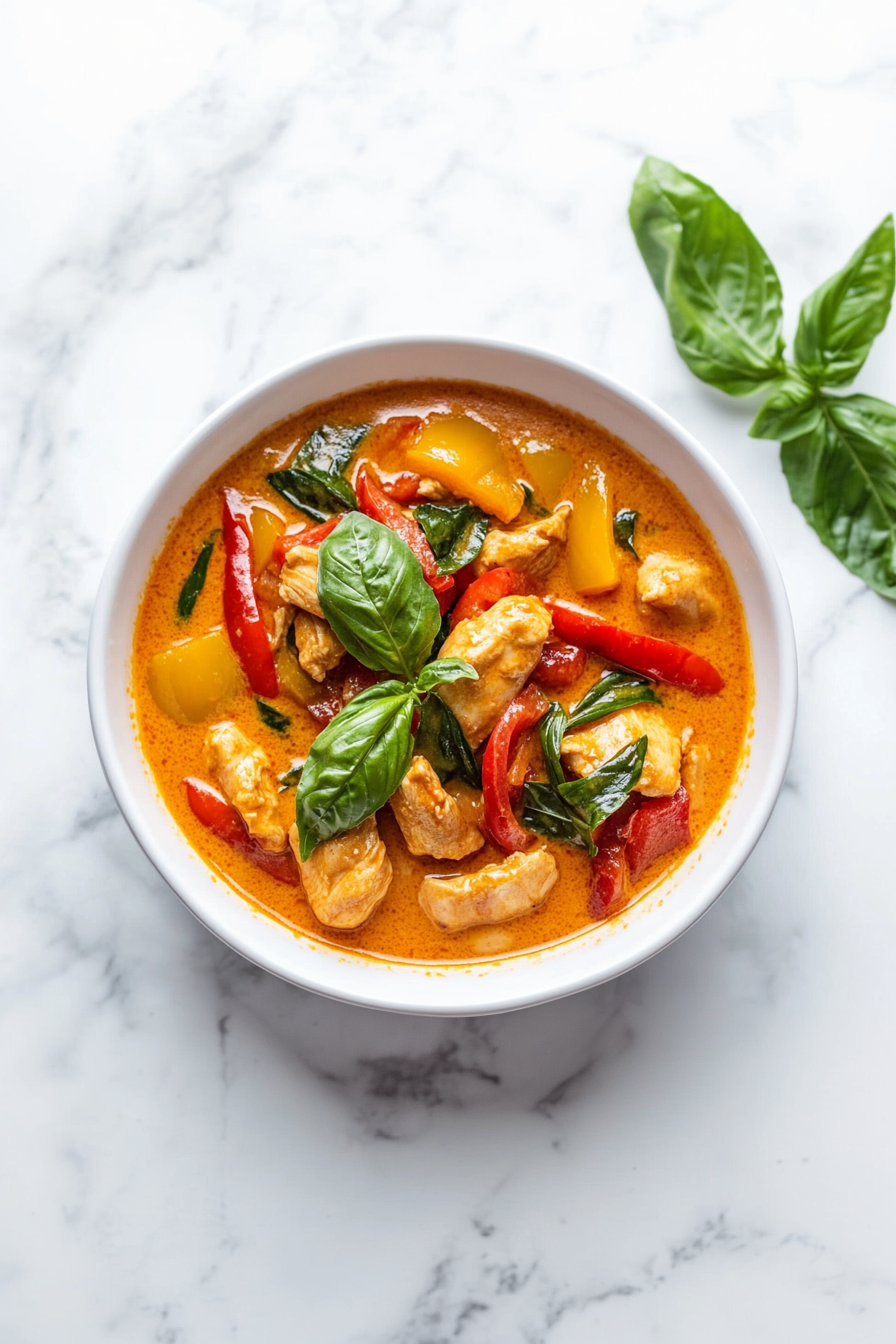
If you’re craving a rich, flavorful, and comforting dish that’s quick to make, this Chicken Panang Curry is just the thing. The creamy coconut milk, combined with the bold panang curry paste, creates a deep and aromatic sauce that coats juicy chunks of chicken and vibrant vegetables.
This dish comes together in just 30 minutes, making it perfect for a busy weeknight dinner or a satisfying weekend treat.
Why I Love This Recipe
- Quick and easy to make.
Ready in just 30 minutes, this curry is perfect for a busy weeknight meal without sacrificing flavor. - Rich and creamy.
The coconut milk and peanut butter create a luxurious, creamy sauce that’s perfectly balanced with the heat from the curry paste. - Packed with vibrant flavors.
The combination of curry paste, ginger, lime juice, and fish sauce gives this dish its signature depth of flavor, while the fresh Thai basil adds a burst of freshness. - Customizable spice level.
You can adjust the level of heat by using more or less panang curry paste to suit your taste. - Perfect for meal prep.
Like many curries, the flavors become even better after resting, making leftovers especially delicious.
Spotlight on Key Ingredients
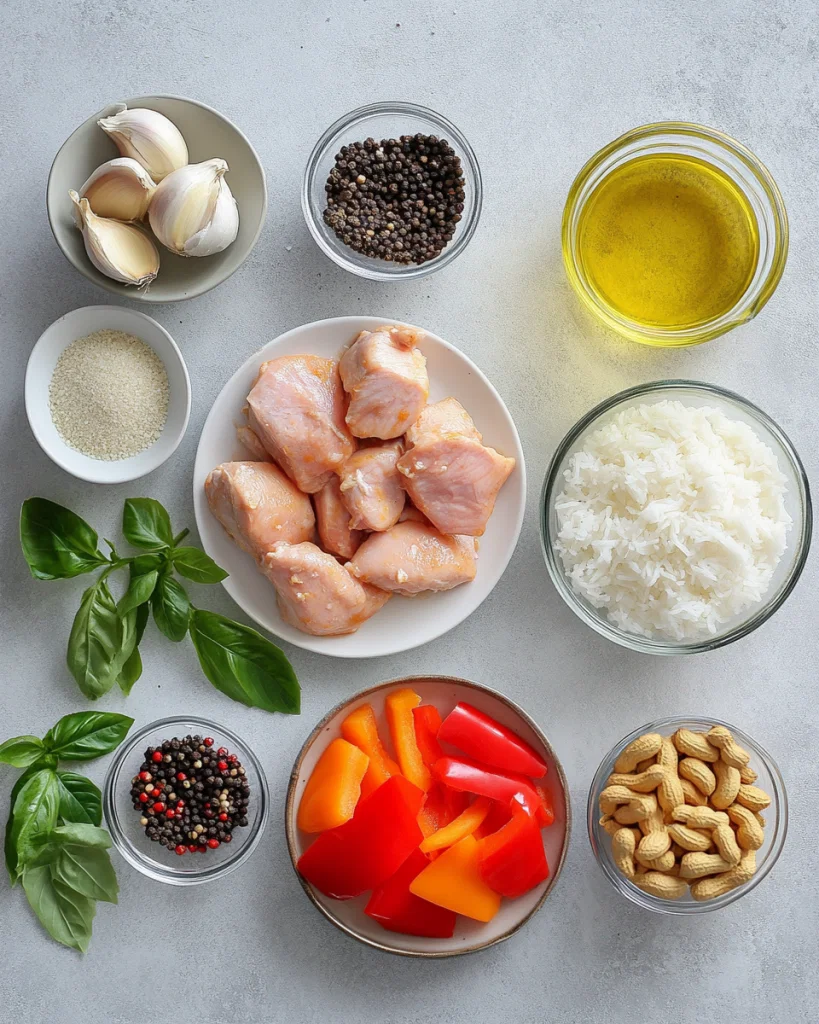
1. Panang Curry Paste
Texture:
Smooth, slightly chunky, and sticky, this paste adds body to the curry sauce.
Flavor:
Rich, aromatic, and mildly spicy with hints of lime, garlic, and herbs.
Prep Tip:
Start with 2 tablespoons for a medium spice level, and add more if you prefer it hotter.
Common Mistake:
Using too much curry paste can overpower the dish. Always taste as you go.
2. Coconut Milk
Texture:
Creamy, thick, and smooth, it forms the base of the curry sauce.
Flavor:
Mildly sweet with a rich, nutty flavor that balances the spices.
Prep Tip:
Use full-fat coconut milk for the richest, creamiest texture.
Common Mistake:
Using light coconut milk can make the sauce too thin and less creamy.
Ingredient Substitutions for Different Needs
- Use chicken thighs instead of chicken breasts.
Chicken thighs are juicier and more flavorful, but chicken breasts work perfectly for a leaner option. - Replace peanut butter with almond butter.
For a nutty flavor with a slightly different texture, almond butter can be a good substitute. - Use tamari or soy sauce instead of fish sauce.
If you don’t have fish sauce, tamari or soy sauce is a great substitute for a salty, umami flavor. - Substitute brown sugar with coconut sugar.
Coconut sugar offers a more caramel-like flavor, perfect for this dish. - Try a dairy-free version using coconut yogurt.
Use coconut cream instead of adding dairy-based ingredients.
Chicken Panang Curry Recipe
Equipment
- Large deep skillet or wok
- Chopping board
- Sharp Knife
- Measuring Spoons and Cups
- Mixing Spoon or Spatula
- Small bowl for slurry
Ingredients
- 2 tbsp oil
- 3 chicken breasts approx. 525g/1.1lbs, chopped into bitesize chunks
- pinch salt and pepper
- 1 onion sliced
- 1 red bell pepper sliced
- 1 yellow bell pepper sliced
- 2 cloves garlic peeled and minced
- 1 tbsp ginger paste
- 2 tbsp panang curry paste
- 2 tbsp peanut butter
- 240 ml 1 cup chicken stock
- 400 ml 14 oz tin full-fat coconut milk
- 1 tbsp fish sauce
- 2 tbsp lime juice juice of approx 1 lime
- 2 tbsp light brown sugar
- 10 Thai basil leaves
- 1 tbsp cornflour cornstarch mixed with 3 tbsp cold water, to form a slurry
To Serve:
- boiled rice long grain or jasmine
- 2 tbsp chopped unsalted peanuts
- 2 spring onions scallions chopped
- 8-12 Thai basil leaves
Instructions
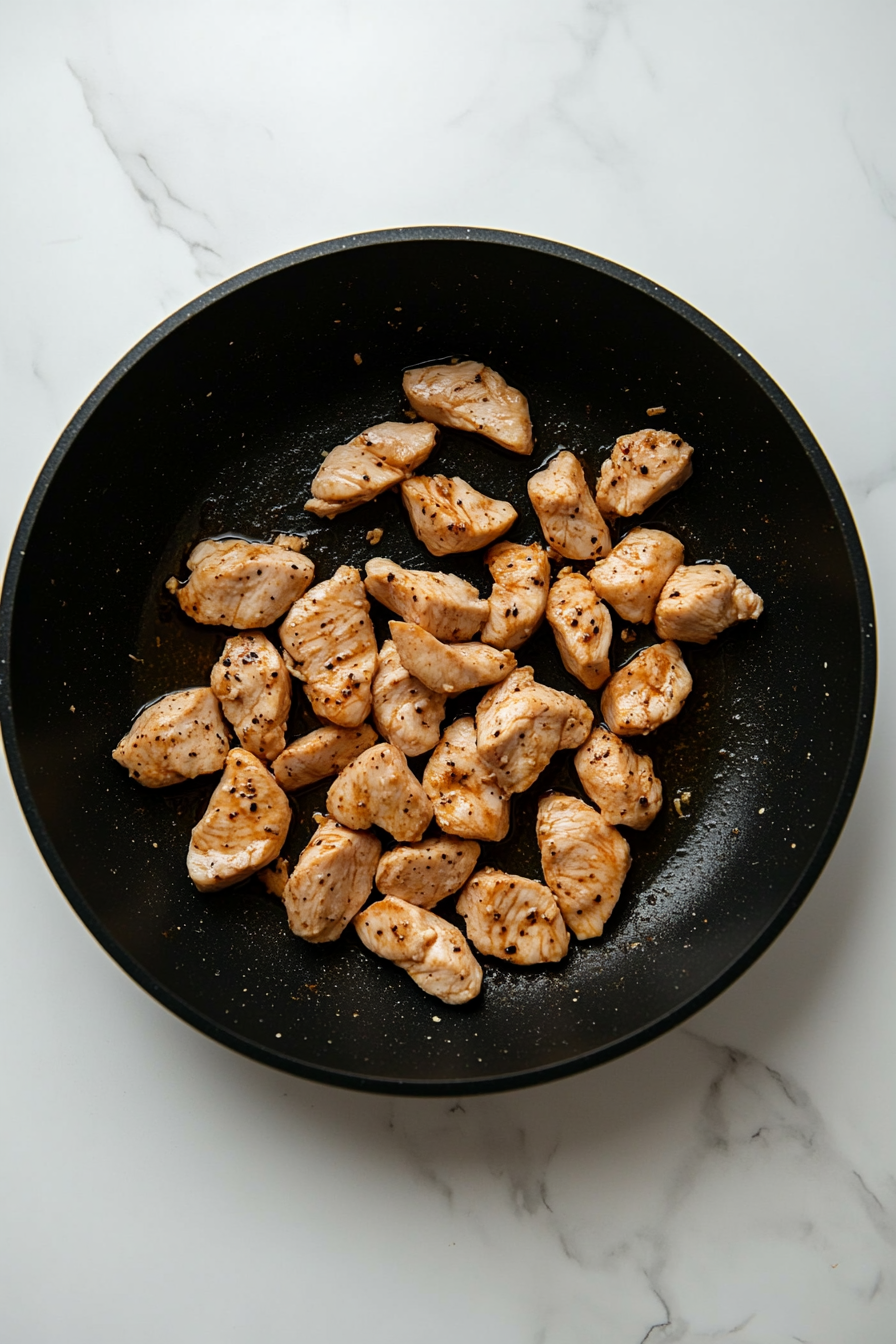
- Heat oil in a large skillet. Add chicken, season with salt and pepper, and sear until lightly browned. Set aside.
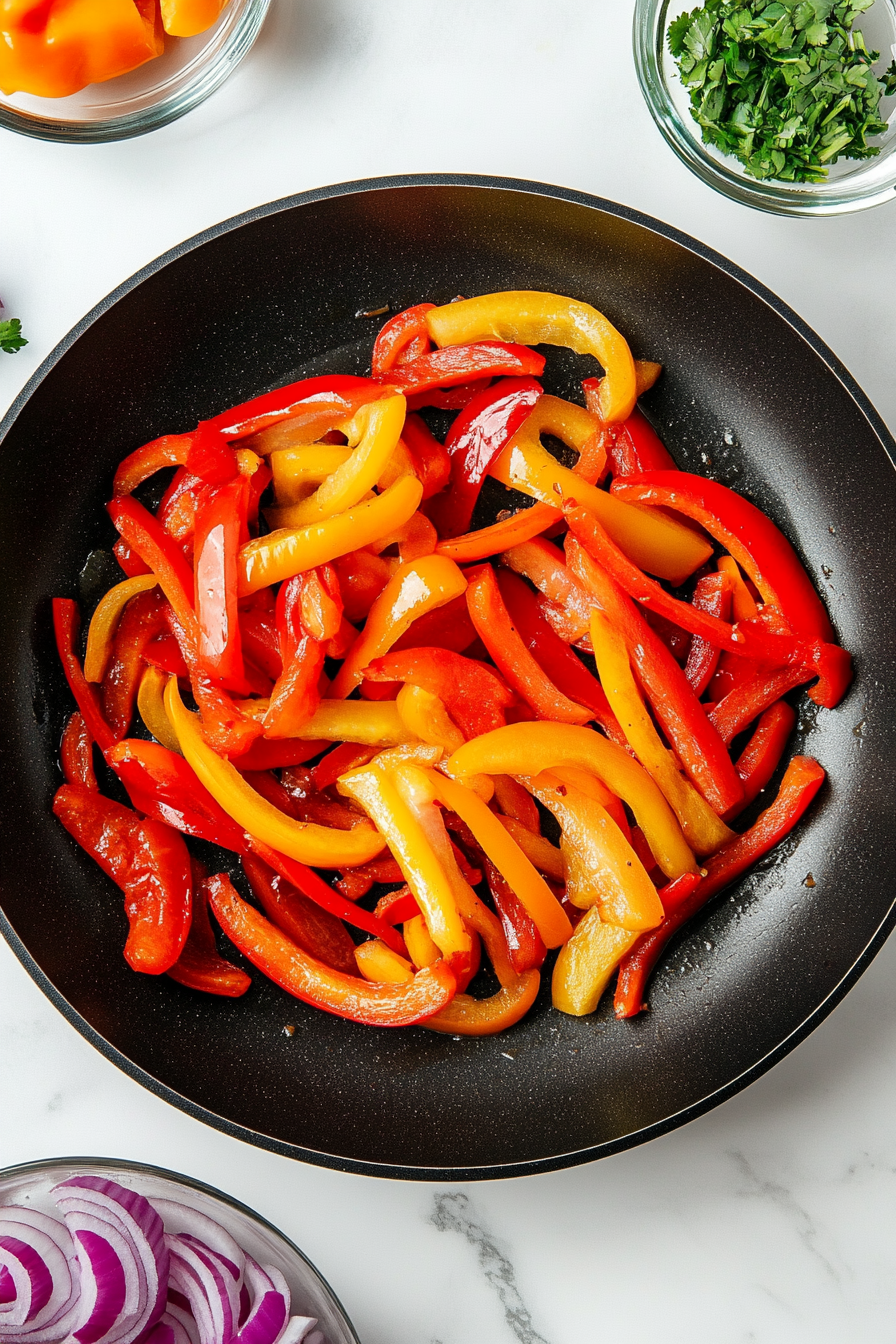
- In the same pan, sauté sliced onion, red and yellow bell peppers until soft.
- Stir in garlic, ginger paste, and Panang curry paste. Cook until fragrant.
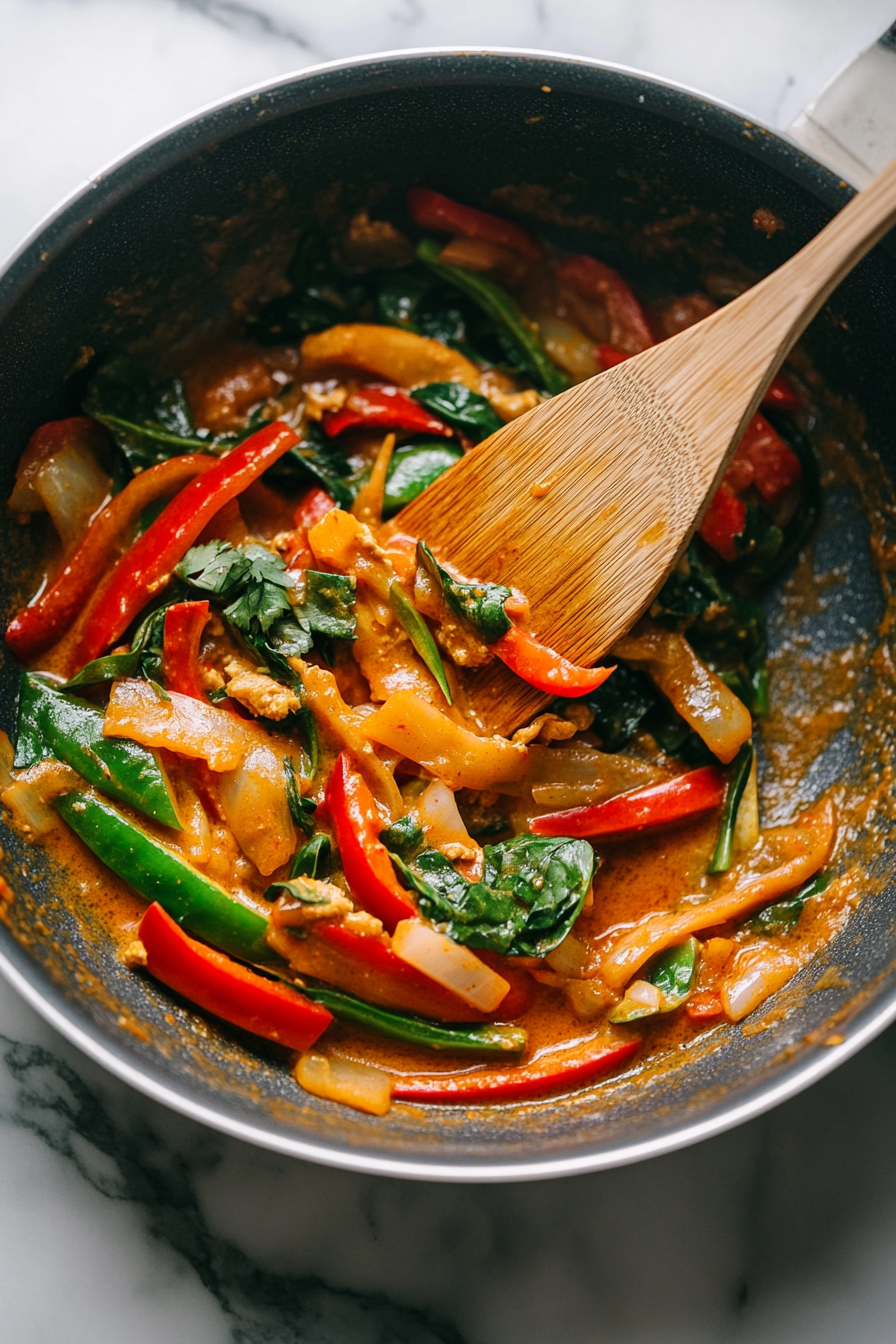
- Add peanut butter, chicken stock, and coconut milk. Mix well.
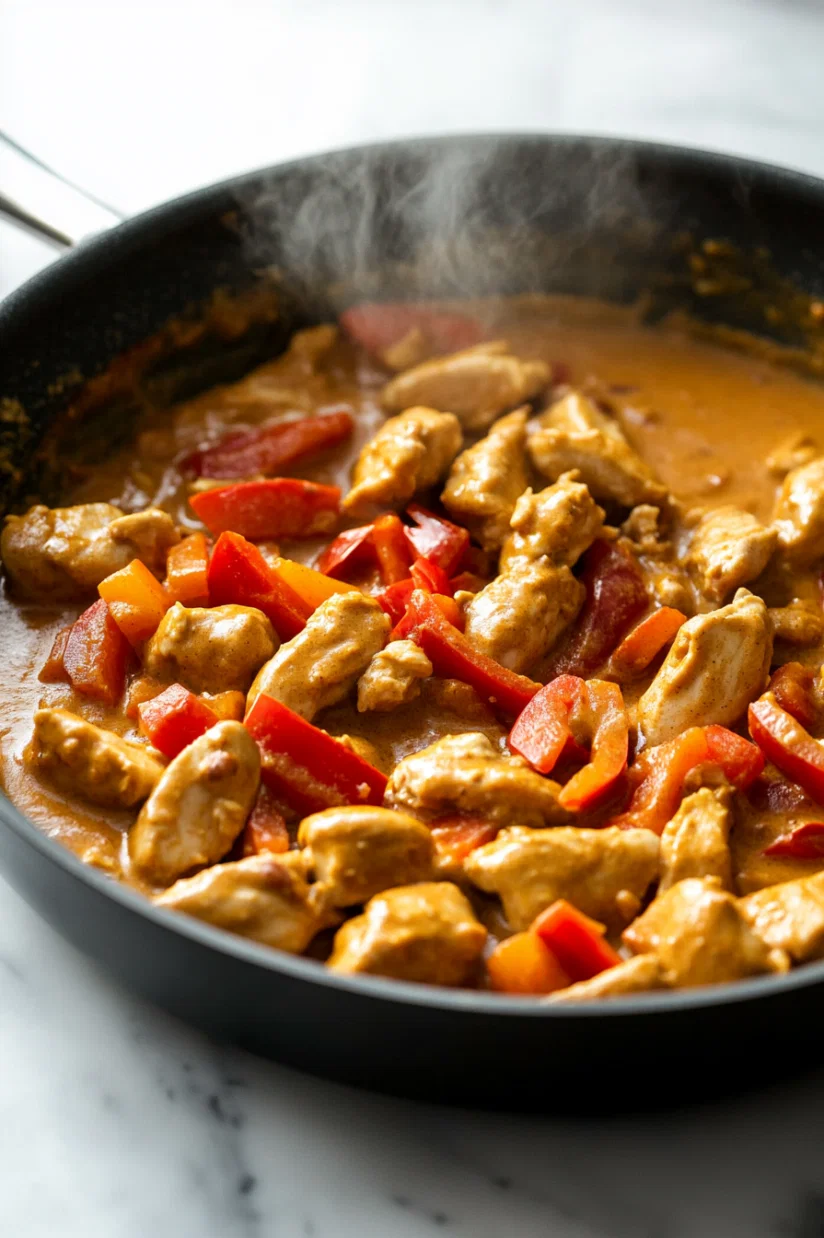
- Stir in fish sauce, lime juice, and brown sugar. Let simmer for 5 minutes.
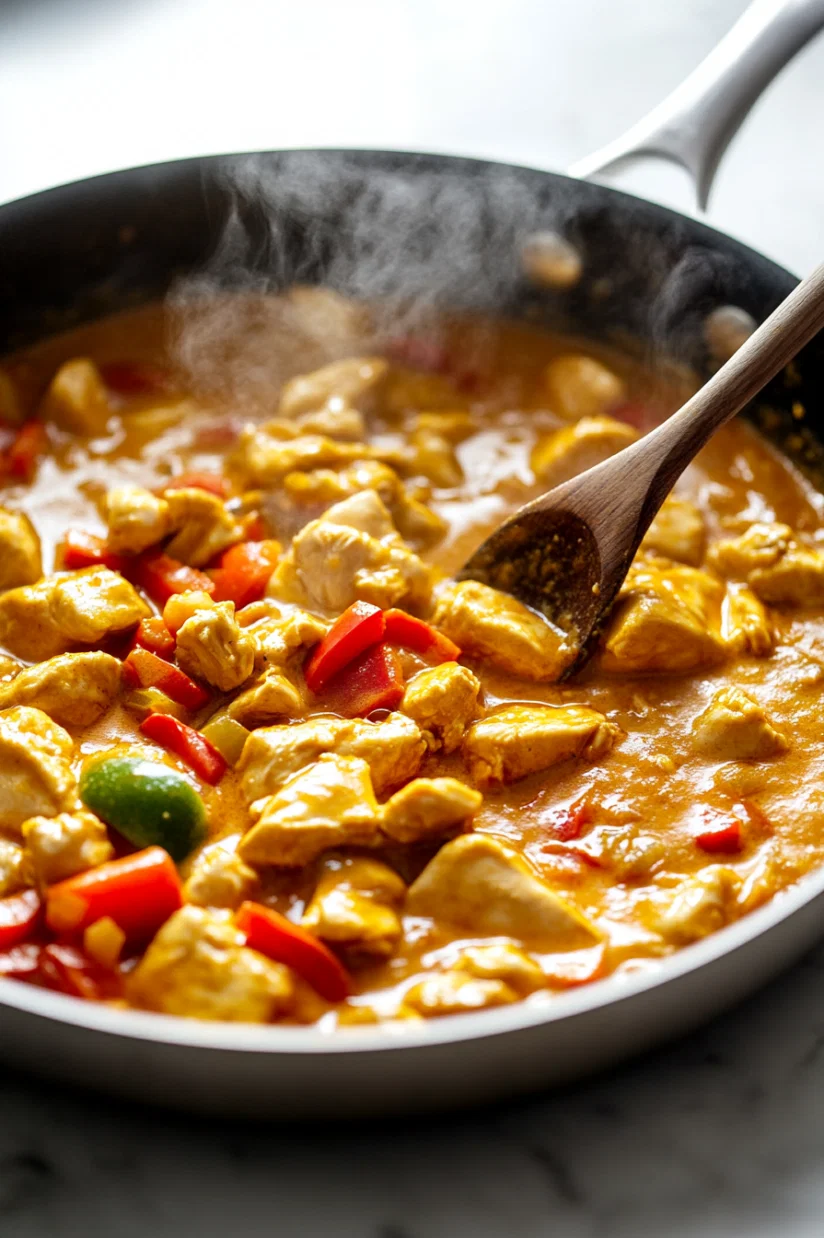
- Return the chicken to the pan. Simmer until fully cooked.
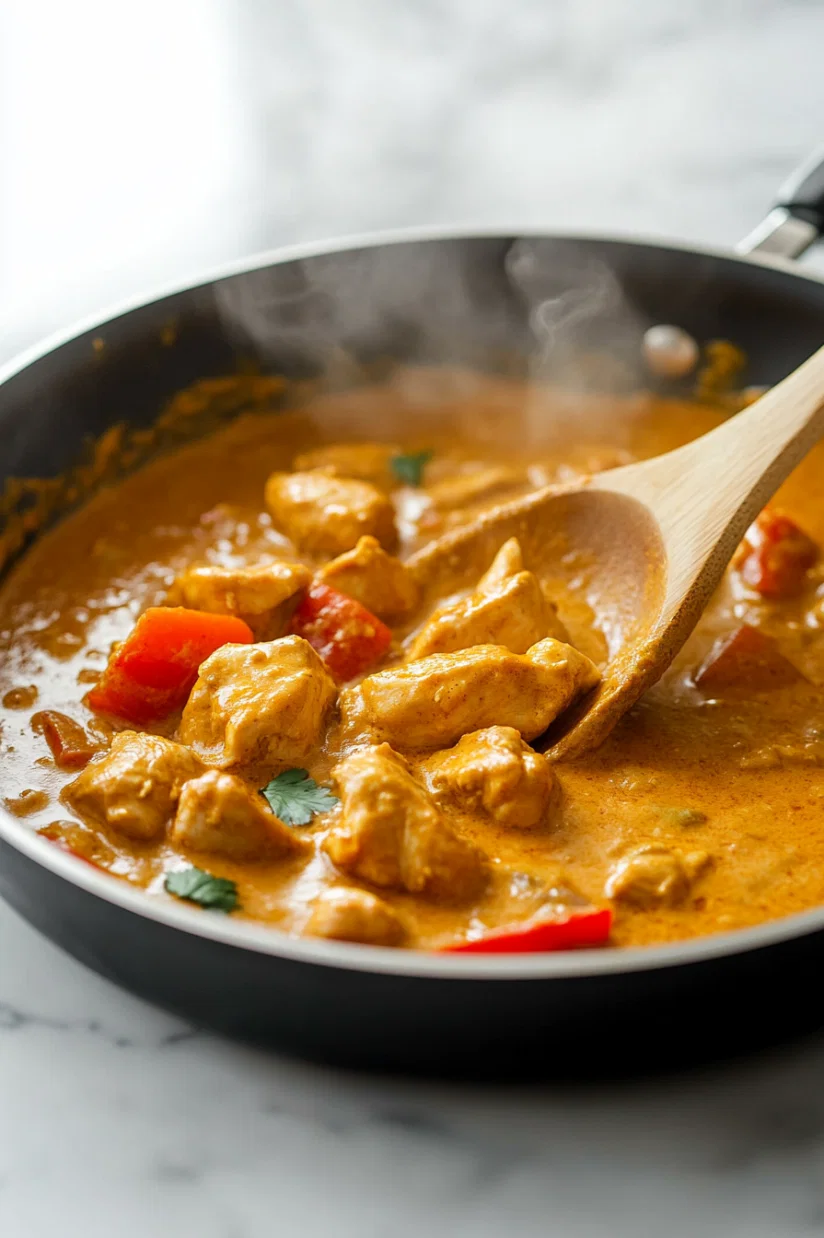
- Add Thai basil leaves and cornflour slurry. Stir gently until the sauce thickens.
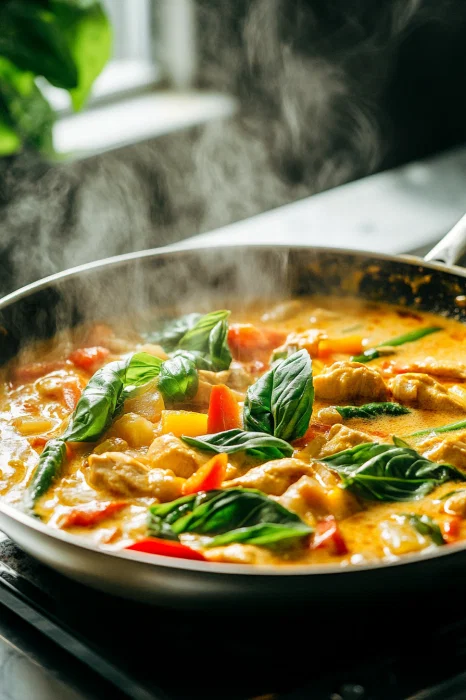
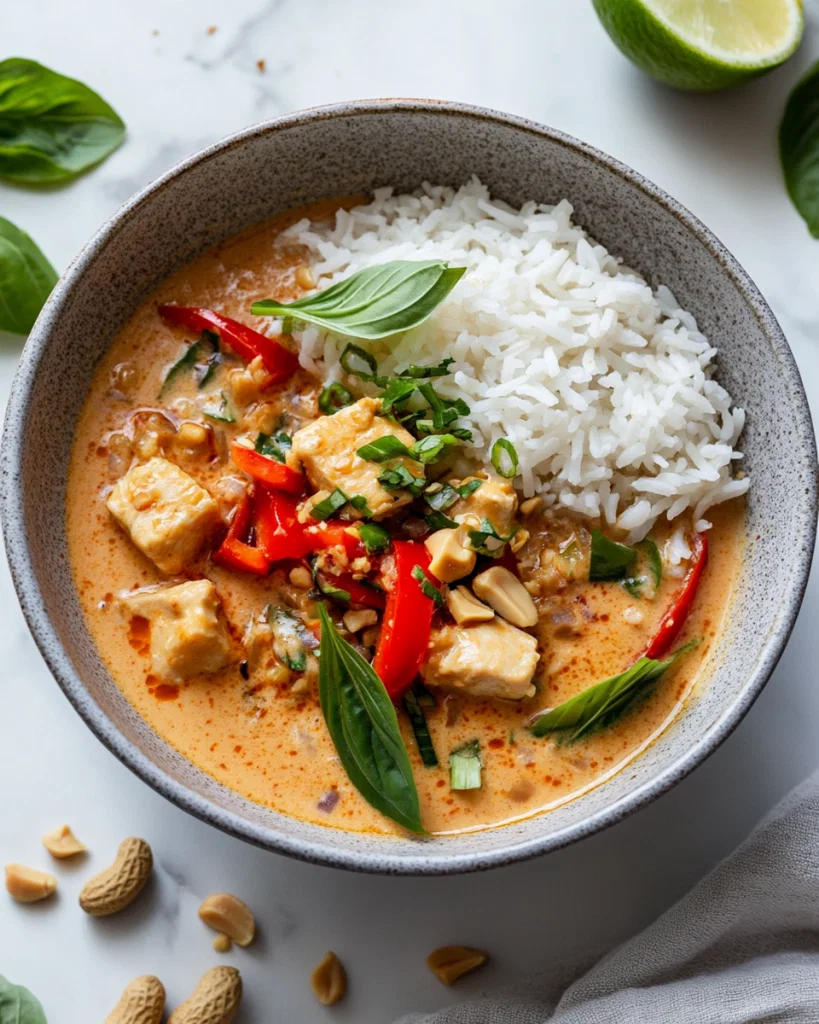
- Serve hot over boiled jasmine or long-grain rice, garnished with chopped peanuts, scallions, and more Thai basil.
Nutrition
How to Know It’s Done
- Chicken should be fully cooked and no longer pink inside.
This can be checked by slicing into a piece of chicken to ensure it’s opaque. - The sauce should have thickened slightly.
The slurry should help achieve the desired creamy consistency. - The vegetables should be tender but not mushy.
They should have softened but still retain their shape and color. - The curry should be fragrant and aromatic.
You should smell the spices, garlic, and ginger as they meld together in the sauce. - The curry should be slightly glossy and smooth.
The coconut milk and peanut butter should create a velvety sauce.
Cooking Tips & Troubleshooting
A few small adjustments can make a big difference in getting a rich, balanced Chicken Panang Curry with the right creamy texture and depth of flavor.
- Use Full-Fat Coconut Mill
Full-fat coconut milk creates the smooth, luxurious texture that makes Panang curry special. Avoid light coconut milk if possible, as it can make the sauce thinner and less flavorful. - Cook the Curry Paste Properly
Allow the Panang curry paste to cook with the garlic and ginger for a minute or two before adding liquids. This helps release the oils and deepen the overall flavor of the curry. - Don’t Boil the Coconut Milk
Keep the curry at a gentle simmer instead of boiling. High heat can cause the coconut milk to separate and make the sauce look oily. - Adjust Spice Gradually
Different curry paste brands vary in heat level. Start with the recommended amount, taste after simmering, and add more paste if you want a stronger kick. - Balance the Flavors Before Serving
Thai curries usually balance sweet, salty, spicy, and sour flavors. Add a little more lime juice for brightness, sugar for sweetness, or fish sauce for extra savory depth. - Keep Chicken Tender
Avoid simmering the chicken too long after it is fully cooked. Chicken thighs stay juicy longer, while chicken breasts need more attention to prevent drying out. - If the Curry Is Too Thin
Let it simmer uncovered for a few extra minutes so excess liquid can reduce naturally. Avoid adding too much cornstarch, as traditional Panang curry gets its thickness from coconut milk reduction. - If the Curry Is Too Thick
Add a small splash of coconut milk or chicken stock and stir gently until the sauce reaches your preferred consistency. - If the Curry Tastes Too Spicy
Add more coconut milk, a small amount of sugar, or extra chicken to soften the heat without losing the curry flavor. - If the Flavor Feels Flat
A squeeze of fresh lime juice, a little extra fish sauce, or a few fresh Thai basil leaves can quickly bring the curry back into balance. - For the Best Final Touch
Add Thai basil and crushed peanuts right before serving. These fresh toppings provide aroma and texture that make the curry taste more complete.
Try More Chicken Recipes
- Chicken Maggi
- Chicken Rendang Recipe
- Chicken Potstickers
- Delicious Chicken Satay
- Keto Thai Curry Chicken Soup
Make-Ahead and Storage Tips
- Store leftovers in an airtight container for up to 3 days.
- Reheat gently on the stovetop over low heat to prevent the sauce from separating.
- You can freeze the curry for up to 2 months.
Let it cool completely before transferring it to an airtight container for freezing. - For best flavor, serve fresh.
However, this curry does taste great the next day, as the flavors continue to develop. - Freeze rice separately if making a large batch for meal prep.
Variations to Try
- Add tofu for a vegetarian option.
- Use zucchini or eggplant instead of bell peppers.
- Add more vegetables, like carrots or peas.
- Swap the peanut butter with cashew butter.
- Make it extra spicy with more chili paste.
Frequently Asked Questions
- Can I make this ahead?
Yes, this curry can be made ahead and stored in the fridge for up to 3 days. - What can I use instead of fish sauce?
You can use soy sauce or tamari as a substitute. - Can I make this without peanut butter?
Yes, you can omit the peanut butter or substitute with almond butter for a similar consistency. - Can I add more vegetables?
Absolutely! Feel free to add any of your favorite veggies. - Can I make this curry spicier?
Yes, add more curry paste or crushed red pepper for an extra kick. - What type of rice should I serve with this?
Long-grain or jasmine rice works wonderfully with this curry. - How do I know when the chicken is fully cooked?
The chicken should be opaque and firm when cut. You can also use a meat thermometer. - Can I use shrimp instead of chicken?
Yes, shrimp works beautifully in this curry. - Can I freeze this curry?
Yes, it freezes well, but the texture of the coconut milk might change slightly when reheated. - Can I serve this curry with noodles?
Absolutely! It would pair well with rice noodles or any other type of noodle you enjoy.