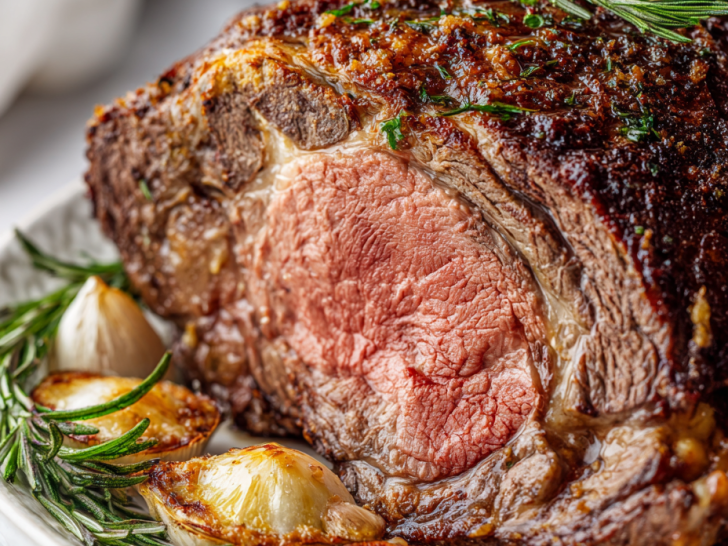
This prime rib recipe is about capturing the essence of holiday cooking—simple, honest, and deeply satisfying. I’ve always loved how the smell of roasting beef fills the house with warmth, stirring memories and anticipation. It’s a dish that demands patience but rewards with a tender, flavorful centerpiece that feels special but isn’t fussy.
Why I Keep Coming Back to This Roast
The slow, deliberate process of roasting and resting always rewards me with a tender, juicy bite. It’s a holiday tradition that feels familiar yet special each year, reminding me of family and quiet moments around the table. The aroma alone lifts spirits and builds anticipation, making every effort worth it. It’s a simple act of love, perfected over many Christmases.
Breaking Down the Ingredients for Perfectness
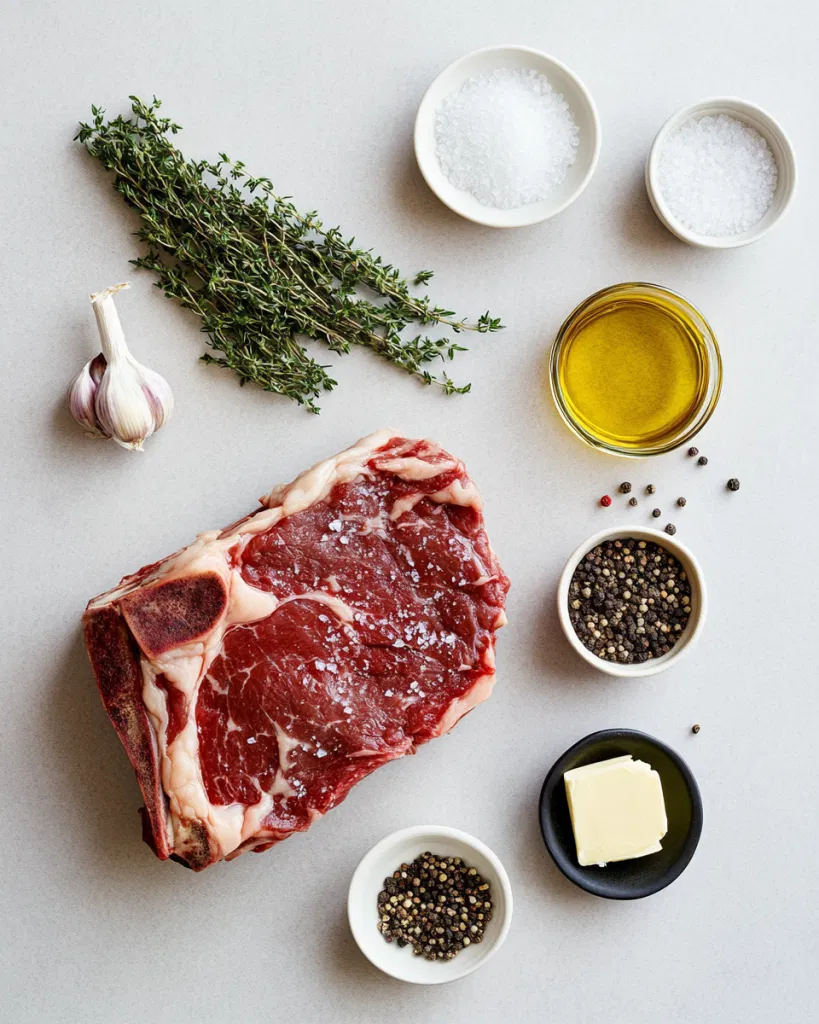
- Prime Rib Roast: The star—look for a well-marbled, bone-in cut for flavor and juiciness.
- Kosher Salt: Generous seasoning with coarse salt helps create a flavorful crust, essential for taste.
- Black Pepper: Freshly ground, it adds a peppery punch and complements the beef’s richness.
- Garlic Powder: A subtle layer of garlic aroma that deepens the savory profile.
- Olive Oil: A light brushing before searing enhances browning and flavor.
- Herbs (optional): Rosemary or thyme can add a fragrant note, but keep it simple if you prefer.
- Soy Sauce (optional): A splash adds umami and depth, especially if you’re feeling adventurous.
Tools of the Trade for a Prime Rib
- Roasting Pan with Rack: Ensures even heat distribution and allows fat to drain, preventing sogginess.
- Meat Thermometer: Accurately gauges internal temperature for perfect doneness.
- Heavy Skillet: Creates a flavorful crust through high-heat searing.
- Aluminum Foil: Helps resting and keeps the meat warm without steaming.
Crafting the Perfect Prime Rib: Step-by-Step
Step 1: Remove the prime rib from the fridge at least two hours before cooking. Let it sit at room temperature. This helps it cook evenly and stay juicy.
Step 2: Preheat your oven to 220°C (430°F). Season the meat generously with salt, pepper, and a touch of garlic powder. Don’t skimp on the salt; it’s the secret to a flavorful crust.
Step 3: Heat a heavy skillet over high heat until shimmering. Sear the prime rib on all sides until deeply browned, about 3-4 minutes per side. The smell of caramelizing meat should fill your kitchen.
Step 4: Transfer the roast to a roasting pan. Roast at 220°C (430°F) for about 15 minutes, then lower the temperature to 160°C (320°F). Continue roasting until the internal temperature reaches 50-52°C (122-125°F) for rare.
Step 5: Rest the meat for at least 20 minutes under loosely tented foil. This redistributes juices and keeps the meat tender. Carve against the grain and serve.
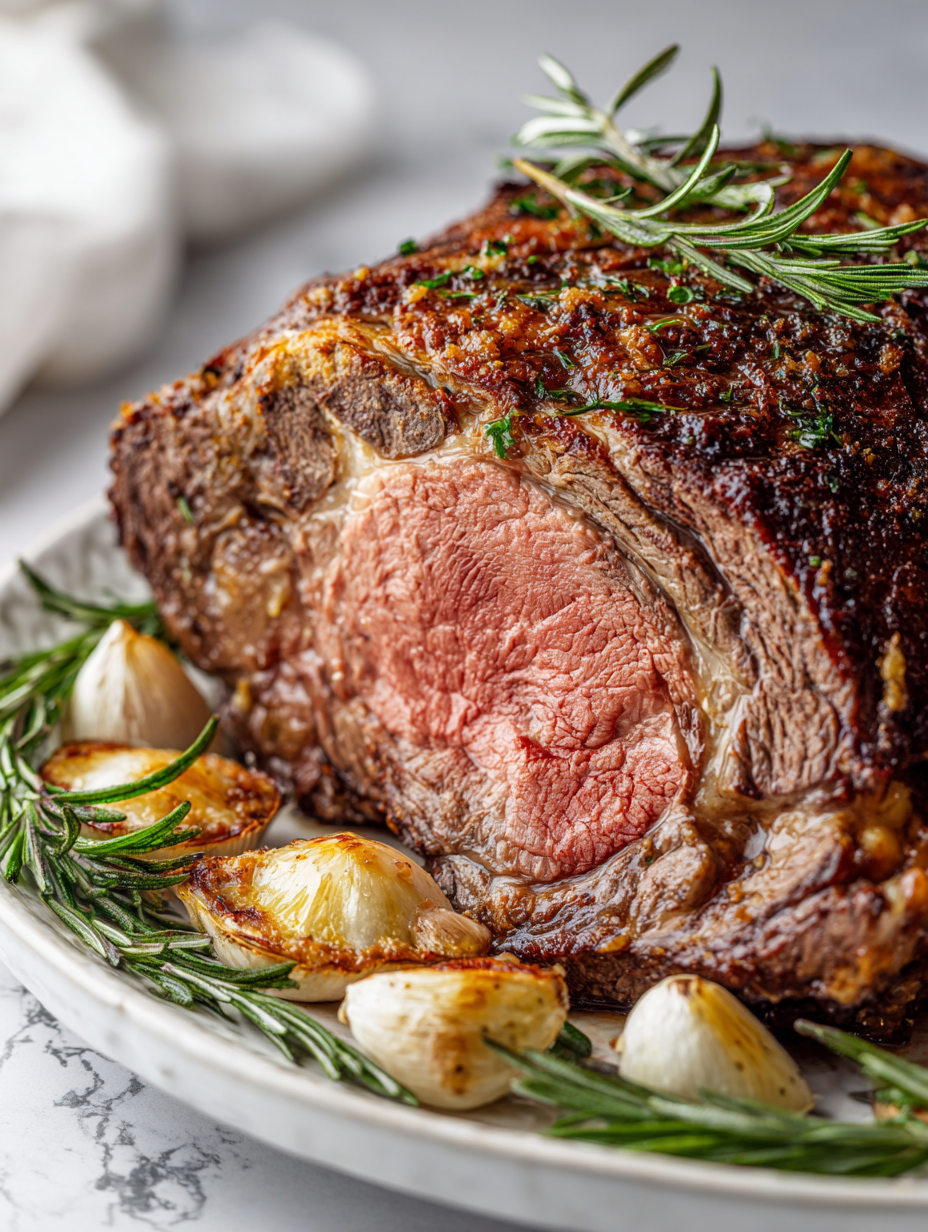
Classic Prime Rib Roast
Equipment
- Roasting pan with rack
- Meat thermometer
- Heavy skillet
- Aluminum foil
Ingredients
- 4-5 pounds Prime Rib Roast bone-in, well-marbled
- 2 tablespoons Kosher Salt generous amount for seasoning
- 1 teaspoon Black Pepper freshly ground
- 1 teaspoon Garlic Powder
- 1 tablespoon Olive Oil for searing
- Optional Herbs (Rosemary or Thyme) for added fragrance
- Splash Soy Sauce optional, for umami
Instructions
- Remove the prime rib from the fridge and let it sit at room temperature for about two hours. This helps it cook evenly and stay juicy.
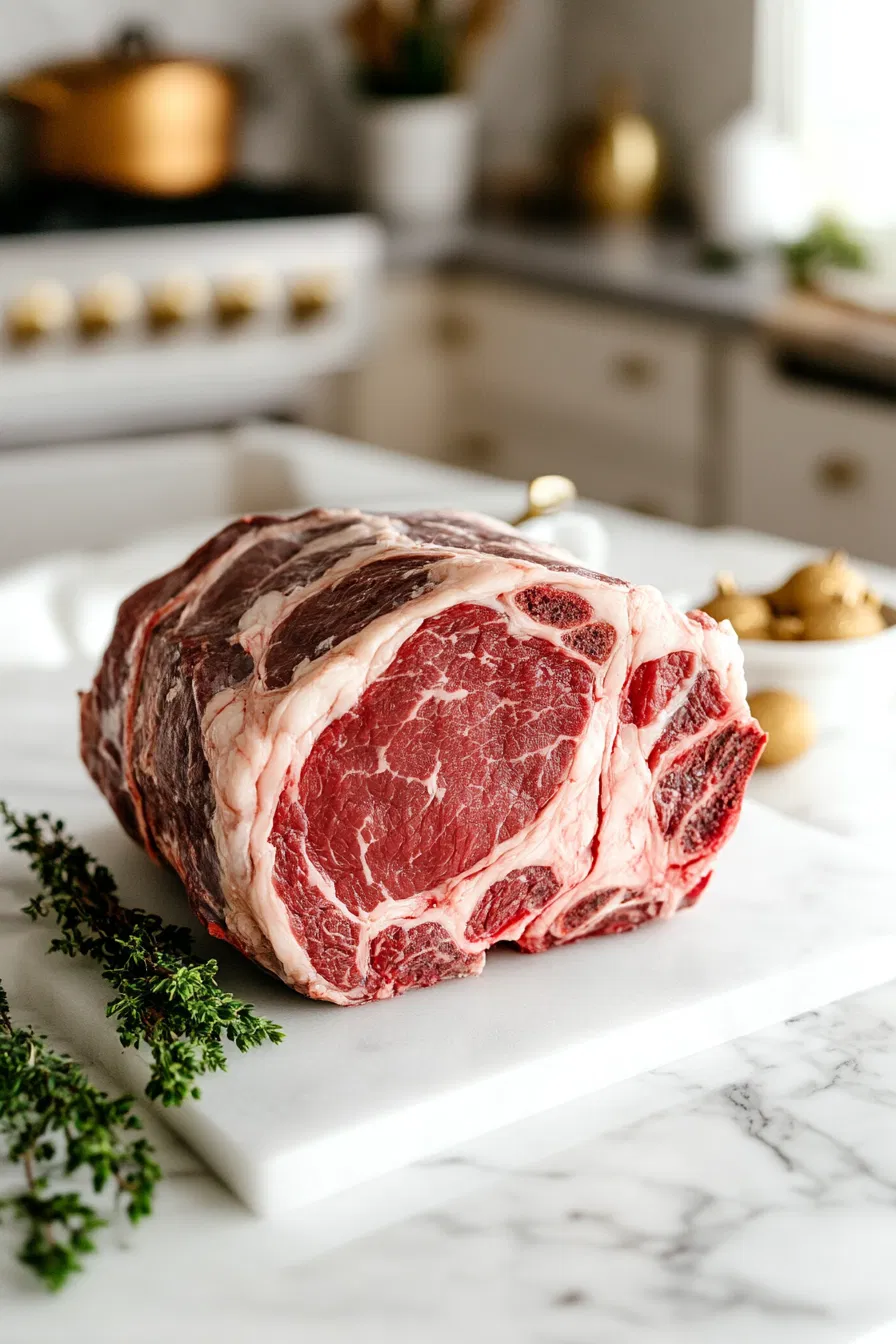
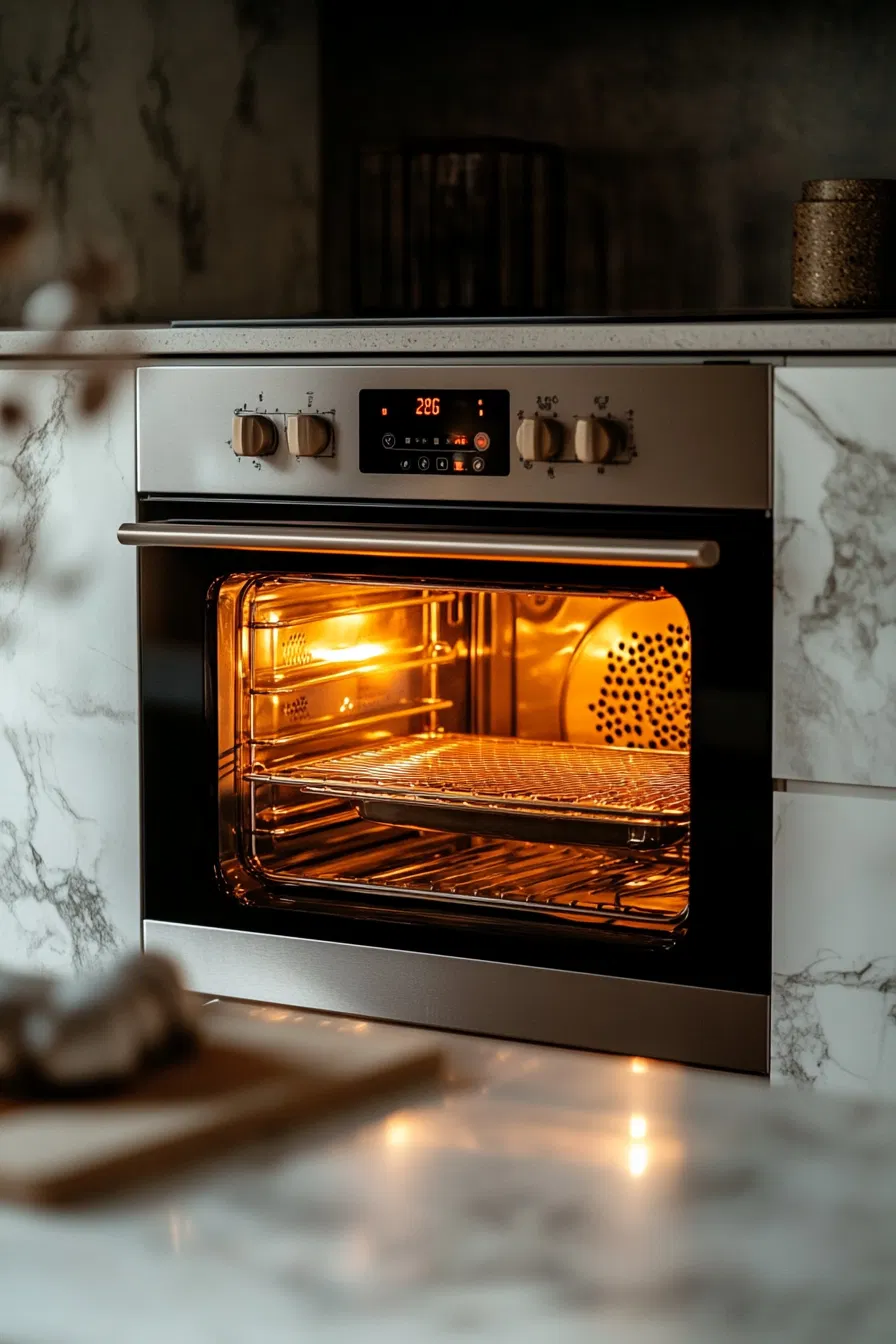
- Preheat your oven to 220°C (430°F). Meanwhile, pat the roast dry with paper towels; this helps achieve a good sear.
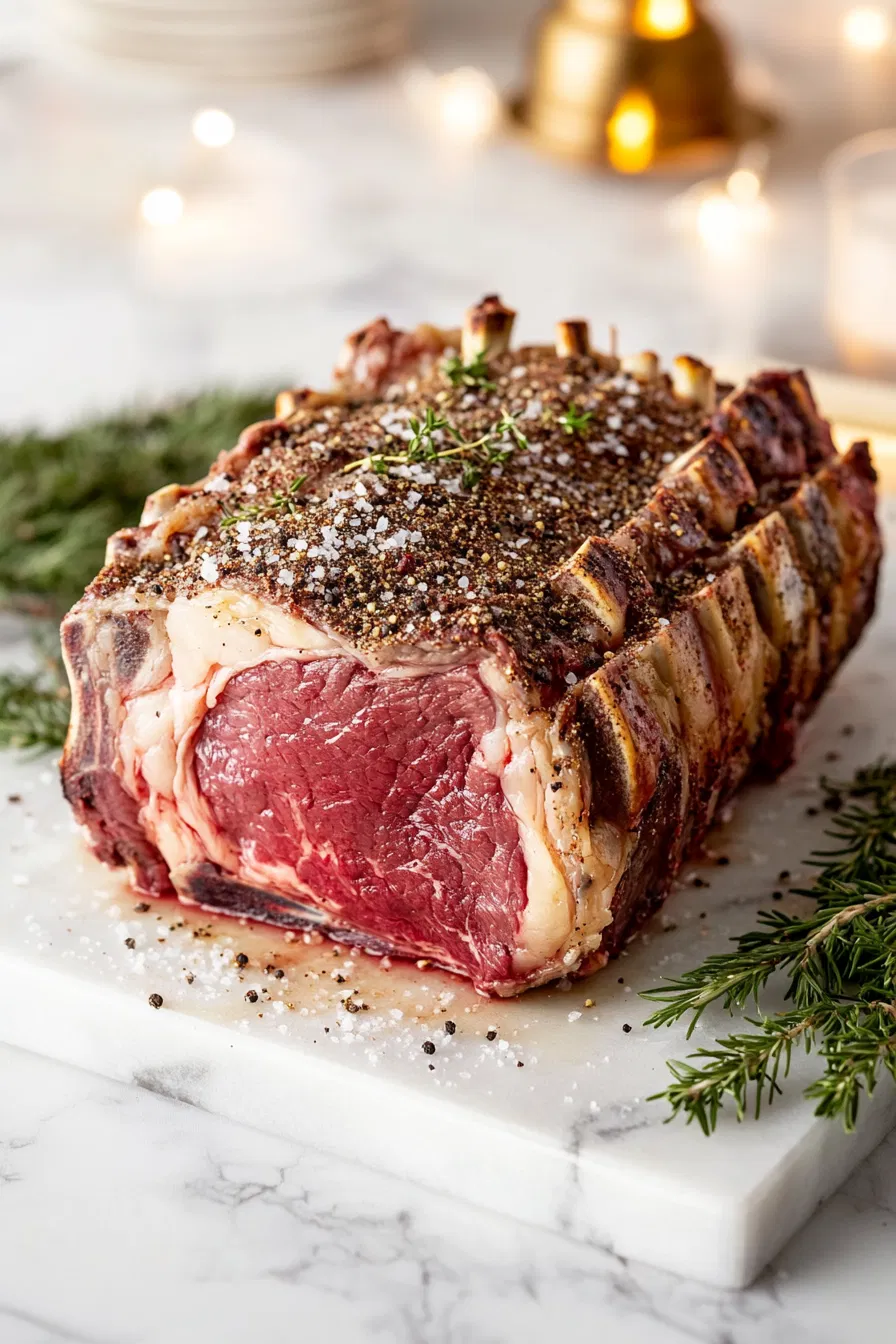
- Mix together the salt, pepper, and garlic powder, then rub the mixture all over the roast generously, especially on all sides to build a flavorful crust.
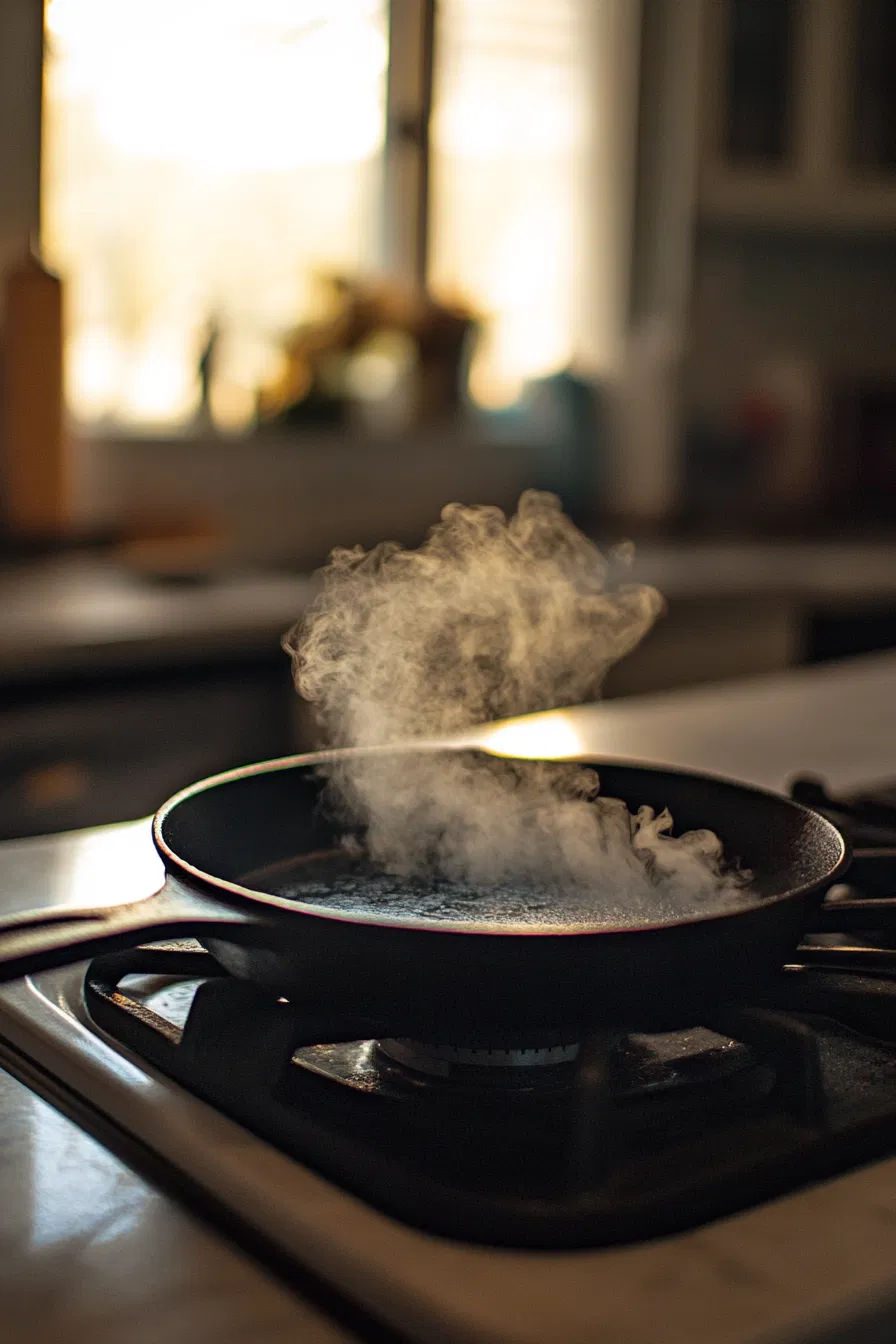
- Heat a heavy skillet over high heat until shimmering and slightly smoking. Brush the roast with olive oil to help it sear evenly.
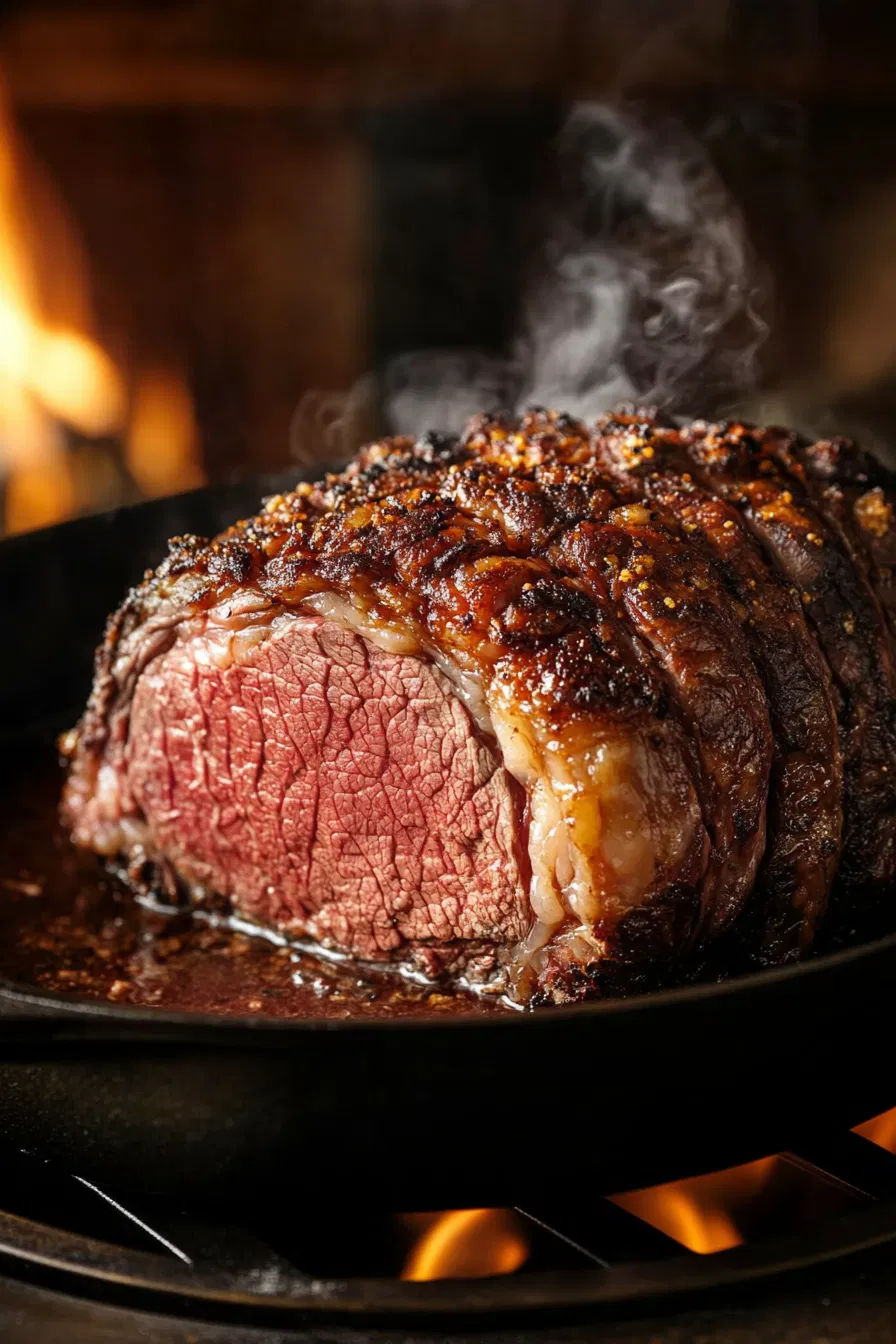
- Sear the prime rib on all sides, about 3-4 minutes per side, until deeply browned and fragrant. You should hear a satisfying sizzle and see a rich, caramelized crust forming.
- Transfer the seared roast to a roasting pan fitted with a rack. Insert a meat thermometer into the thickest part of the meat.
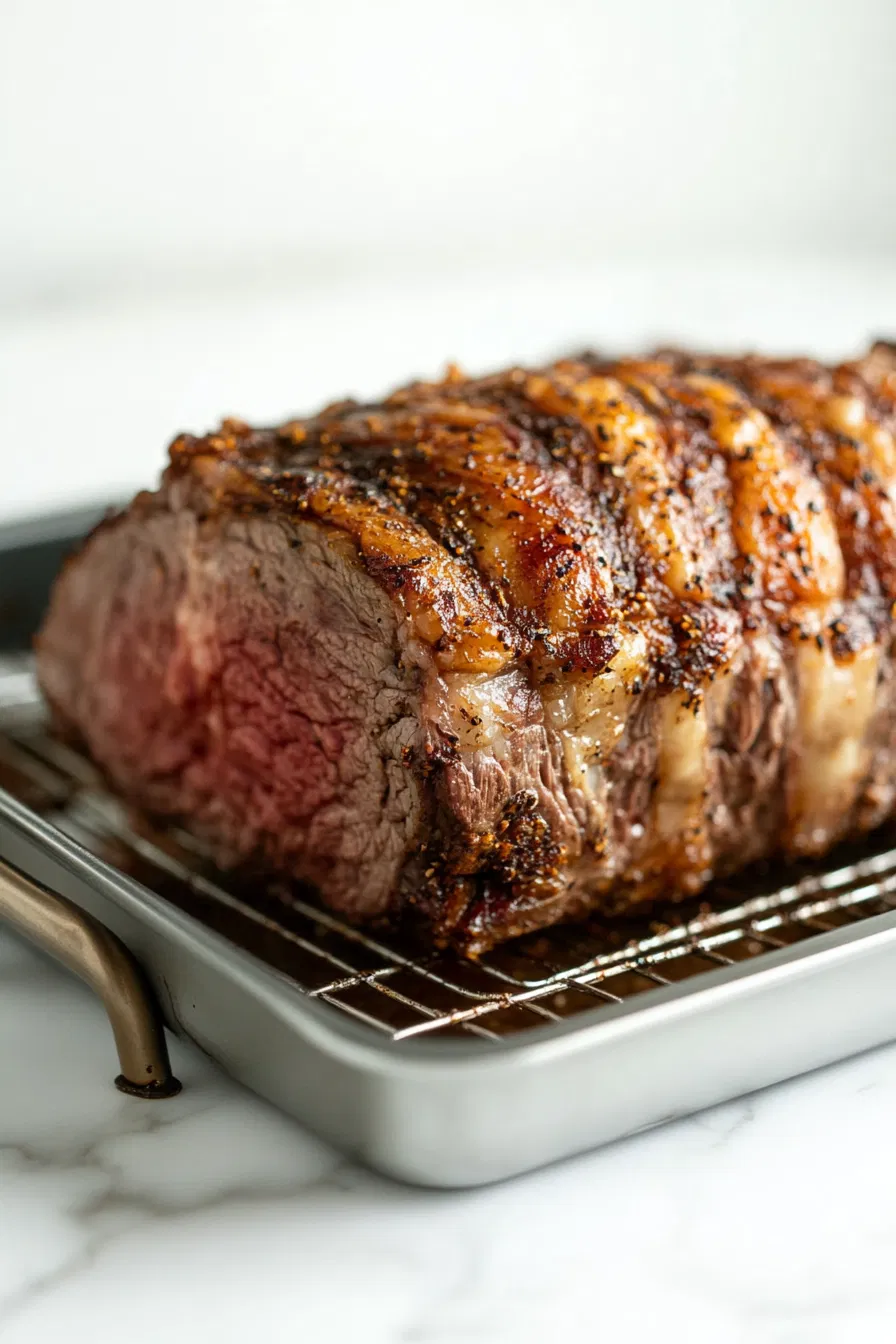
- Roast the meat at 220°C (430°F) for about 15 minutes, then reduce the oven temperature to 160°C (320°F). Continue roasting until the internal temperature reaches 50-52°C (122-125°F) for rare doneness, which takes about 60-75 minutes.
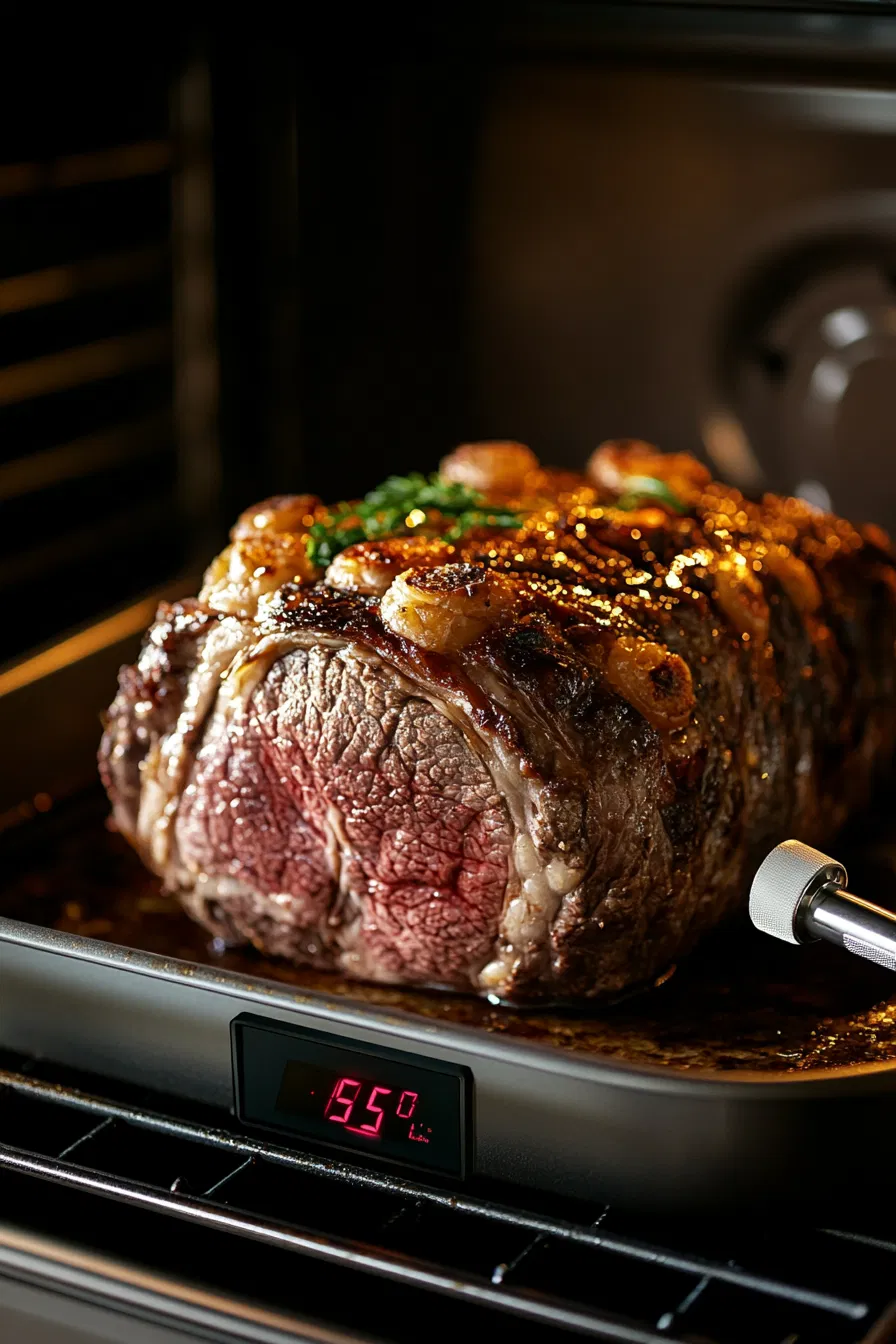
- Remove the roast from the oven and tent loosely with aluminum foil. Let it rest for at least 20 minutes; this allows the juices to redistribute, ensuring a tender, juicy bite.
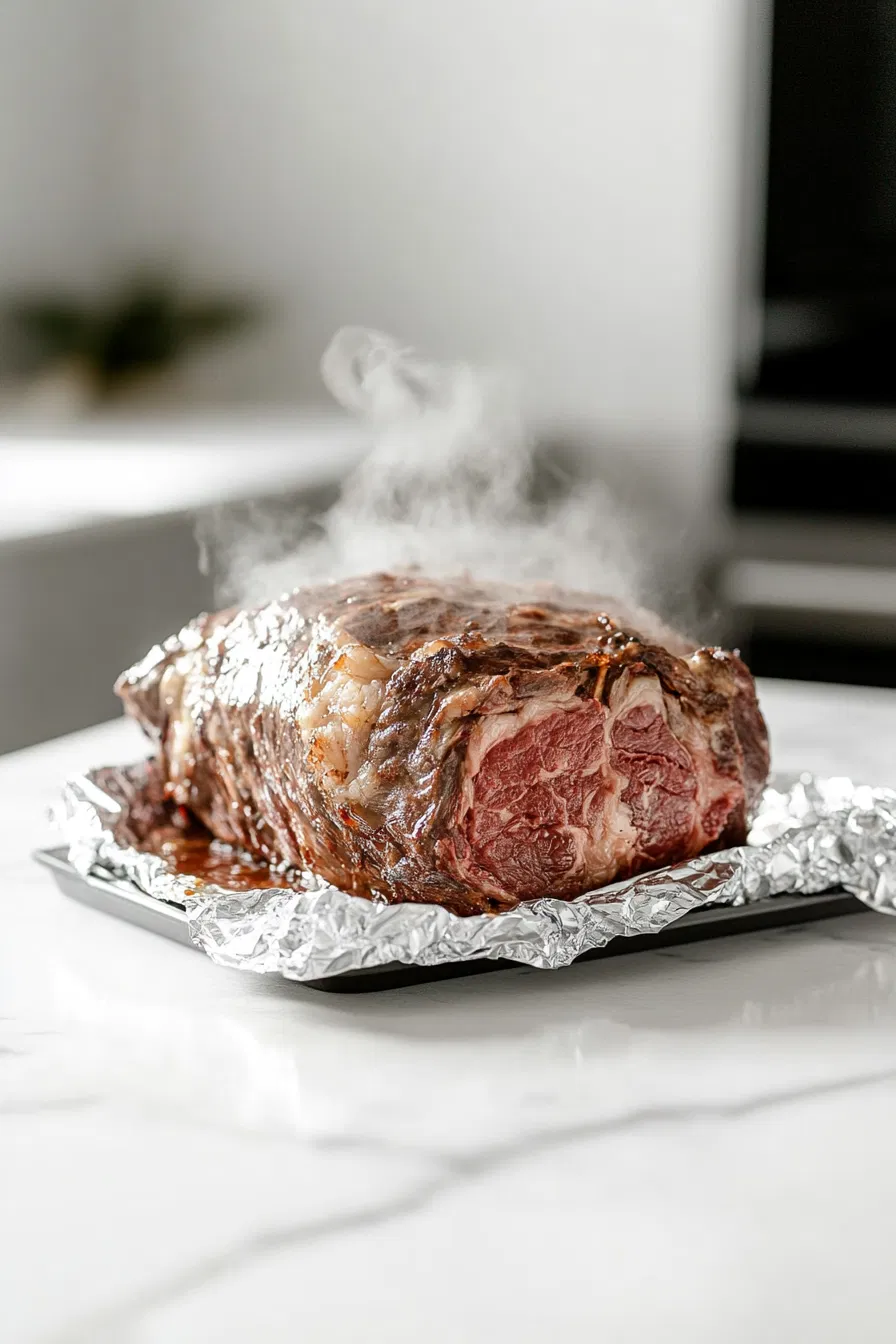
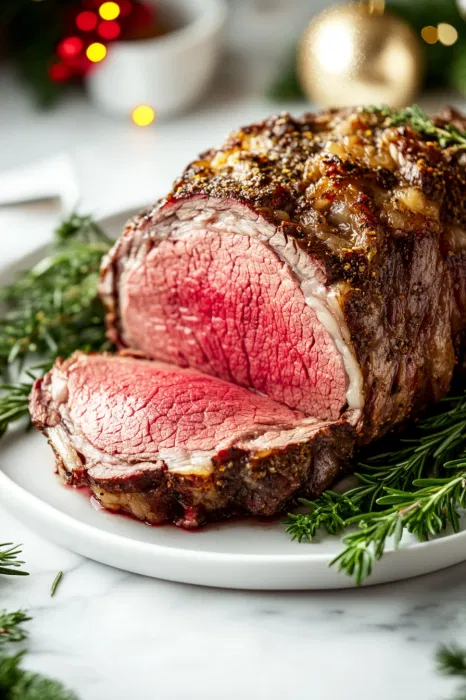
- Carve the prime rib against the grain into thick slices, revealing a rosy, succulent interior with a beautifully crusted exterior.
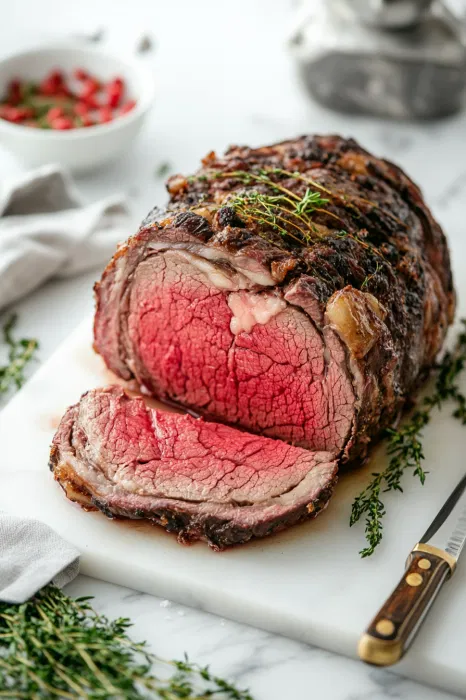
- Serve the slices warm, accompanied by your favorite sides, and enjoy the rich, tender flavor of this classic holiday centerpiece.
Nutrition
Cooking Checkpoints to Keep You on Track
- The crust should be deep golden and fragrant after searing.
- Internal temp hits 50-52°C (122-125°F) for perfect rare—use a reliable probe.
- Juices should run clear when you carve, not pink or cloudy.
- Meat should feel firm but give slightly when pressed—avoid overcooking.
Common Mistakes and How to Fix Them
- Cutting into the meat immediately after roasting.? Rest the meat properly to prevent juices from running out when sliced.
- Cooking until the meat is gray and dry.? Use a reliable thermometer to avoid overcooking.
- Burnt or uneven crust.? Ensure even searing by turning the meat regularly.
- Resting in a chilly room, making the meat tough.? Let the meat rest in a warm spot, not in a cold kitchen.
This recipe isn’t about perfection but about embracing the process—tender meat crusted with flavor, resting just long enough to lock everything in. Each slice should carry that satisfying richness, a reminder of the humble magic of good meat and simple seasonings. Feel free to tweak the seasonings to match your holiday mood, maybe a dash of rosemary or a smear of horseradish for extra punch. Enjoy every bite, knowing you’ve brought a bit of tradition to life in your own kitchen.