Honey Glazed Ham Recipe
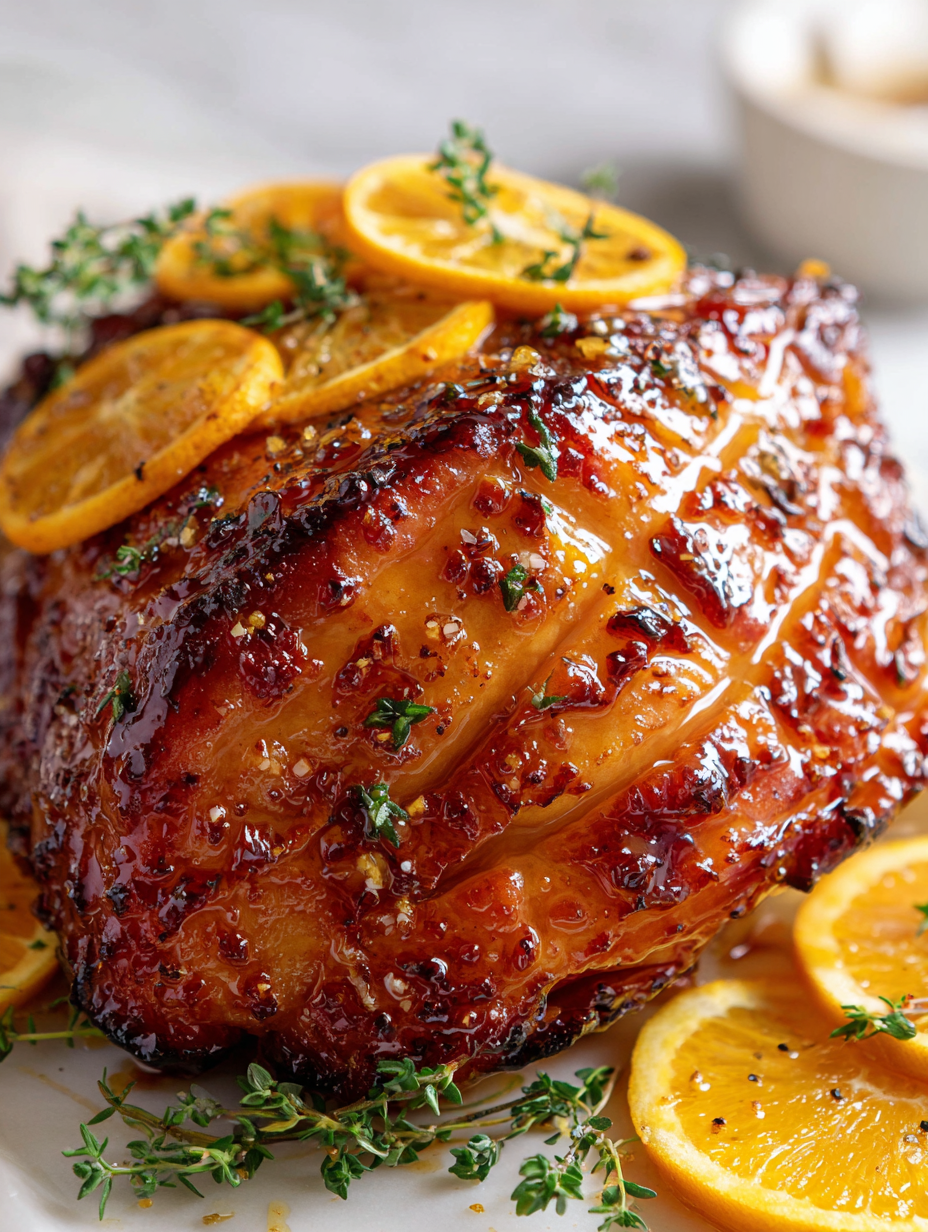
A great glazed ham is all about the contrast between juicy meat and a sticky, caramelized crust. This recipe uses a bright citrus and honey glaze to balance the saltiness of the roast, resulting in a centerpiece that looks as good as it tastes
Everything You’ll Need for the Feast
Choosing the right ingredients is 90% of the work. Here is what you need to know to ensure maximum flavor:
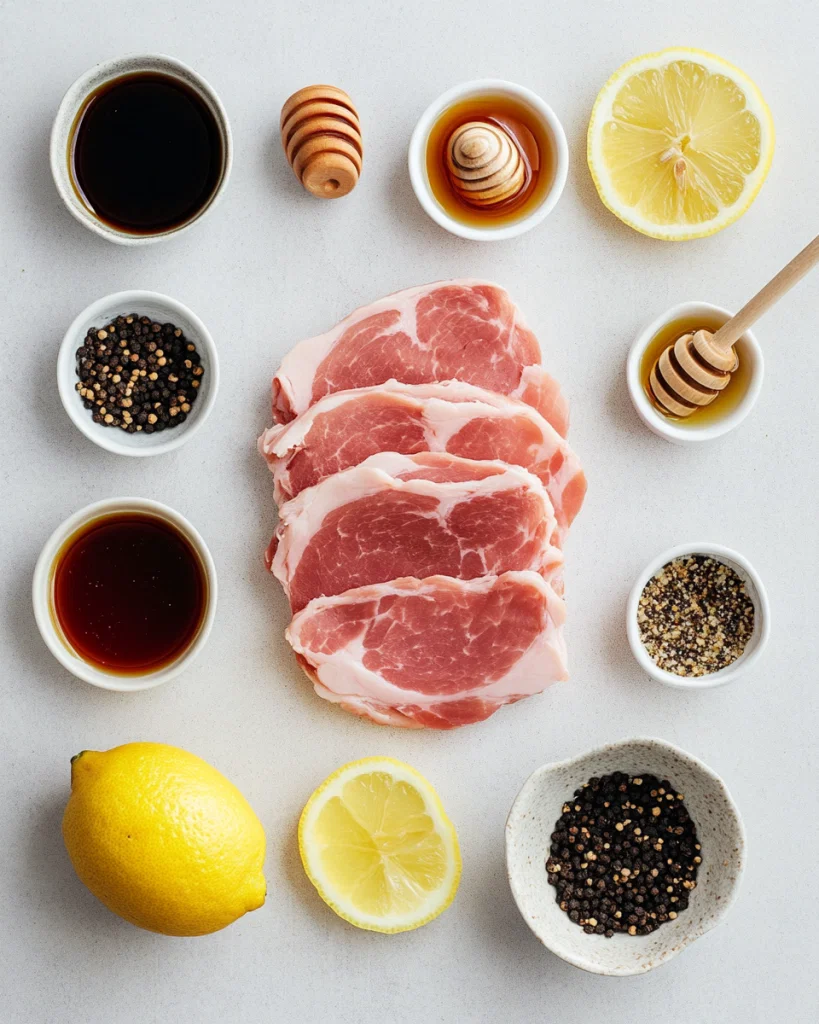
- The Ham: Look for a “City Ham” (wet-cured and smoked). A bone-in ham is highly recommended; the bone acts as a heat conductor, helping the center cook more evenly while adding extra depth to the flavor.
- The Sweetener: We use Amber Honey for its thick viscosity. Unlike thinner syrups, honey clings to the meat, creating that iconic “lacquered” look.
- The Acid (Dijon & Citrus): This is the most important part of the glaze. The mustard acts as an emulsifier to keep the glaze from separating, while the orange juice provides citric acid to cut through the salt and fat of the pork.
- The Spices: Cloves or Cinnamon aren’t just for smell—they provide an “earthy” base note that balances the high sugar content of the honey.
Citrus Honey Glazed Ham
Equipment
- Oven
- Sharp Knife
- Basting Brush
- Roasting pan
Ingredients
- 1 bone-in or boneless ham preferably whole, about 4-5 kg
- 1/2 cup water
- 1/2 cup honey for glazing and caramelization
- 2 tbsp Dijon mustard adds tang and depth
- 1/2 cup orange juice brightens the glaze with citrus flavor
- 2 tbsp brown sugar optional, for extra sweetness
- 1/4 tbsp cloves or cinnamon for warmth and aroma
Instructions
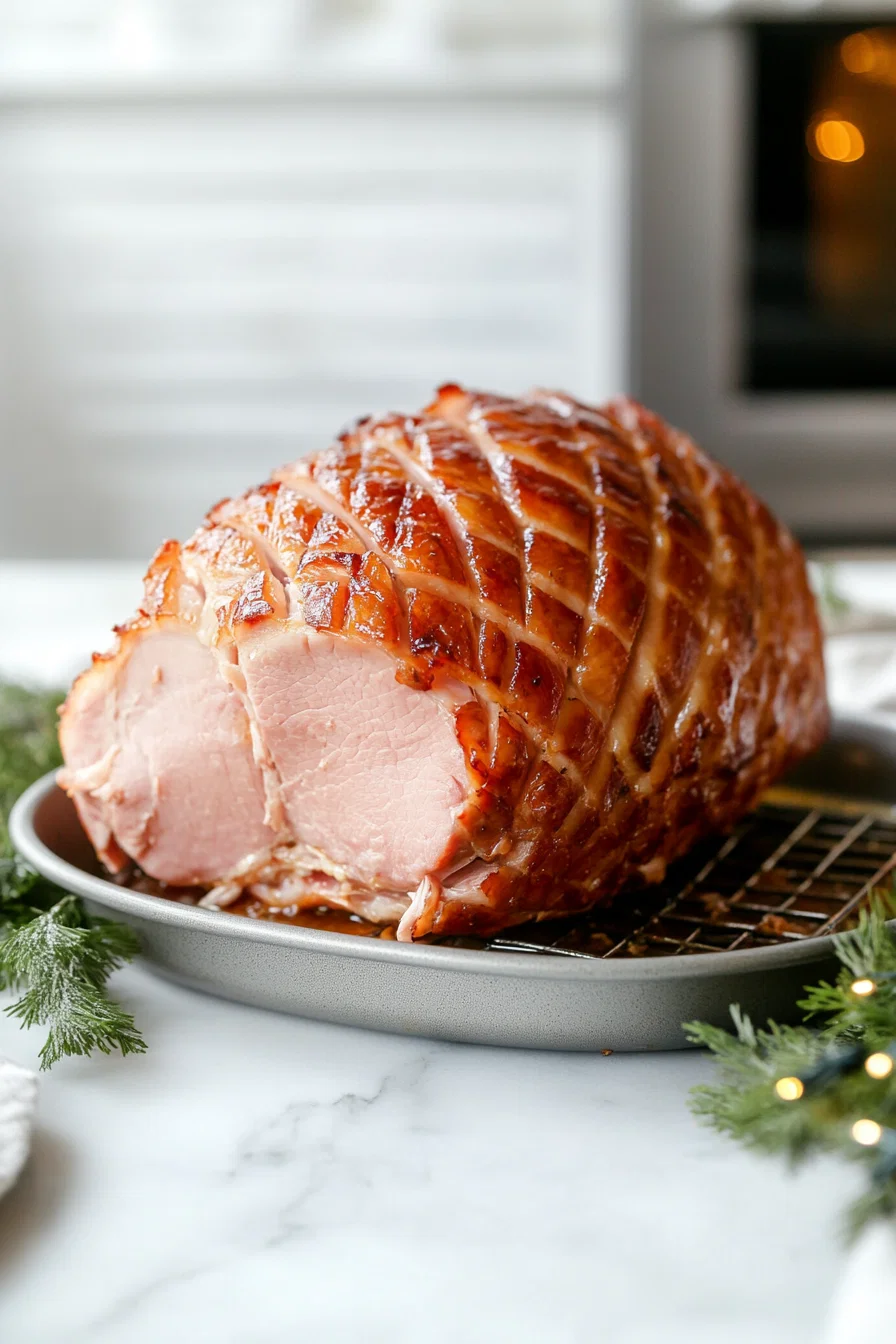
- Preheat your oven to 165°C (330°F). Place the ham on a cutting board and score the skin in a diamond pattern, about 0.5 cm deep, to help the glaze soak in and create a decorative look.
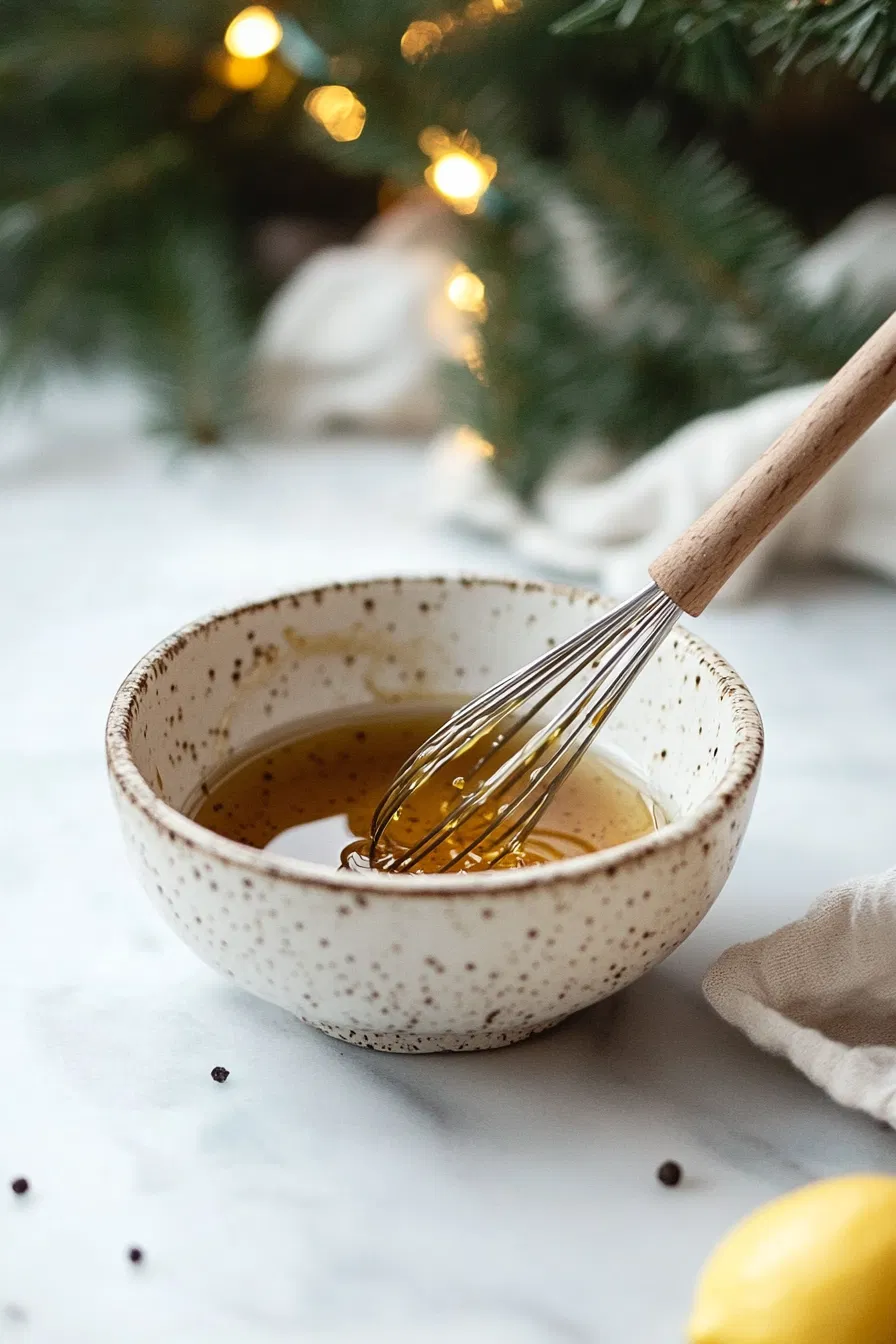
- In a bowl, whisk together honey, Dijon mustard, orange juice, and brown sugar until well combined. This mixture will become the flavorful glaze that coats the ham.
- Use a basting brush to generously apply the glaze over the scored ham, making sure to get into all the crevices. This first coat will start the flavor infusion.
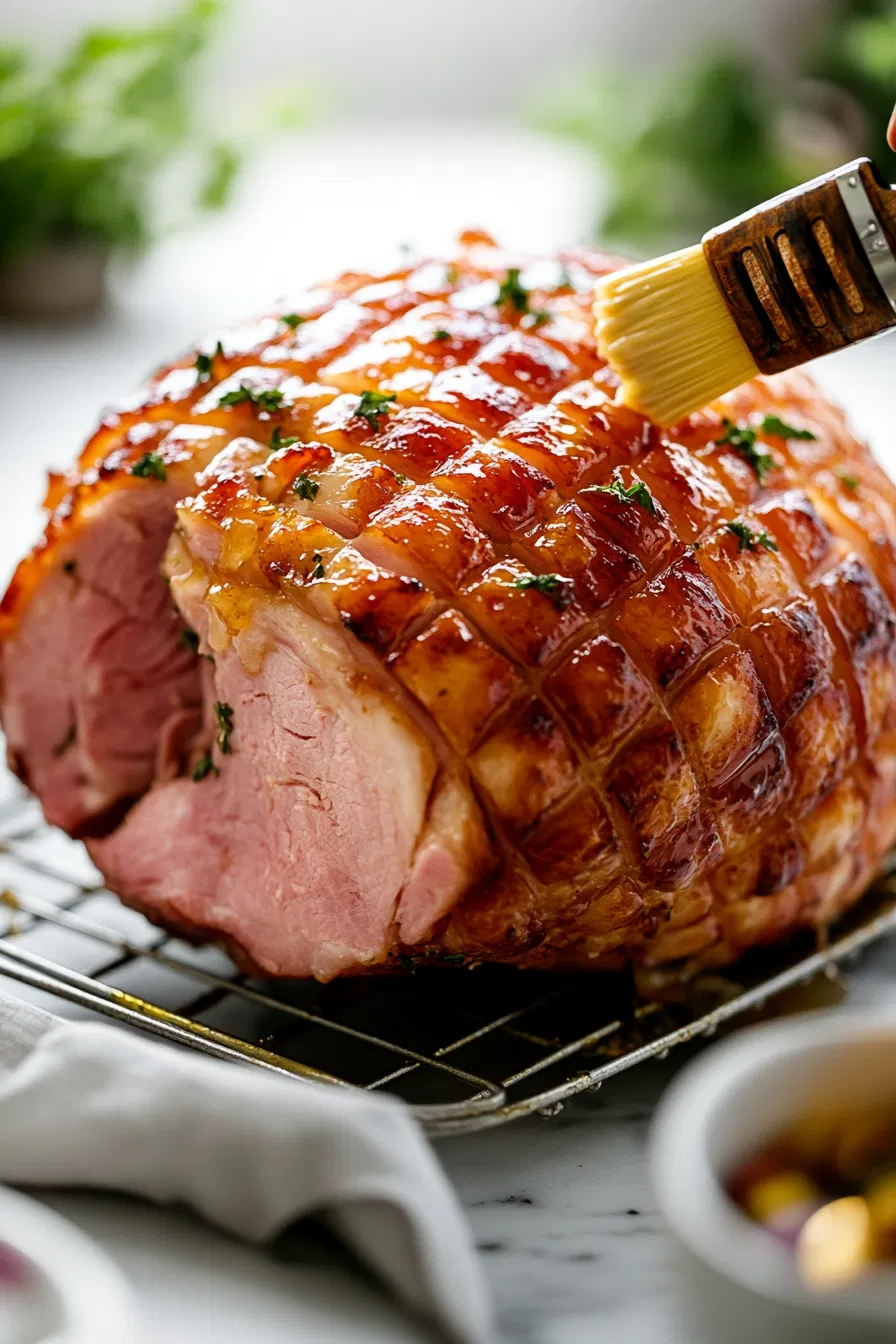
- Place the ham in a roasting pan and bake uncovered for about 1.5 to 2 hours, basting with the remaining glaze every 30 minutes. The aroma of citrus and honey will fill your kitchen as the glaze begins to caramelize.
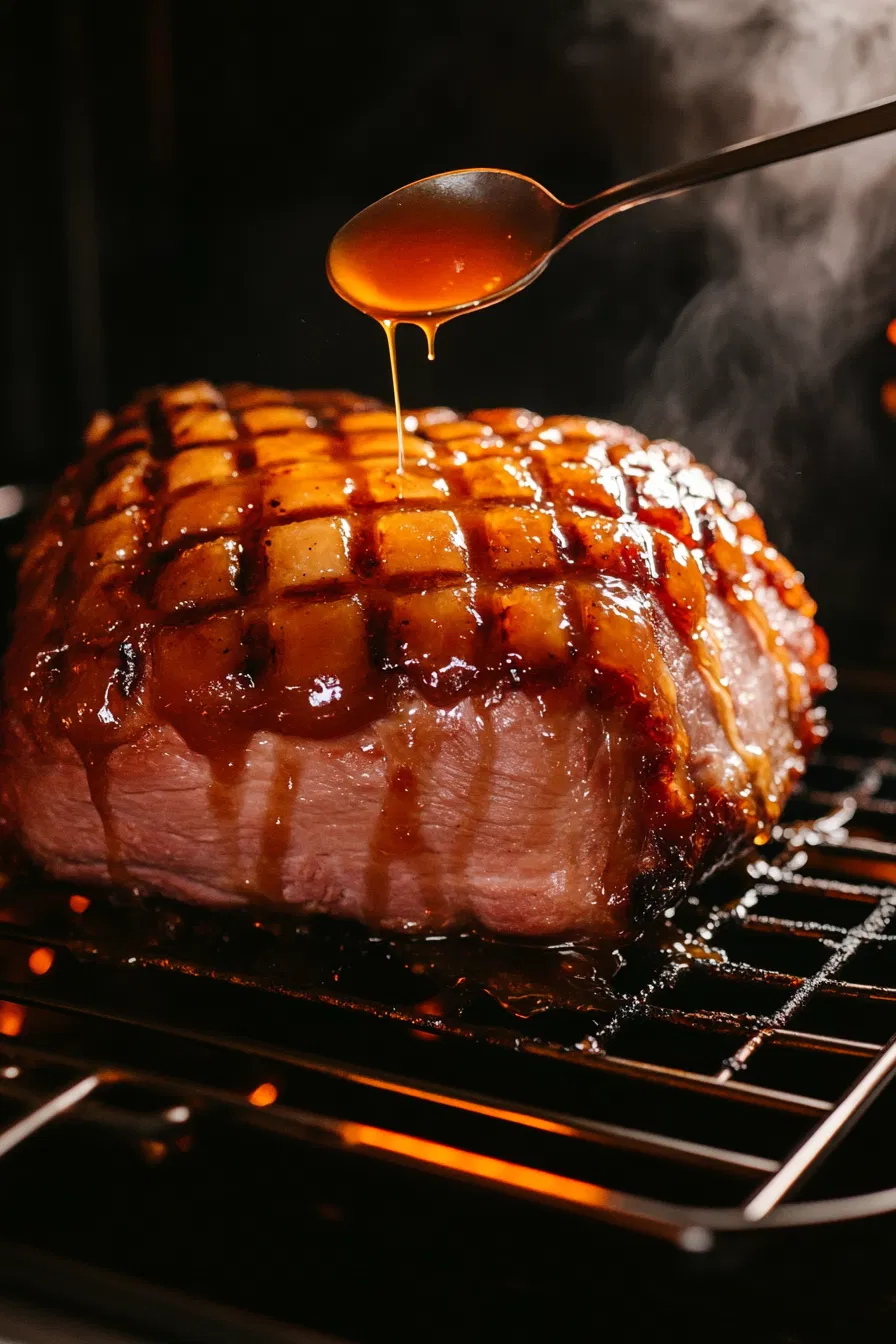
- During the last 20 minutes of baking, increase the oven temperature to 200°C (390°F) to help the glaze bubble and turn a rich, golden brown. Keep an eye on it to prevent burning.
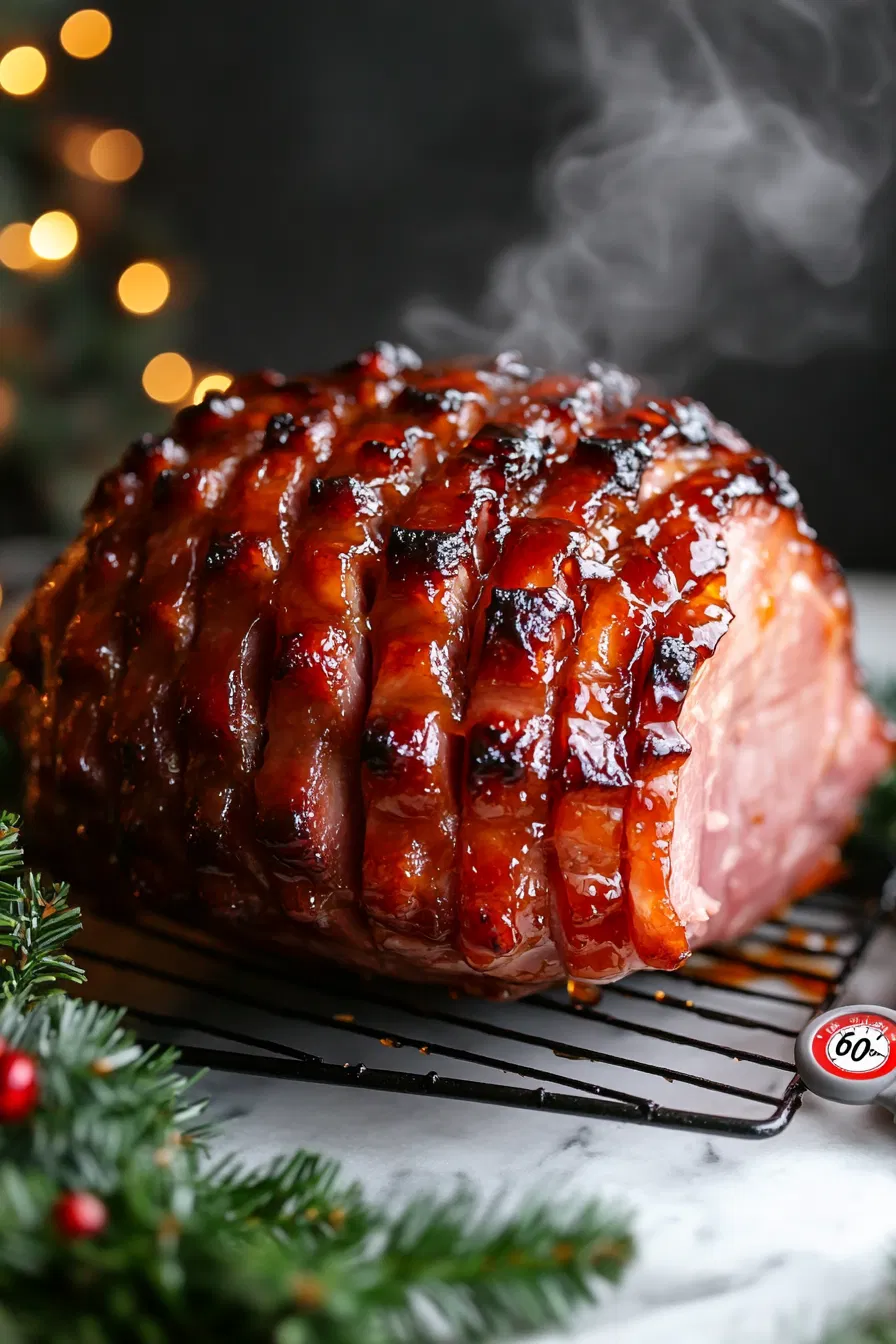
- Once the glaze is bubbling and the edges are caramelized, remove the ham from the oven and let it rest for about 15 minutes. This allows the juices to redistribute and makes slicing easier.

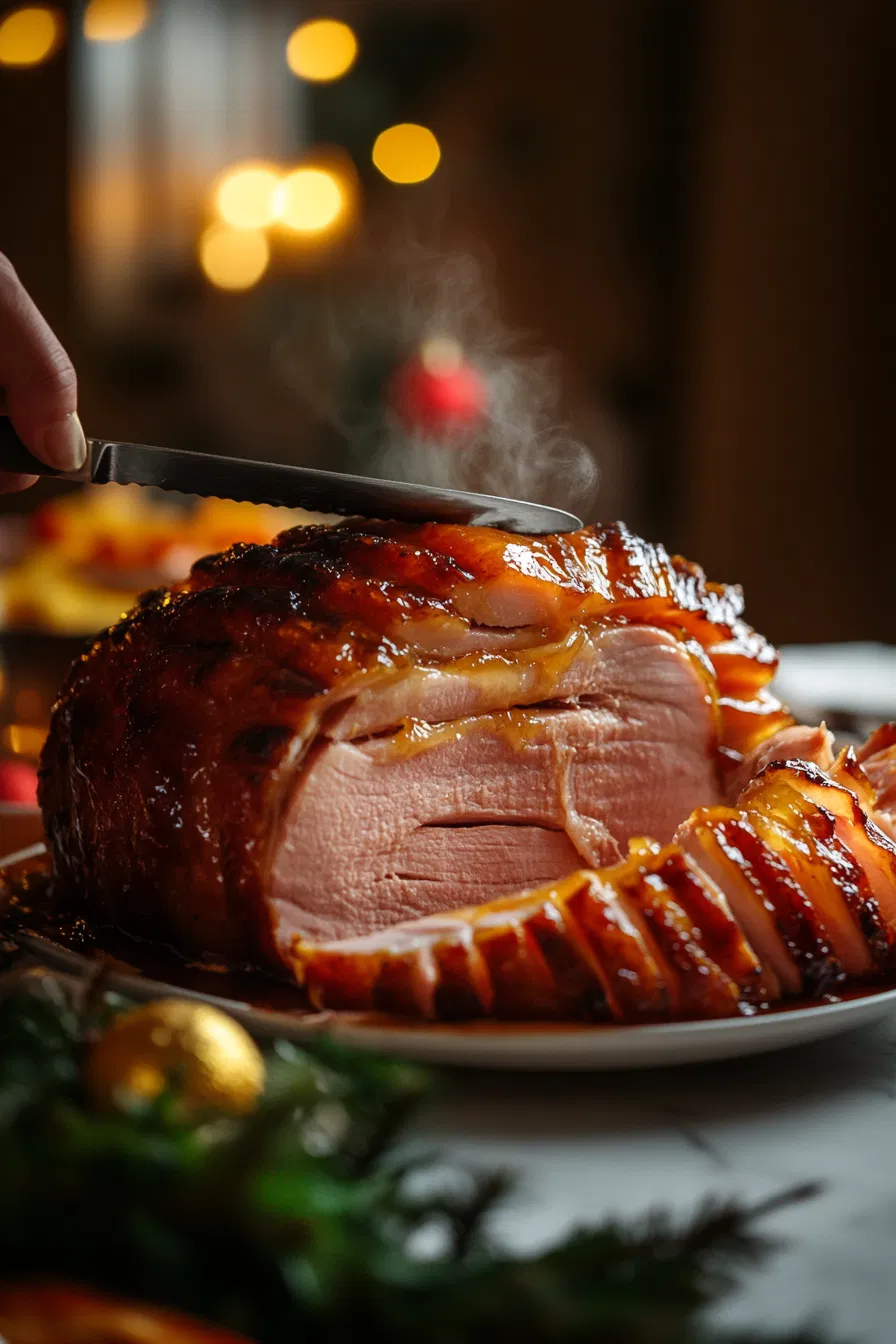
- Slice the ham into thick, juicy pieces, revealing a tender interior with a glossy, flavorful crust. Drizzle any extra glaze over the slices for added shine and flavor.
Nutrition
Pro-Tips for Final Adjustments
Even a perfectly timed roast may need a few final touches to suit your palate. Use these professional “fixes” to balance your flavors before serving:
- To Balance Excess Sweetness: If the honey glaze feels too heavy, whisk a teaspoon of Dijon mustard or a splash of fresh orange juice into the pan drippings. The acidity will instantly cut through the sugar.
- To Rescue Dry Edges: If the outer slices feel overcooked, slice the ham thinly and arrange it on a warm platter, then spoon the hot pan juices directly over the meat to restore its tender texture.
- To Enhance the Aroma: If the festive scent is missing, brush the warm slices with a “glaze boost”—a tablespoon of honey mixed with a tiny pinch of fresh cinnamon or cloves right before it hits the table.
Chef’s Secret: “The secret to a melt-in-your-mouth bite isn’t just the glaze—it’s slicing against the grain. It breaks up the muscle fibers, making every cut feel incredibly tender.”
Preparation & Storage: The Stress-Free Guide
Efficiency is the key to a professional holiday meal. Use these timelines to keep your roast fresh and flavorful:
- Advanced Prep: You can whisk the honey-citrus glaze together up to 24 hours in advance. Store it in a sealed glass jar in the refrigerator; a quick 10-second stir is all it needs before brushing.
- Optimal Refrigeration: Leftovers remain at peak quality for 4 days. For the best results, store the ham in thick slices to prevent the meat from drying out.
- The “Moisture-First” Reheat: To avoid rubbery leftovers, place slices in a baking dish with a splash of water or broth and cover tightly with foil. Warm at a low temperature (130°C) to recreate the steam effect from the original bake.

The Ham Edit: Our Top-Rated Recipes
Frequently Asked Questions
- Can I use a boneless ham for this recipe? Absolutely. While a bone-in ham offers more flavor and better heat distribution, a boneless ham is much easier to carve and serves a larger crowd quickly. Reduce your initial baking time by 10–15 minutes as boneless cuts tend to heat through faster.
- Is the brown sugar mandatory? No. The honey provides the primary sweetness and “stickiness.” The brown sugar is added solely for a deeper, molasses-like caramelization and a darker mahogany color. You can omit it for a lighter, brighter citrus glaze.
- Can I substitute lemon or lime for the orange juice? Yes, but use them sparingly. Lemon and lime are significantly more acidic than orange juice. If swapping, use half the amount and add a tablespoon of water or extra honey to balance the sharpness.
- How long should the ham rest before carving? Patience is key. Let the ham rest for at least 15–20 minutes tented loosely with foil. This allows the internal juices to redistribute; if you slice too early, the moisture will run out, leaving the meat dry.
- My glaze is too thin; how do I thicken it? If your glaze isn’t clinging to the ham, simmer it in a small saucepan over medium heat for an extra 3–5 minutes before the final basting. This evaporates excess water and creates a thick, syrupy consistency that “sets” beautifully in the oven.

Hi, I’m Austin. Every recipe you’ll find here is carefully tested, photographed, and created to help you cook with confidence…..
know more