Perfect Sheet Pan Hawaiian Chicken Recipe!

This Sheet Pan Hawaiian Chicken brings sweet pineapple, colorful bell peppers, red onion, and tender chicken together in a sticky, savory-sweet sauce. The combination of brown sugar, soy sauce, garlic, and fresh ginger gives the dish a tropical-inspired flavor, while a touch of crushed red pepper adds gentle heat.
It’s a handy weeknight dinner because everything cooks on one sheet pan, leaving you with less cleanup and plenty of flavor. The key to getting the best results is spreading the ingredients evenly, managing the sauce’s moisture, and giving the chicken enough room to caramelize instead of steam.
I love serving this over fluffy Basmati Rice or pairing it with a chilled Peach Mojito when I’m feeling fancy but it’s just as good on its own.
The Secret to a Thick, Glossy Hawaiian Sauce

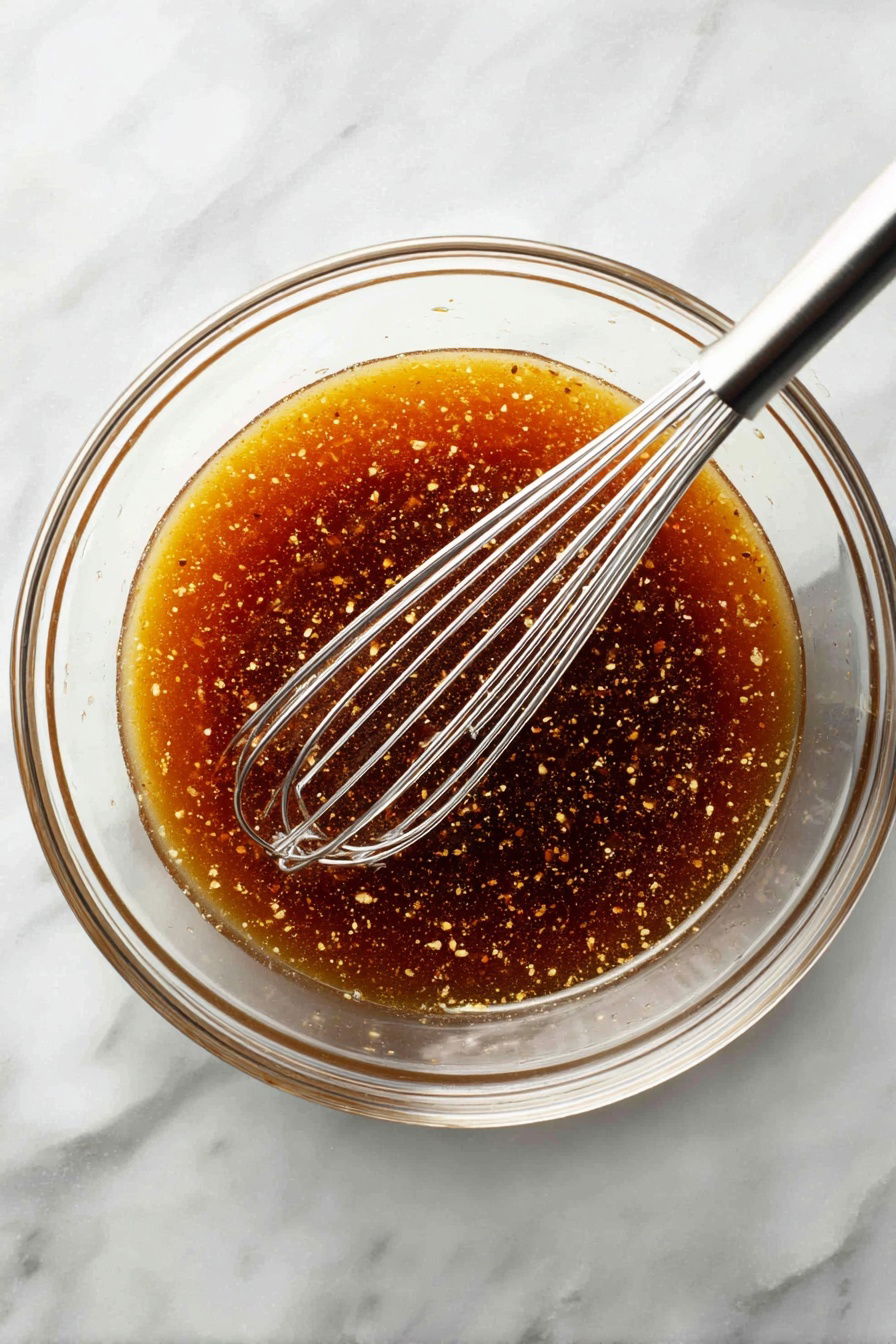
The sauce brings together several different flavors. Soy sauce adds saltiness and umami, brown sugar contributes sweetness, pineapple juice adds fruity acidity, and garlic and ginger provide a savory aromatic base.
Cornstarch is especially important because it helps the sauce thicken as it heats. Whisk it thoroughly into the liquid ingredients before tossing everything together, making sure there are no dry lumps.
As the mixture roasts, the sauce coats the chicken and vegetables and begins to concentrate. The sugar helps create caramelized edges, but it can also brown quickly, so keep an eye on the pan toward the end of cooking.
A useful tip: If you’re using canned pineapple, reserve some of its juice for the sauce as specified in the recipe. Drain the pineapple pieces well enough that they don’t introduce unnecessary liquid to the pan.
Sheet Pan Hawaiian Chicken Recipe
Equipment
- Large mixing bowl
- Whisk or Spoon
- Baking sheet (sheet pan)
- Parchment paper or foil (optional for easy cleanup)
- Oven
Ingredients
- 1 ½ lbs chicken breasts cut into 1½ inch cubes
- 1 red bell pepper cut into strips, (about 1½ inches long by ¾ inch wide)
- 1 orange or yellow bell pepper cut into strips, (about 1½ inches long by ¾ inch wide)
- ½ large red onion cut into strips
- 1 cup diced pineapple (fresh or canned)
SAUCE:
- ⅓ cup low-sodium soy sauce
- ¼ cup brown sugar packed
- 2 Tablespoons Worcestershire sauce
- 2 Tablespoons pineapple juice (from the can if using canned; freshly squeezed if using fresh)
- 1 Tablespoon cornstarch
- 1 Tablespoon olive oil
- 1 teaspoon fresh ginger (I use a fresh minced ginger paste from the store)
- 1 teaspoon minced garlic (about 2 cloves)
- ¼ teaspoon crushed red pepper
Instructions
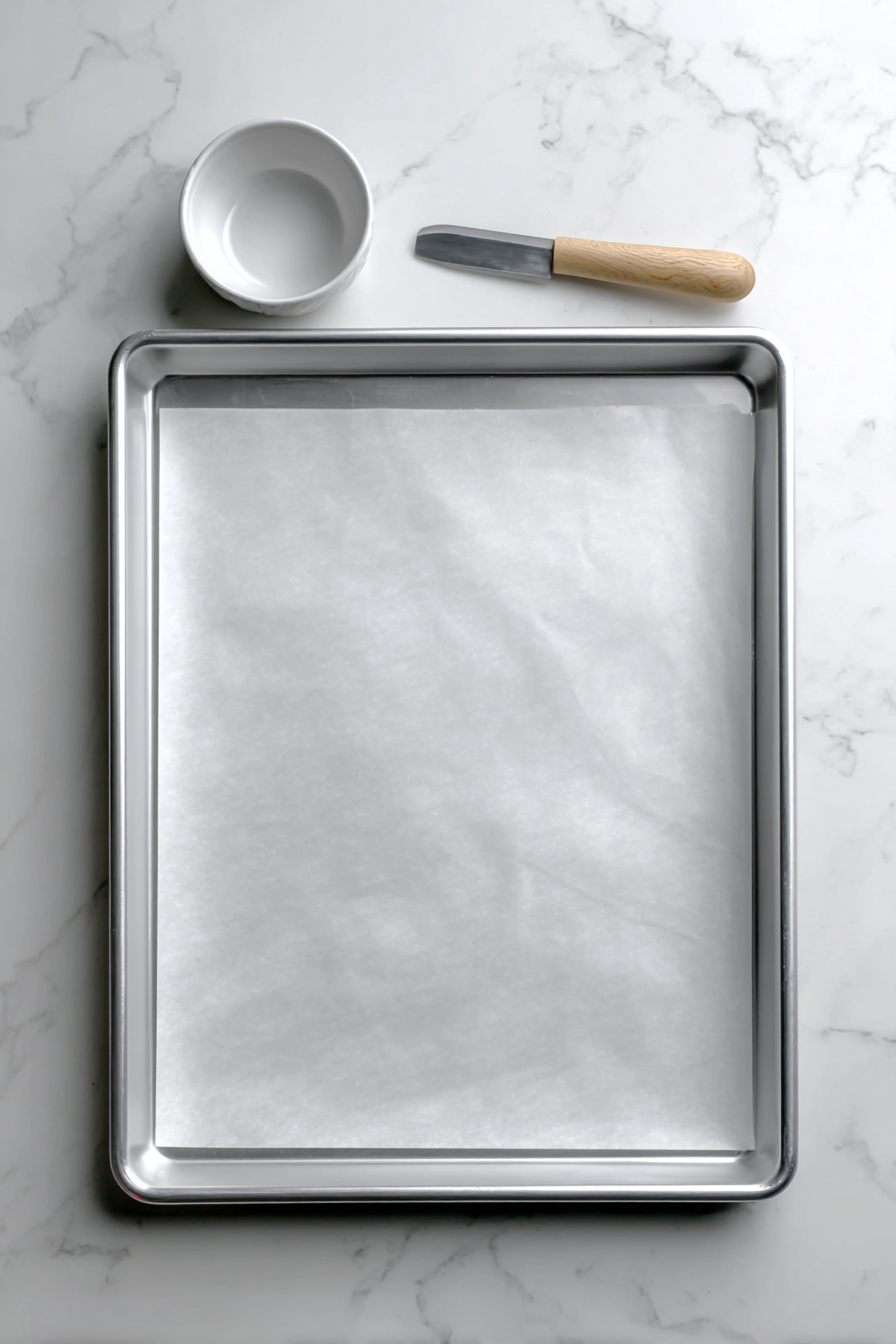
- Preheat oven to 400°F (200°C) and line a baking sheet with parchment or foil.
- In a bowl, whisk together soy sauce, brown sugar, Worcestershire, pineapple juice, cornstarch, olive oil, ginger, garlic, and crushed red pepper.
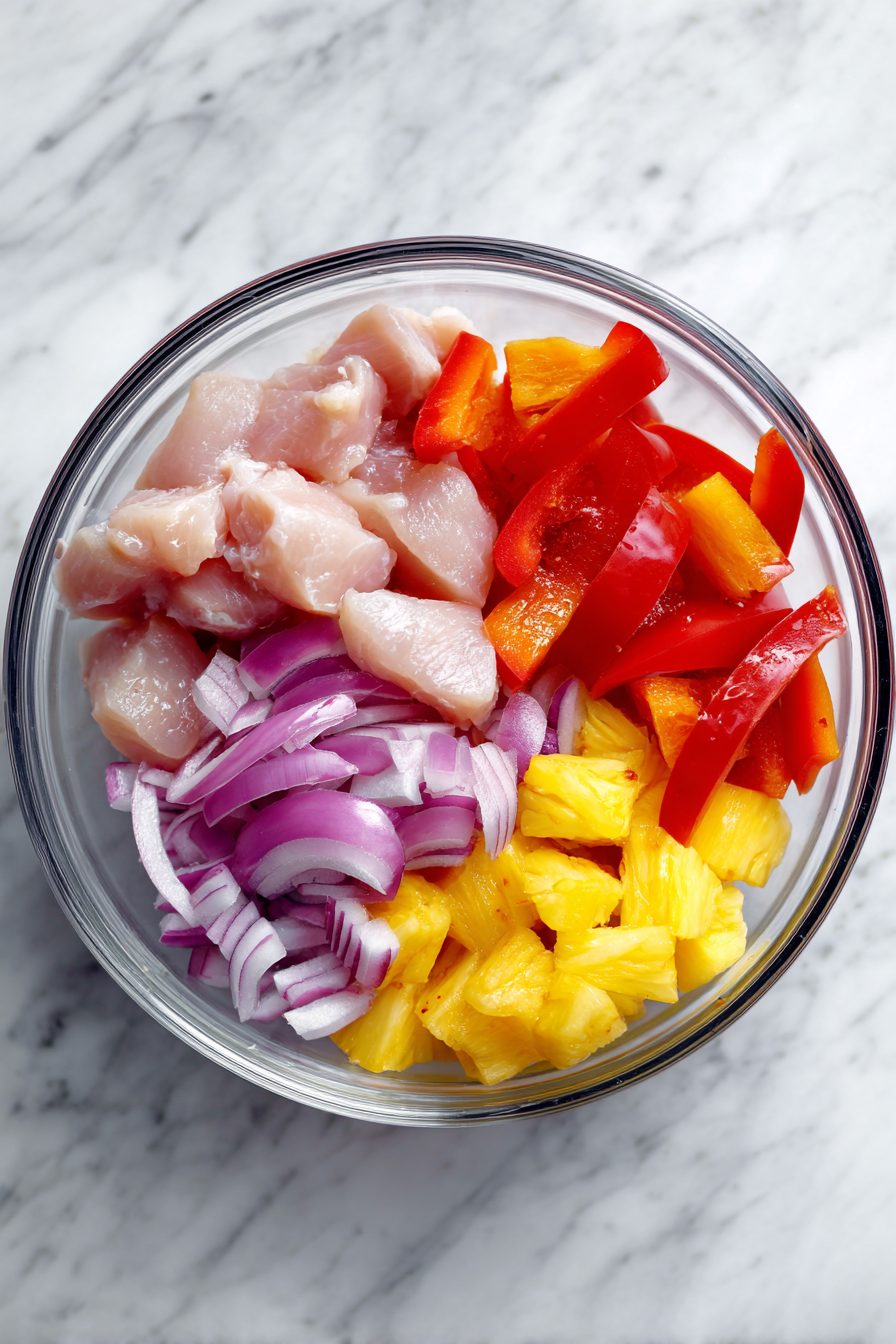
- Add diced chicken, peppers, onion, and pineapple to the bowl and toss to coat.
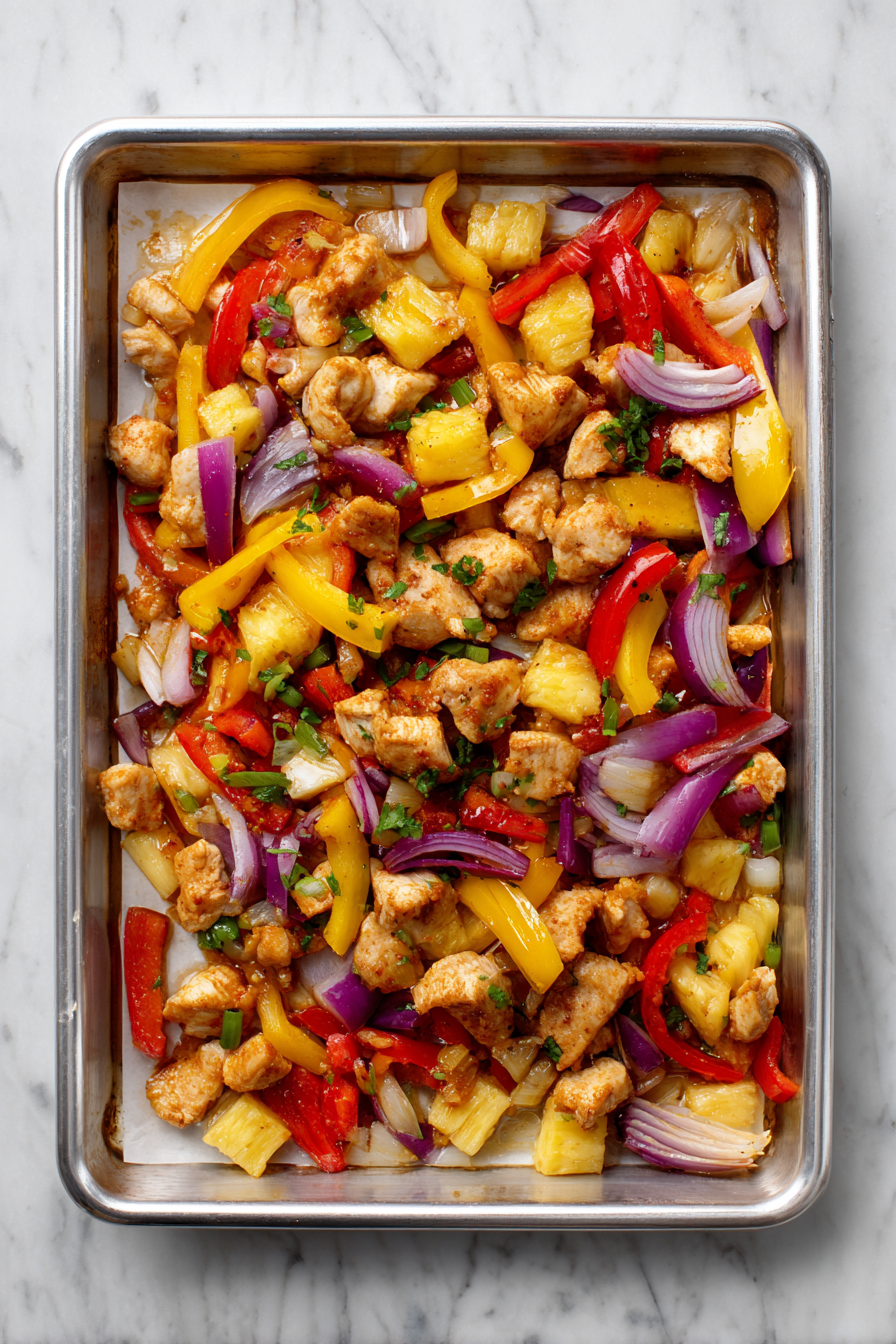
- Spread everything evenly on the prepared sheet pan.
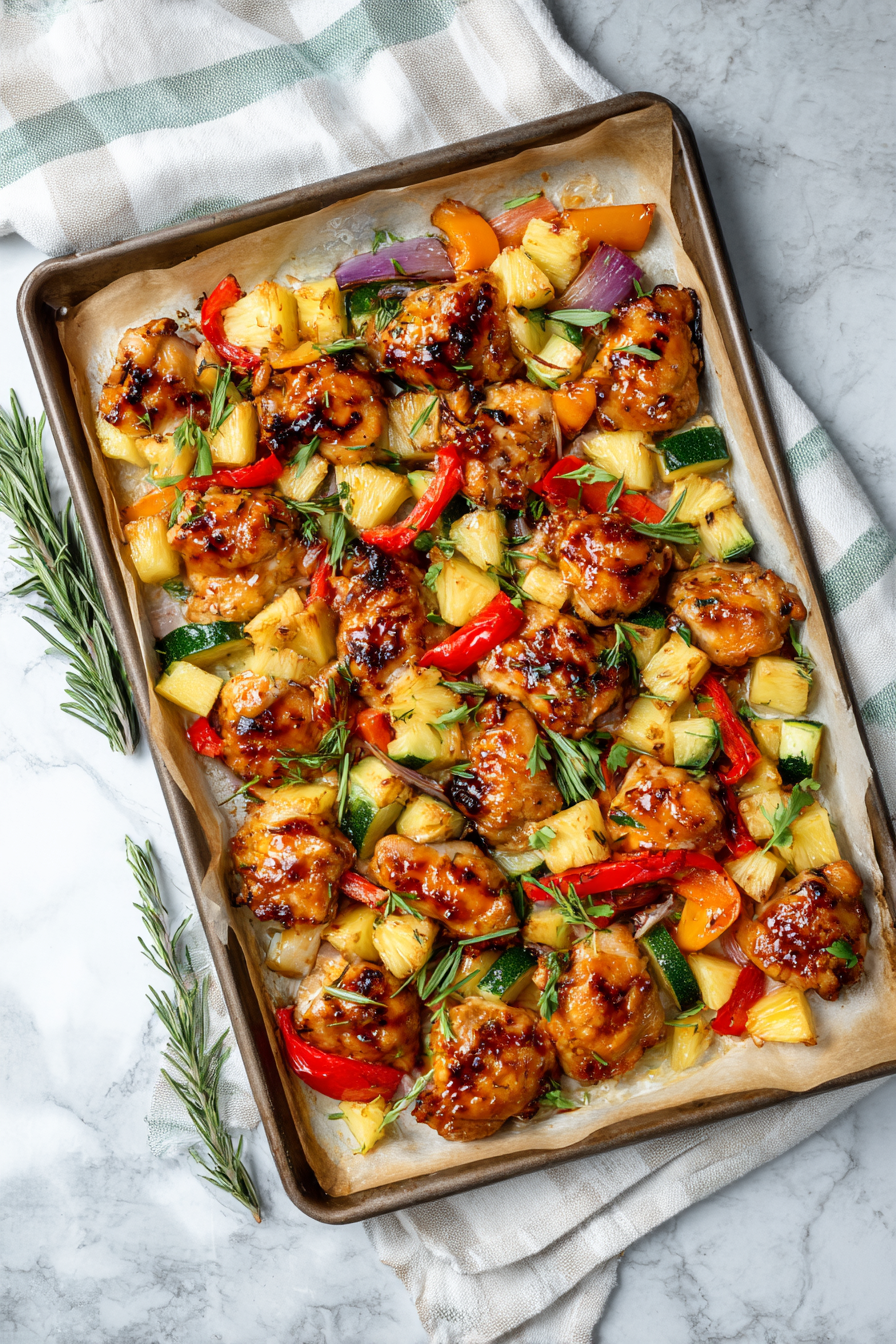
- Bake for 25 minutes, or until the chicken is fully cooked and slightly caramelized.
- Remove from oven, garnish with fresh herbs (optional), and serve hot.
Nutrition
Fresh or Canned Pineapple: Which Works Best?
Both options work, and each brings something slightly different to the finished dish.
- Fresh pineapple: Offers a bright, tangy flavor and works well when cut into small, even pieces.
- Canned pineapple: Is convenient, consistently sweet, and provides juice that can be used directly in the sauce.
Choose pineapple packed in juice when possible, rather than heavy syrup, so you have better control over the sweetness. If using canned pineapple, drain the pieces before adding them to the sheet pan while reserving the required juice for the sauce.
Pineapple releases moisture as it heats, so avoid adding extra juice beyond the recipe’s specified amount unless you deliberately want a looser sauce.
How to Keep Chicken Breast Juicy
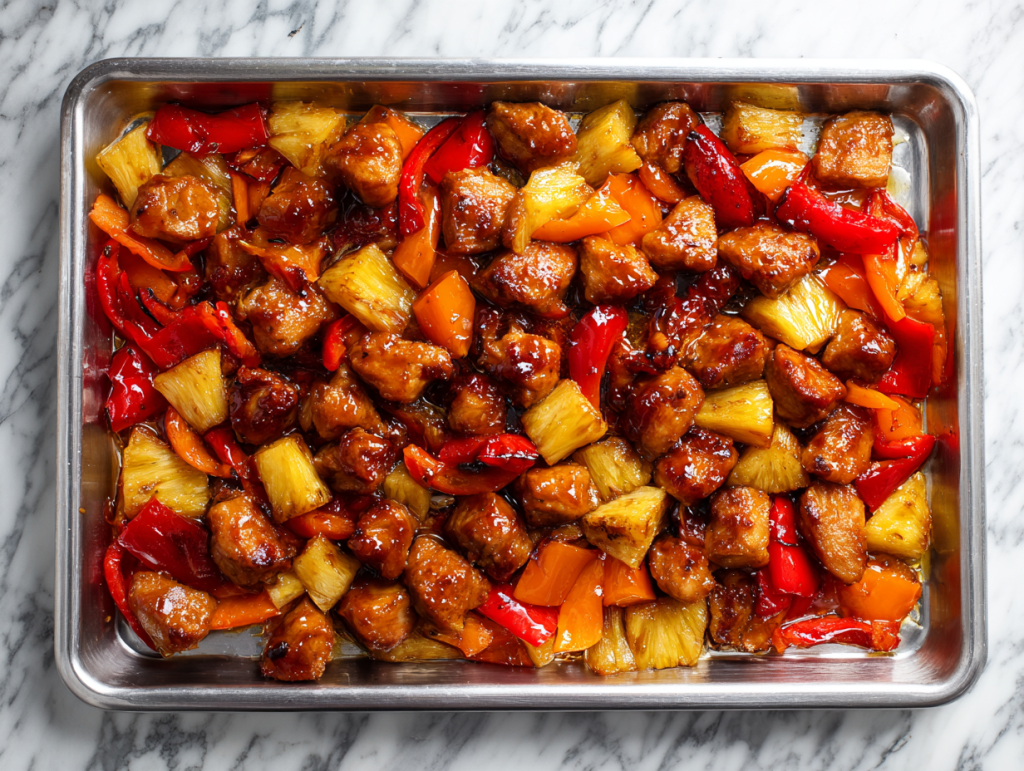
Chicken breast is lean and can dry out if it cooks longer than necessary. Cutting it into evenly sized cubes helps prevent some pieces from becoming overcooked while others are still finishing.
The recipe lists a 25-minute baking time at 400°F, but oven performance and the size of the chicken pieces can affect the timing. Check the thickest pieces with a food thermometer; chicken should reach an internal temperature of 165°F (74°C).
Once the chicken reaches that temperature, remove the pan from the oven rather than leaving it inside to brown further. The sauce and residual heat will continue to affect the ingredients briefly after cooking.
If the vegetables look ready before the chicken, rely on the temperature reading to determine when the chicken is safely cooked.
Easy Ways to Adjust the Flavor
One of the best things about this sheet pan meal is how easy it is to adapt without changing its basic character.
- More heat: Increase the crushed red pepper slightly or add a little chili sauce when serving.
- Less sweetness: Reduce the brown sugar modestly if you prefer a more savory sauce, keeping in mind that it also contributes to caramelization.
- Extra vegetables: Add vegetables that roast well, such as broccoli florets, but cut them into suitable sizes and avoid overcrowding the pan.
- A fresh finish: Sprinkle chopped cilantro or sliced green onions over the cooked chicken.
- A little crunch: Add sesame seeds just before serving for extra texture.
What to Serve With Hawaiian Chicken
The sweet-and-savory sauce pairs particularly well with plain rice, which absorbs the juices without competing with the pineapple flavor. Brown rice or quinoa also works if you want a heartier base.
For a lower-carbohydrate option, serve the chicken with cauliflower rice or a simple cabbage slaw. The freshness and slight crunch help balance the sticky sauce.
You can also serve it in lettuce cups for a lighter meal or alongside roasted vegetables for an easy family dinner. Spoon some of the pan sauce over the chicken just before serving so each portion gets plenty of flavor.
Make-Ahead and Storage Tips
You can whisk the sauce together ahead of time and refrigerate it in a covered container until you’re ready to cook. You can also cut the vegetables in advance and store them separately.
Refrigerate cooked leftovers in an airtight container within two hours of cooking and use them within 3–4 days.
To reheat, warm the chicken and vegetables in a covered skillet over medium-low heat until thoroughly hot, adding a small splash of water if the sauce has become too thick. You can also use the microwave, stirring partway through to heat the food evenly.
The peppers may soften more after reheating, but the sauce should still provide plenty of flavor. For the best texture, avoid repeatedly reheating the same portion.
Frequently Asked Questions
- Can I use chicken thighs instead of chicken breasts?
Yes. Boneless, skinless chicken thighs can work well and often stay juicy because they contain more fat. Cut them into similarly sized pieces and check that the thickest pieces reach 165°F (74°C). - Can I use frozen pineapple?
Yes, but thaw it first and drain away excess liquid. Extra moisture can make the sauce thinner and prevent the ingredients from caramelizing as effectively. - Why is my Hawaiian chicken sauce watery?
Pineapple and vegetables naturally release moisture as they cook. The pan may also be overcrowded, which encourages steaming. Use a large sheet pan, drain canned pineapple, and avoid adding extra liquid beyond the recipe’s specified amount. - Can I prepare this meal ahead of time?
Yes. You can prepare the sauce and chop the vegetables ahead of time. For the freshest texture and best food-safety practices, keep the raw chicken refrigerated separately until you’re ready to combine the ingredients and bake them. - Is this recipe spicy?
The small amount of crushed red pepper adds gentle heat rather than making the dish very spicy. You can reduce it or leave it out for a milder flavor, or increase it if you prefer more heat.