Crispy Pork Crackling Recipe

There’s something irresistible about biting into a piece of perfectly crispy pork crackling. That first crunchy bite gives way to a tender, flavorful center, especially when the pork belly has been cooked slowly in lard before getting its final golden finish in hot oil.
This Pork Crackling Recipe brings Southern-style flavor to the table with a homemade seasoning blend called Cracklin’ Dust. Made with chile de árbol, garlic, white pepper, and celery seeds, the seasoning gives each piece a spicy, savory kick. A few dashes of hot sauce at the end make these cracklings even more flavorful.
The secret isn’t just frying the pork belly. It’s the combination of gentle cooking, proper chilling, and a quick final fry that creates the contrast between a crispy exterior and tender meat.
What Makes Southern Pork Cracklings Different?

Pork cracklings and pork rinds are often confused, but they’re not quite the same thing.
Pork rinds are typically made from pork skin that has been cooked and fried until light and airy. Pork cracklings, on the other hand, usually contain some fat and meat along with the skin, giving them a richer flavor and a more substantial crunch.
This recipe uses 1-inch pieces of pork belly, which contain layers of fat and meat. As the pieces cook, the fat renders and the meat becomes tender. The final frying stage creates a crisp, golden exterior while preserving that satisfying richness inside.
Unlike plain salted cracklings, this version gets an extra layer of flavor from a spicy Southern-inspired seasoning blend.
My tip: Spread the pork belly pieces in a single layer on the baking sheet before refrigerating. This allows them to cool more evenly and prevents them from sticking together in a large clump.
Pork Crackling Recipe
Equipment
- Rimmed baking sheet
- Spice grinder or blender
- Small Bowl
- Paper Towels
- Cooking Thermometer
Ingredients
- 2 pounds pork belly, cut up into 1-inch pieces
- 1 cup lard
- peanut oil for frying
- hot sauce to sprinkle on at the end
- 2 tbsp chile de árbol, ground
- 2 tbsp kosher salt
- 1 tsp sugar
- 1/2 tsp white pepper, ground
- 1/2 tsp granulated garlic
- 1/2 tsp celery seeds, ground
Instructions
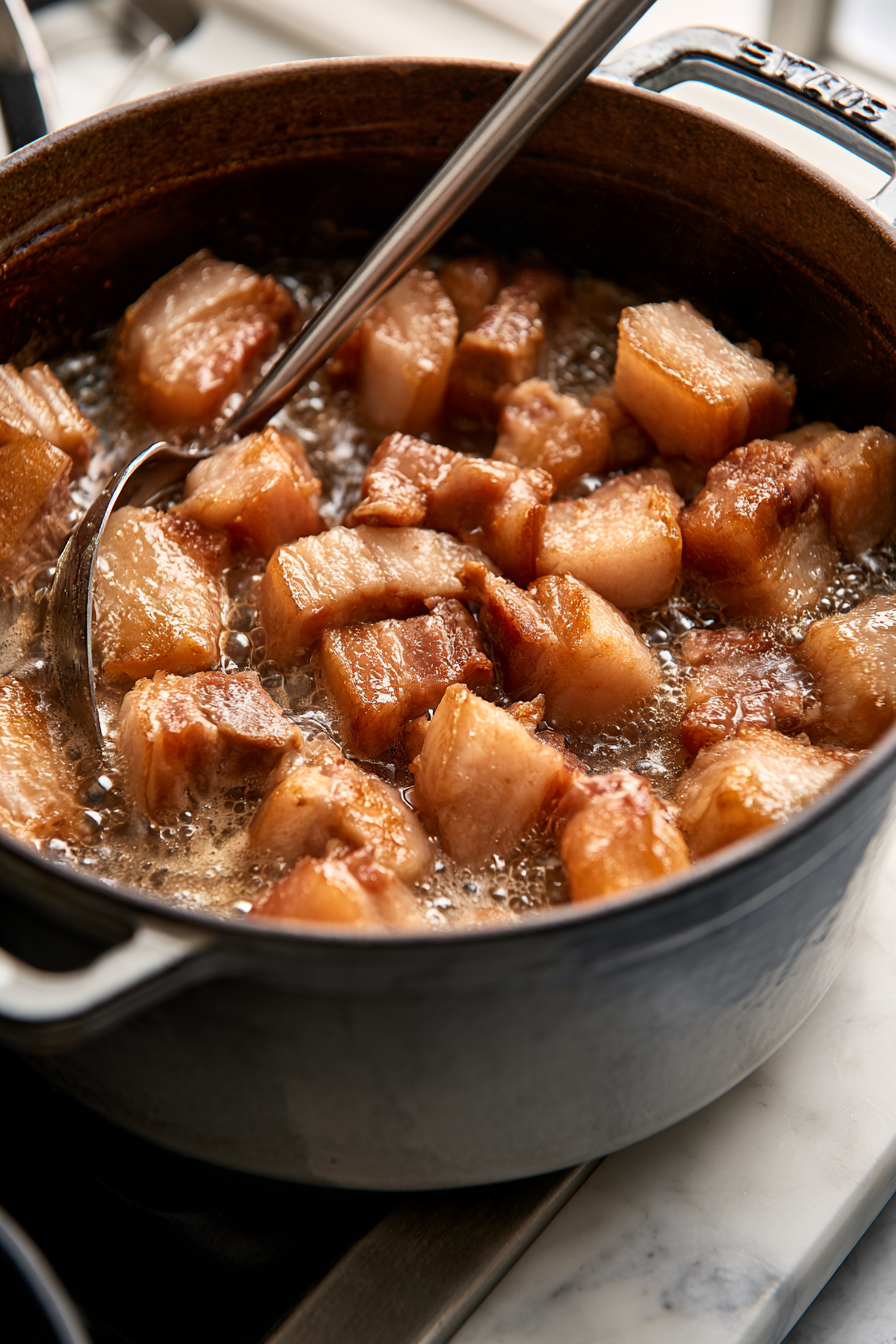
- In a Dutch oven, combine pork belly pieces and lard, bringing them to a boil over medium-high heat. Stir frequently and simmer until the meat starts to brown and becomes tender, about 25-30 minutes.

- Remove the pork belly from the Dutch oven and place it on a rimmed baking sheet. Refrigerate until cold.

- In a small bowl, mix together the ground chile de árbol, kosher salt, sugar, white pepper, granulated garlic, and ground celery seeds to create the "Cracklin' Dust" seasoning.

- Strain and reserve the lard from the Dutch oven for future use. Heat peanut oil in the Dutch oven to 380 degrees Fahrenheit.

- Fry the cold pork belly in batches until puffed and golden brown, about 2-3 minutes per batch.
- Drain the fried pork belly pieces on paper towels. In a bowl or bag, toss the cracklin' pork belly with a few dashes of hot sauce and sprinkle the Cracklin' Dust seasoning over it.

Nutrition
Why This Recipe Uses Two Cooking Stages
The most important detail in this recipe is that the pork belly isn’t fried just once.
First, the pieces are simmered in lard until tender and beginning to brown. This stage helps render some of the fat and cooks the pork belly before the final crisping process.
Next comes the chilling stage. Cooling the pork belly makes the pieces firmer and easier to handle during frying.
Finally, the cold pork belly goes into hot peanut oil at 380°F for approximately 2–3 minutes per batch.
That last stage is what gives the cracklings their puffed, golden exterior.
How to Get Crispy Pork Crackling Without Burning It
Getting the right texture depends on controlling the oil temperature and avoiding overcrowding.
Peanut oil should be heated to 380°F. At this temperature, the exterior can crisp quickly without requiring a long frying time.
Here are a few details that make a noticeable difference:
- Keep the pieces evenly sized. Cutting the pork belly into approximately 1-inch pieces helps them cook consistently.
- Use a cooking thermometer. Guessing the oil temperature can lead to greasy or overly browned cracklings.
- Fry in small batches. Adding too many cold pieces at once can lower the oil temperature.
- Watch the color closely. The pork belly should become puffed and golden brown during the short final fry.
- Drain immediately. Transferring the cracklings to paper towels helps remove excess surface oil.
The Secret Behind Cracklin’ Dust Seasoning
The seasoning is one of my favorite parts of this recipe because it gives the rich pork belly a completely different personality.
Instead of relying on salt alone, Cracklin’ Dust combines several flavors that work together.
- Chile de árbol brings a sharp, noticeable heat. It’s spicier than many mild chili powders, so it gives the cracklings a proper kick.
- Kosher salt enhances the pork’s savory flavor, while a small amount of sugar balances the spice.
- White pepper adds another layer of warmth without overpowering the chile.
- Granulated garlic contributes a familiar savory flavor, and ground celery seeds introduce a slightly earthy, aromatic note.
Common Pork Crackling Problems and How to Fix Them
- Why Are My Pork Cracklings Chewy Instead of Crispy?
Chewy cracklings may not have rendered enough fat during the initial cooking stage, or the final frying oil may have been too cool. Make sure the pork belly becomes tender during the first stage and that the peanut oil reaches the specified temperature before frying. - Why Did My Cracklings Turn Out Greasy?
Greasy cracklings are often the result of frying at too low a temperature. When the oil cools significantly, the pork belly may not crisp as quickly. Frying smaller batches helps maintain a steadier temperature. - Why Are My Cracklings Too Dark?
The final frying stage happens quickly, especially at 380°F. Watch each batch closely and remove the pieces when they become puffed and golden brown. Don’t rely on the timer alone. - Why Isn’t the Seasoning Sticking?
If the cracklings have cooled completely, the dry seasoning may not adhere as evenly. Toss them with the hot sauce and Cracklin’ Dust while they’re still warm, using just enough sauce to help coat the pieces without making them soggy.
What to Serve With Pork Cracklings
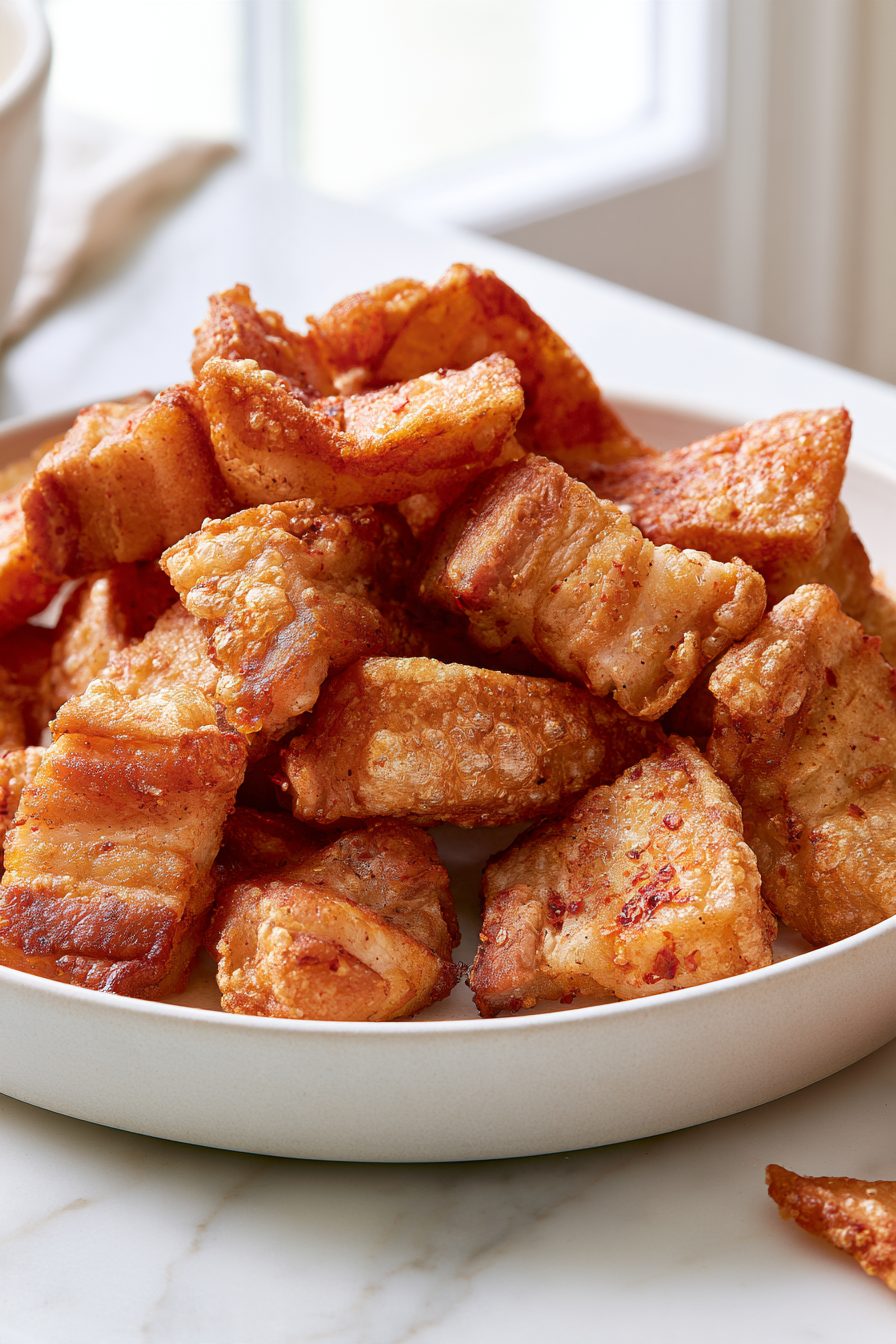
These spicy pork cracklings make a satisfying appetizer, but they’re also delicious alongside classic Southern comfort foods.
Collard greens are a particularly good match because their earthy flavor balances the richness of the pork.
A serving of cornbread provides a softer texture alongside the crunchy cracklings.
For something lighter, try serving them with roasted vegetables or slaw. The acidity helps cut through the richness.
Pair your crackling with different dips like tangy barbecue sauce, Sriracha Mayo, or a creamy aioli. It’s all about the dip and crunch combo!
You can also crumble a few pieces over a bowl of beans or a savory salad for extra crunch.
For a Halloween party, game-day gathering, or casual cookout, serve them in small bowls with extra hot sauce on the side.
How to Store and Reheat Pork Cracklings
Pork cracklings taste best shortly after frying, when the exterior is at its crispiest. If you have leftovers, allow them to cool before transferring them to an airtight container.
Because this recipe contains cooked pork belly with meat and fat, refrigerate the leftovers promptly rather than treating them like shelf-stable packaged pork rinds.
For best quality, enjoy refrigerated leftovers within 3–4 days.
Can You Reheat Pork Cracklings?
Yes. Reheating them in an oven or air fryer can help restore some of their crispness.
Spread the cracklings in a single layer and heat them until thoroughly hot, checking frequently to prevent burning.
Avoid microwaving them if you’re trying to preserve their crunch, as the texture can become softer or chewier.
Frequently Asked Questions
- Can I Make Pork Cracklings Without Lard?
This particular recipe uses lard during the initial cooking stage because it helps cook the pork belly and render its fat. Changing that cooking method may affect the final texture, so I recommend following the recipe as written for the intended results. - Can I Use a Different Oil Instead of Peanut Oil?
A neutral, high-smoke-point frying oil may work, provided it is suitable for the recipe’s 380°F frying temperature. The flavor and frying performance can vary slightly depending on the oil. - Are Pork Cracklings Supposed to Be Hard or Crunchy?
Good pork cracklings should have a firm, crispy exterior with some richness and chew from the meat and fat. They generally have a denser texture than airy pork rinds. - Can I Prepare Pork Cracklings Ahead of Time?
Yes. You can complete the initial lard-cooking stage, chill the pork belly, and refrigerate it until you’re ready for the final frying stage. Keep the cooked pork refrigerated and finish frying shortly before serving for the best texture. - How Spicy Are These Pork Cracklings?
The chile de árbol and hot sauce give them a noticeable kick. You can control the heat by adjusting how much of the prepared Cracklin’ Dust and hot sauce you add when tossing the finished cracklings.
Hi, I’m Austin. Every recipe you’ll find here is carefully tested, photographed, and created to help you cook with confidence…..
know more