Delicious Chicken Satay Recipe in 30 Minutes!
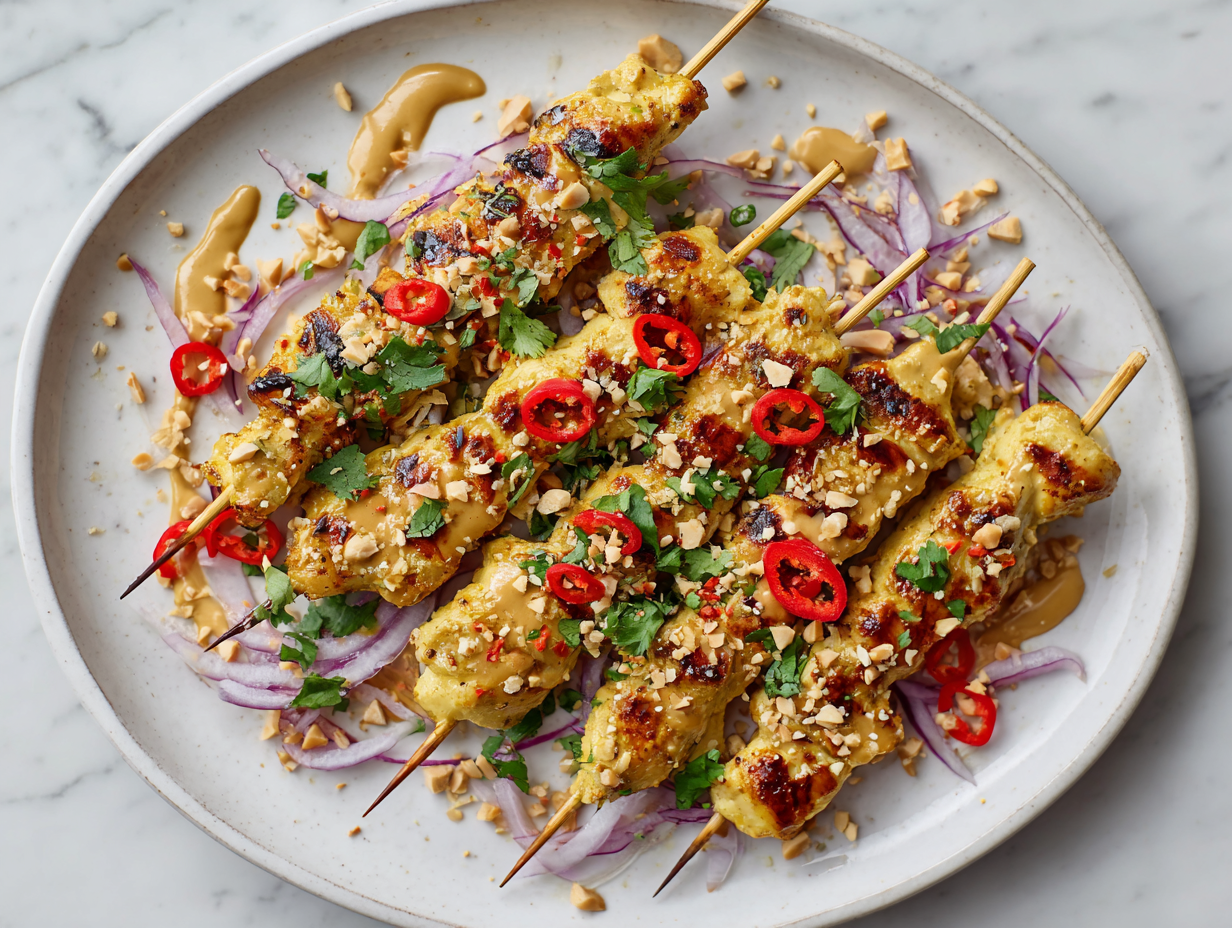
Some recipes just make their way into your regular rotation—not because they’re fancy, but because they’re easy, full of flavor, and genuinely good for you. That’s exactly what this chicken satay recipe is for me.
What I love most is how this recipe fits so well into a healthy lifestyle—lean chicken breast, grilled or pan-seared, and rich in protein. A high-protein meal like this can increase satiety by 25%, helping you feel full longer and avoid those late-night snack traps.
Pair it with this creamy, nutty Satay Sauce, and you’ve got a meal that tastes indulgent but feels incredibly light. Want to keep things refreshing? A chilled Skinny Margarita balances the spice beautifully without adding guilt.
The marinade is where the magic starts—coconut milk, crushed garlic, and warming spices like cumin and coriander soak into the chicken, giving it tender, juicy flavor that only gets better on the grill.
It’s quick, it’s vibrant, and it brings a little Southeast Asian street food magic right to your kitchen.
Let me know how yours turns out—I’d love to hear your favorite twists or how you served it.
What Makes This Recipe a Must-Try?
This isn’t just a recipe I love—it’s one that fits into my everyday life in the most effortless way. Here’s why it’s earned a permanent spot in my weekly meal plan:
- Quick to Prep, Perfect for Busy Days: I marinate the chicken ahead of time, and when it’s time to cook, it’s ready in minutes—ideal for those weeknights when I just want something easy but satisfying.
- Light, Yet Surprisingly Filling: The lean chicken breast gives me a solid dose of protein without feeling heavy. It keeps me full and focused, especially when I’m trying to eat clean.
- Grill or Pan? Both Work: I’ve grilled it outdoors and pan-seared it indoors when it’s raining. Either way, it always turns out tender and flavorful, which means no fuss or fails.
- That Satay Sauce? Totally Addictive: I’ve used the same sauce for veggie dip trays, noodle tosses, and even as a spread for wraps—it’s become a multi-use staple in my fridge.
- Healthy, Without Feeling Restrictive: It fits right into my goals for eating well and staying on track—no boring meals, no cravings, just good food that makes me feel good.
Chicken Satay Recipe
Equipment
- Grill pan or non-stick skillet
- Tongs or skewers
- Whisk or spoon (for sauce)
- Knife and chopping board
- Small saucepan (for satay sauce)
Ingredients
Chicken Skewers:
- 3 chicken breasts cut into long thin strips
- 1 tbsp dark soy sauce use tamari for gluten-free
- 2 garlic cloves peeled and crushed
- 200 ml 7 oz coconut milk from a tin
- ½ tsp cumin
- ½ tsp coriander
- ¼ tsp ground ginger
Satay sauce:
- 3 heaped tbsp smooth peanut butter
- 1 tbsp dark soy sauce use tamari for gluten free
- ½ tsp chilli flakes red pepper flakes
- 1 tbsp fish sauce
- 200 ml 7 oz coconut milk from a tin
- 1 tbsp light brown sugar
- ½ tsp ground coriander
- juice of 1 lime
To Serve:
- 1 fresh red chilli thinly sliced
- 2 tbsp fresh coriander cilantro chopped
- ½ tsp chilli flakes red pepper flakes
- ¼ red onion peeled and finely sliced
- 1 tbsp roasted peanuts roughly chopped
- 1 tsp sesame seeds
Instructions
- In a mixing bowl, marinate chicken strips with soy sauce, garlic, coconut milk, cumin, coriander, and ground ginger for at least 30 minutes.
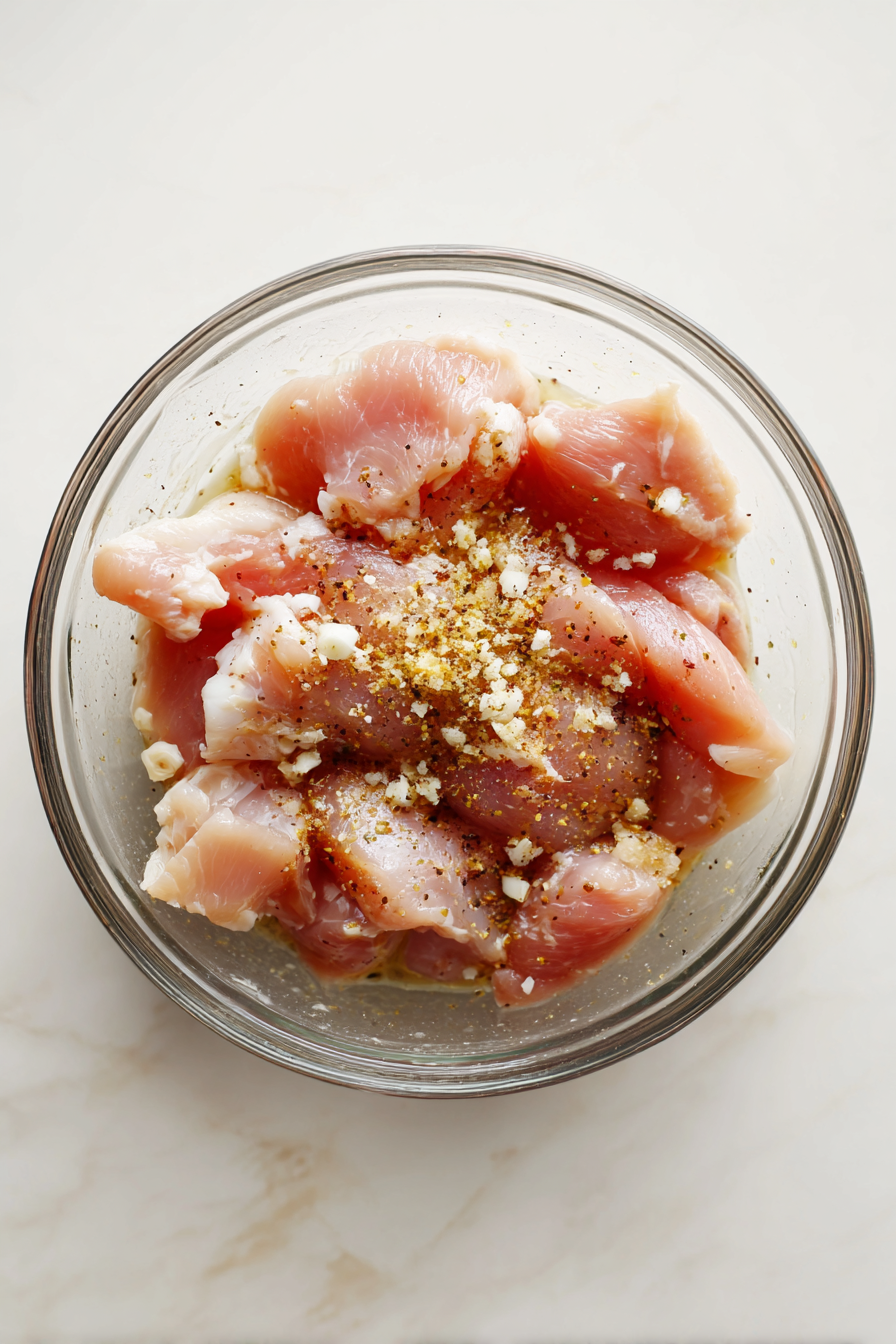
- Thread the marinated chicken onto skewers evenly.
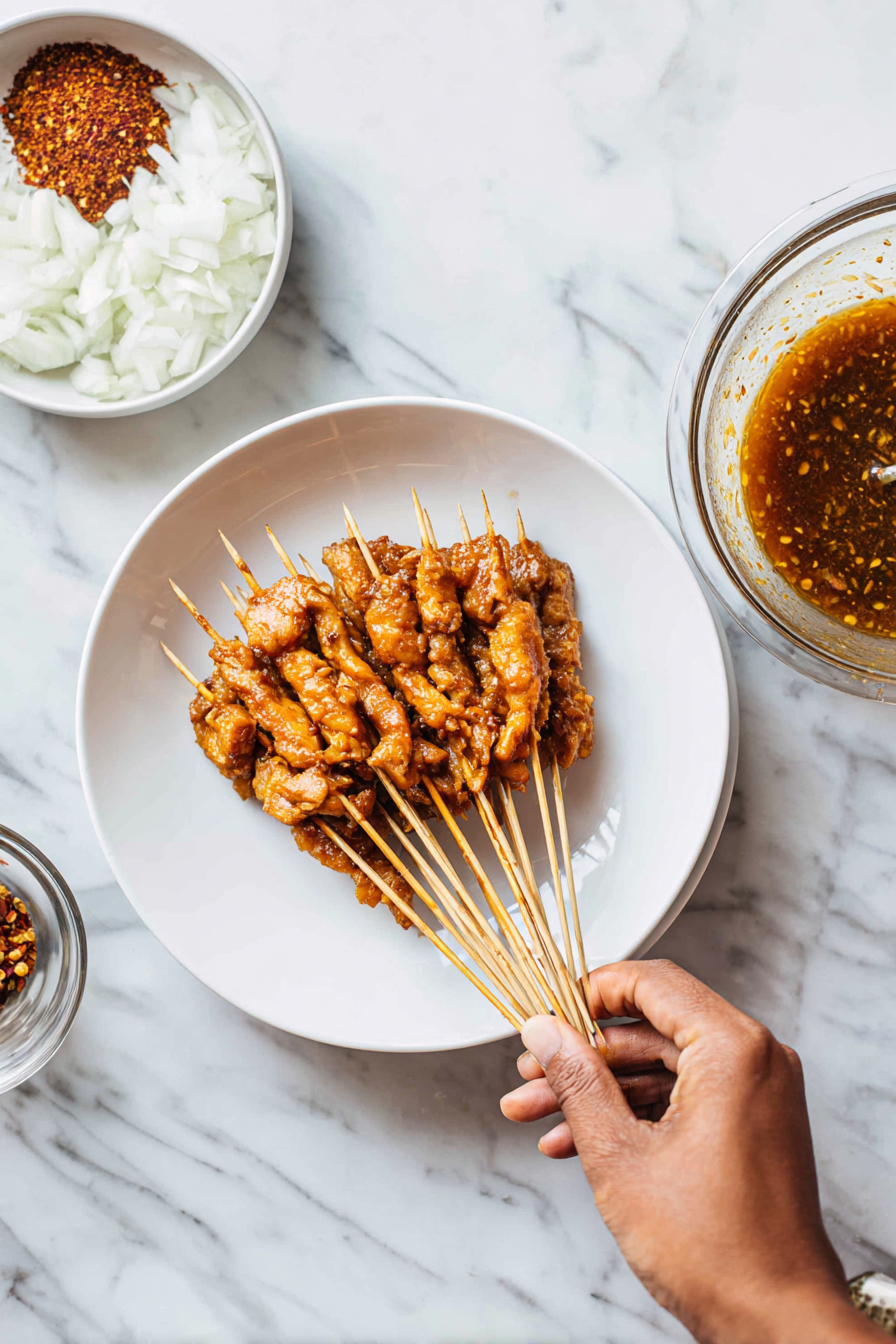
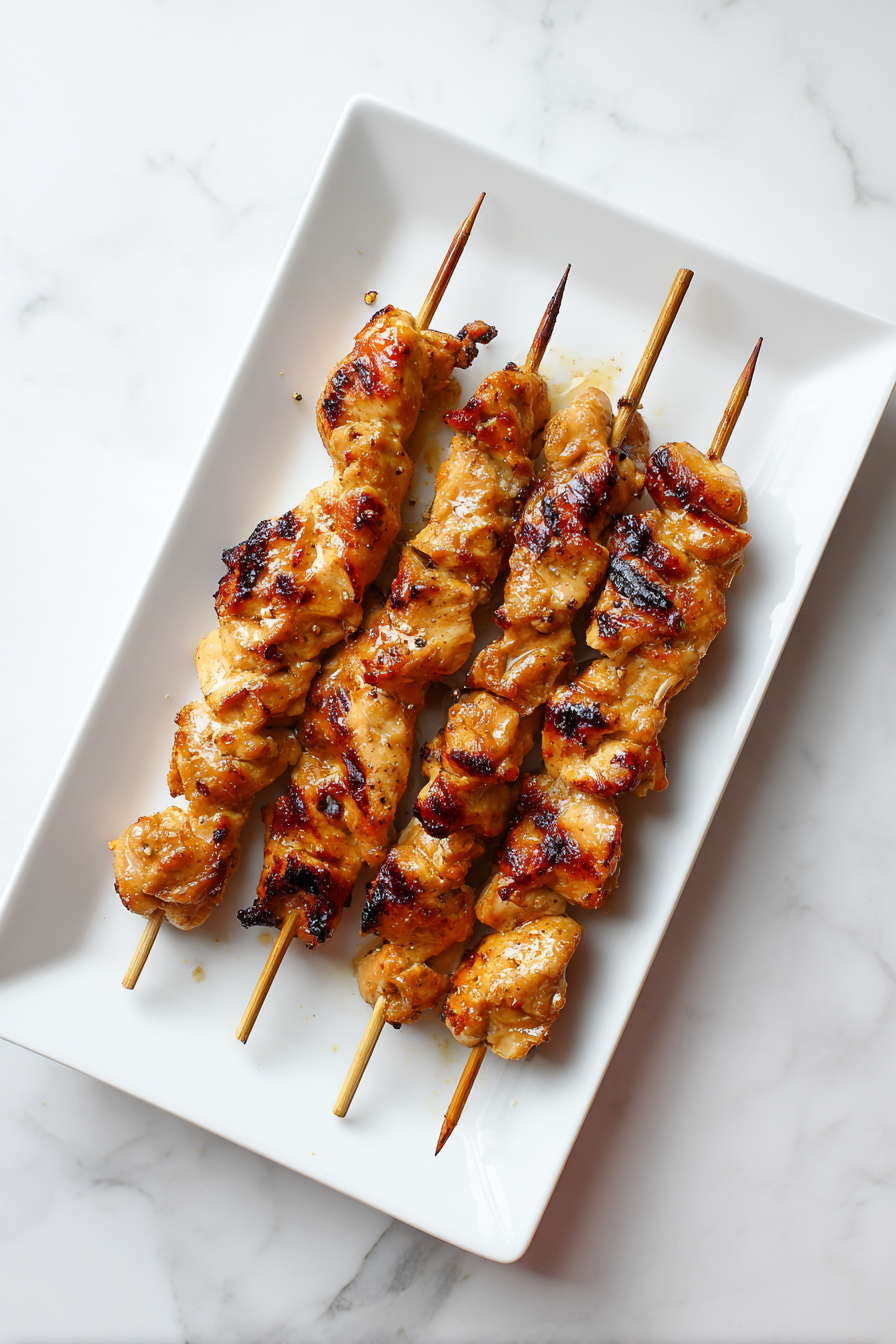
- Grill or pan-fry the skewers on medium-high heat until golden brown and fully cooked, turning occasionally.
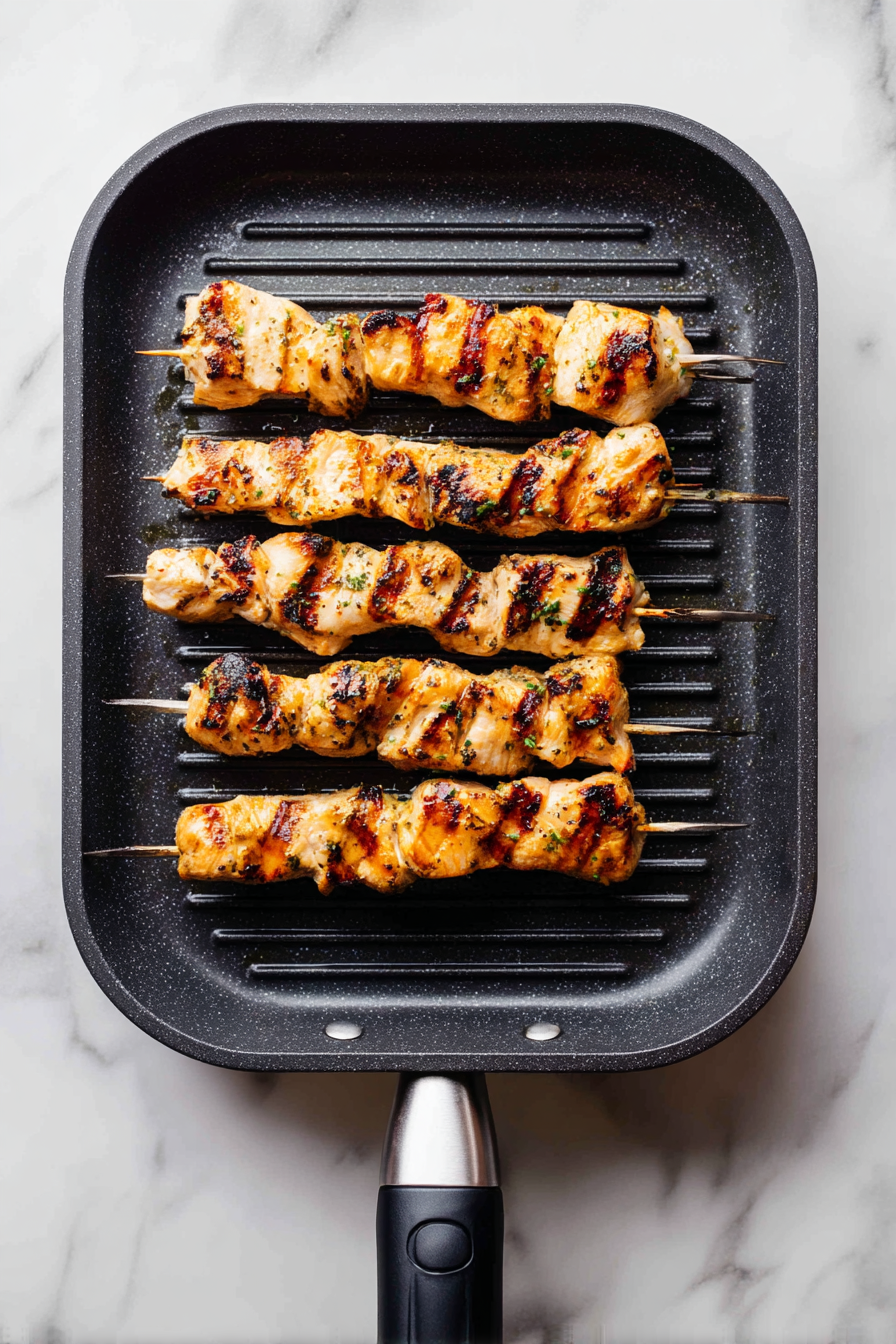
- In a small saucepan, combine peanut butter, coconut milk, soy sauce, fish sauce, lime juice, chili flakes, sugar, and coriander.
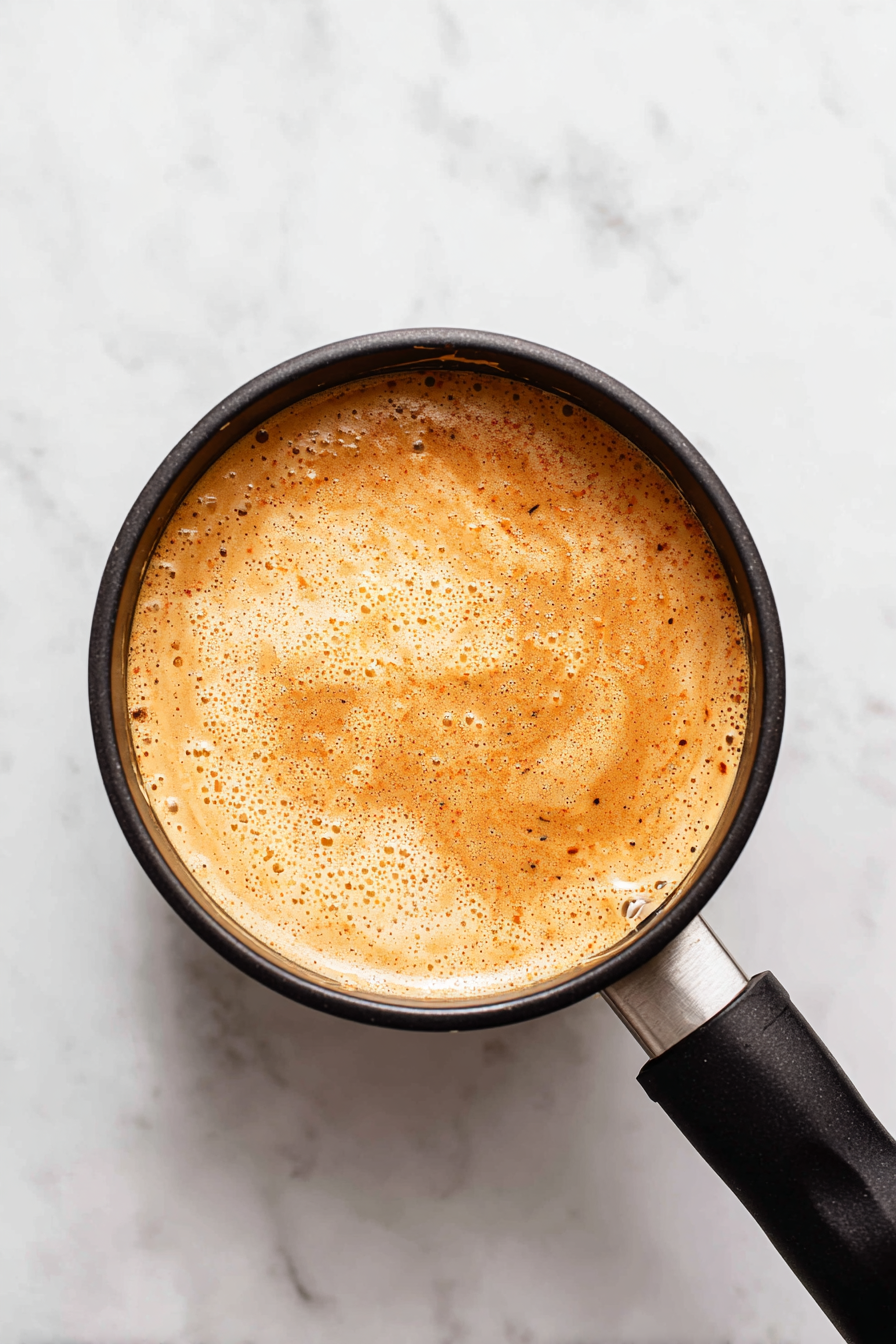
- Simmer the satay sauce on low heat, whisking until smooth and slightly thickened.
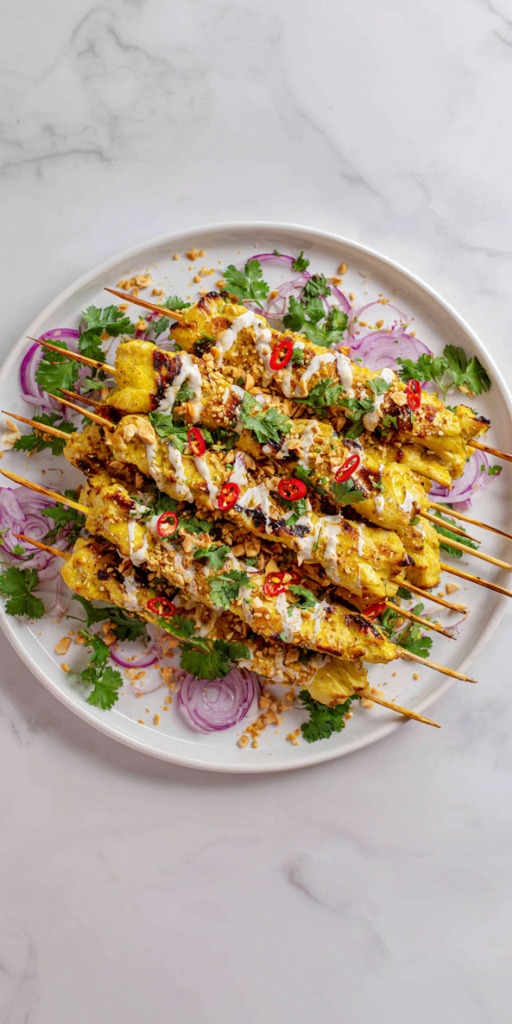
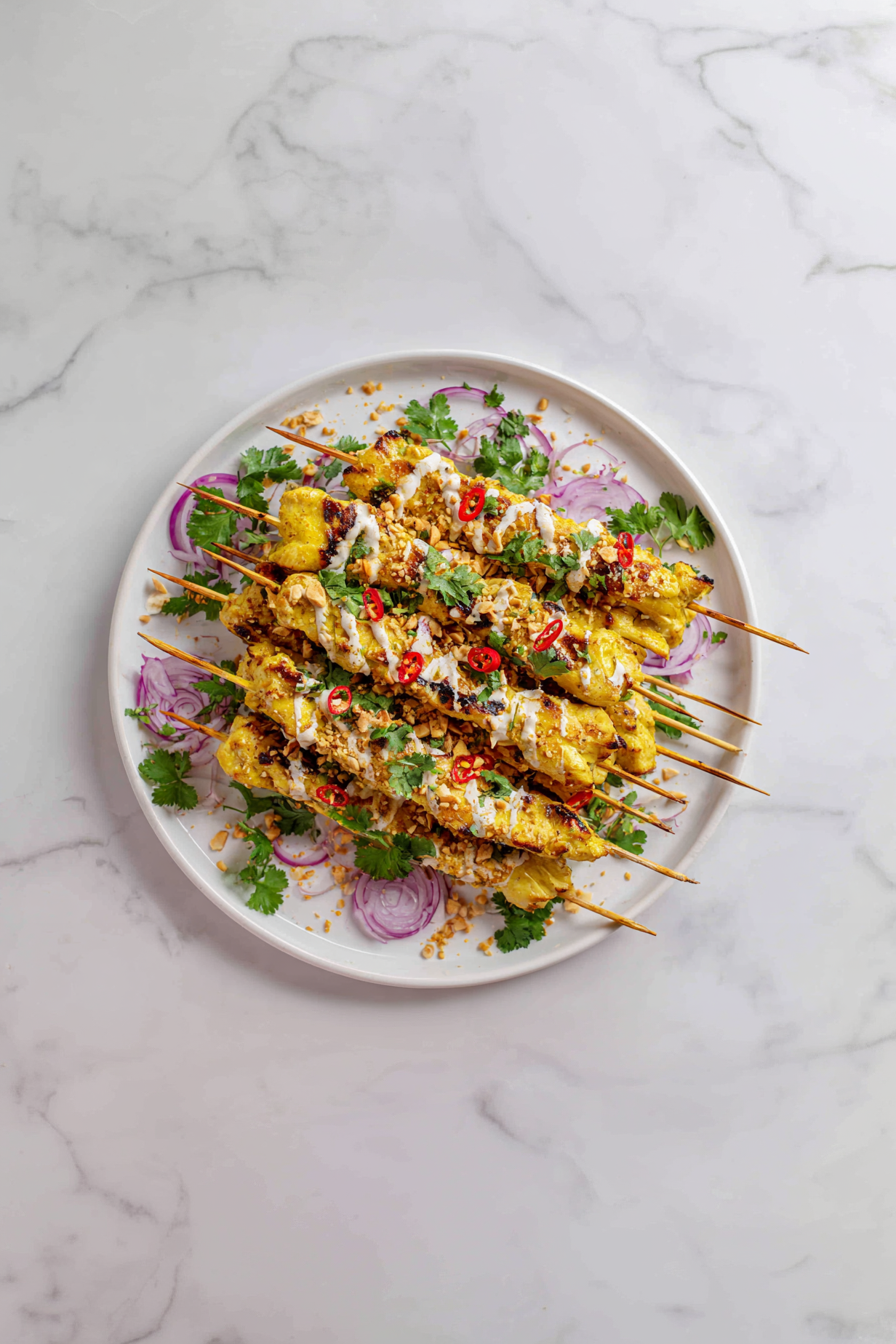
- Plate the chicken skewers and drizzle with warm satay sauce.
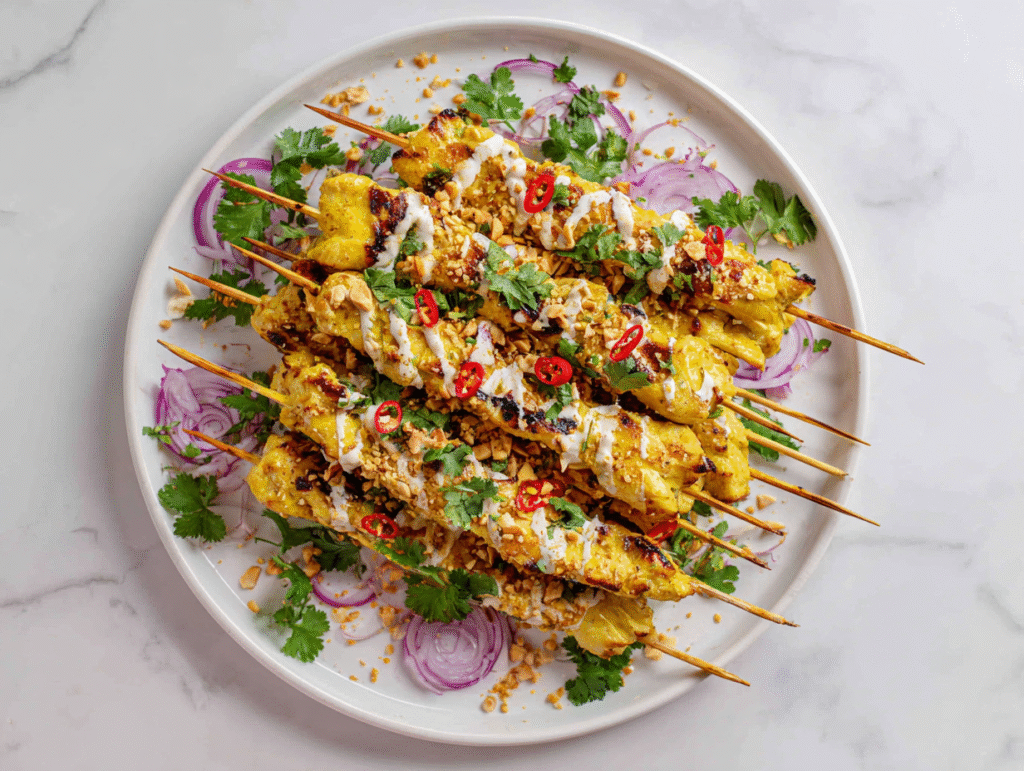
- Garnish with sliced red chili, red onion, coriander, roasted peanuts, and sesame seeds.
- Serve hot with rice or a Skinny Margarita for a refreshing contrast.
Nutrition
Next-Level Tips For Perfect Chicken Satay!
- Use full-fat coconut milk for richness:
Light versions won’t give you that same creamy, velvety marinade. Full-fat coconut milk helps the spices cling better to the chicken and locks in moisture during cooking. - Slice chicken against the grain for tenderness:
Long, thin strips are great—but cutting against the grain ensures the meat stays tender and tears easily when biting into it. - Don’t over-marinate beyond 12 hours:
More isn’t better here. Too much marination, especially in acidic or enzyme-rich ingredients, can change the texture and make it mushy. - Reserve some marinade for basting:
Set aside a tablespoon or two of the marinade before adding raw chicken. Brush it on while grilling for that extra glossy, flavorful finish. - Simmer satay sauce low and slow:
Peanut butter can catch and burn easily. Keep the heat gentle and whisk constantly for a smooth, silky sauce without grainy bits. - Let skewers rest before serving:
Just like steak, grilled chicken needs a couple of minutes to rest. It helps the juices redistribute and keeps every bite juicy, not dry. - Toasted peanuts > plain peanuts:
If you’re garnishing, quickly dry-toast the peanuts in a pan for 2–3 minutes. It elevates the nutty flavor and adds a crunchy contrast to the soft meat.
Quick Questions?
1. Can I use chicken thighs instead of chicken breast?
Yes, definitely! Thighs are juicier and more forgiving if slightly overcooked—great for grilling.
2. How long can I store the satay sauce?
Keep it in an airtight container in the fridge for up to 5 days. Just reheat gently before serving.
3. Can I bake the skewers instead of grilling them?
You can! Bake at 200°C (400°F) for about 18–20 minutes, turning once halfway through.
4. Is this recipe freezer-friendly?
Yes—freeze the marinated chicken on skewers before cooking. Defrost in the fridge overnight, then grill or pan-fry fresh.
5. What’s a good side dish for chicken satay?
Coconut rice, cucumber salad, or vermicelli noodles pair perfectly. A chilled Skinny Margarita also complements the spice really well.
6. Can I make it spicier or milder?
Totally. Adjust the chili flakes in both the marinade and the sauce to match your heat preference.