Vegan Pad Thai Recipe
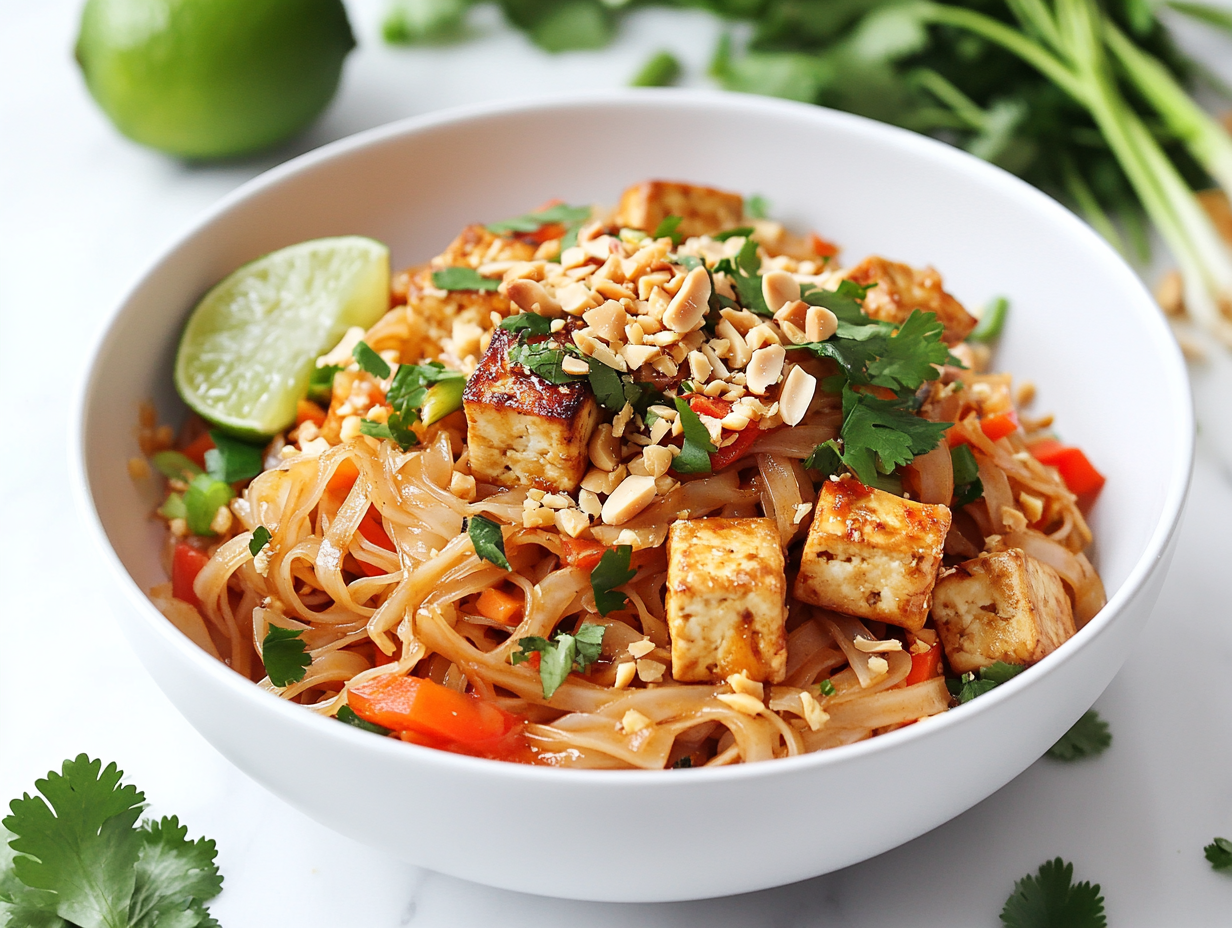
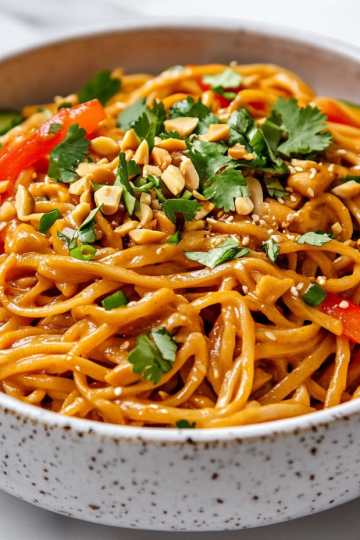
This Vegan Pad Thai Recipe is a flavorful plant-based version of the classic Thai noodle dish, featuring chewy rice noodles, crispy tofu, colorful vegetables, and a perfectly balanced sauce. The combination of sweet maple syrup, tangy lime, savory soy sauce, and optional tamarind creates the signature sweet, sour, and savory flavors that make Pad Thai so popular.
Ready in about 30 minutes, this easy vegan dinner is perfect for busy weeknights, meal prep, or when you’re craving restaurant-style Thai food at home. Fresh herbs, crunchy peanuts, and lime wedges bring everything together for a bright and satisfying meal.
Why You’ll Love This Recipe
- Fast and Flavorful: A complete dinner that comes together quickly with simple ingredients.
- Restaurant-Style Taste: The homemade sauce creates authentic sweet, tangy, and savory Pad Thai flavors.
- Protein Packed: Crispy tofu adds plant-based protein and satisfying texture.
- Customizable: Easily adjust vegetables, spice level, and toppings.
- Meal Prep Friendly: Prepare the sauce and vegetables ahead for quick cooking.
- Naturally Vegan: Made without eggs or fish sauce while keeping all the classic flavors.
Ingredient Insights and Substitutions
- Rice Noodles: Flat rice noodles create the traditional Pad Thai texture. Avoid soaking them too long because they continue cooking in the skillet.
- Tofu: Extra-firm tofu works best because it holds its shape and becomes crispy when cooked. Pressing the tofu removes excess moisture.
- Tamarind Paste: Tamarind provides the signature tangy flavor found in traditional Pad Thai. If unavailable, lime juice and rice vinegar create a good balance.
- Soy Sauce or Tamari: Adds salty, savory depth. Use tamari for a gluten-free version.
- Maple Syrup: Provides sweetness while keeping the recipe vegan. Brown sugar can also be used.
- Peanuts: Crushed peanuts add the classic crunchy topping and contrast with the soft noodles.
Chef’s Tip: Prepare the Pad Thai sauce before cooking. Once the noodles hit the pan, the cooking process moves quickly, so having everything ready helps prevent overcooking.
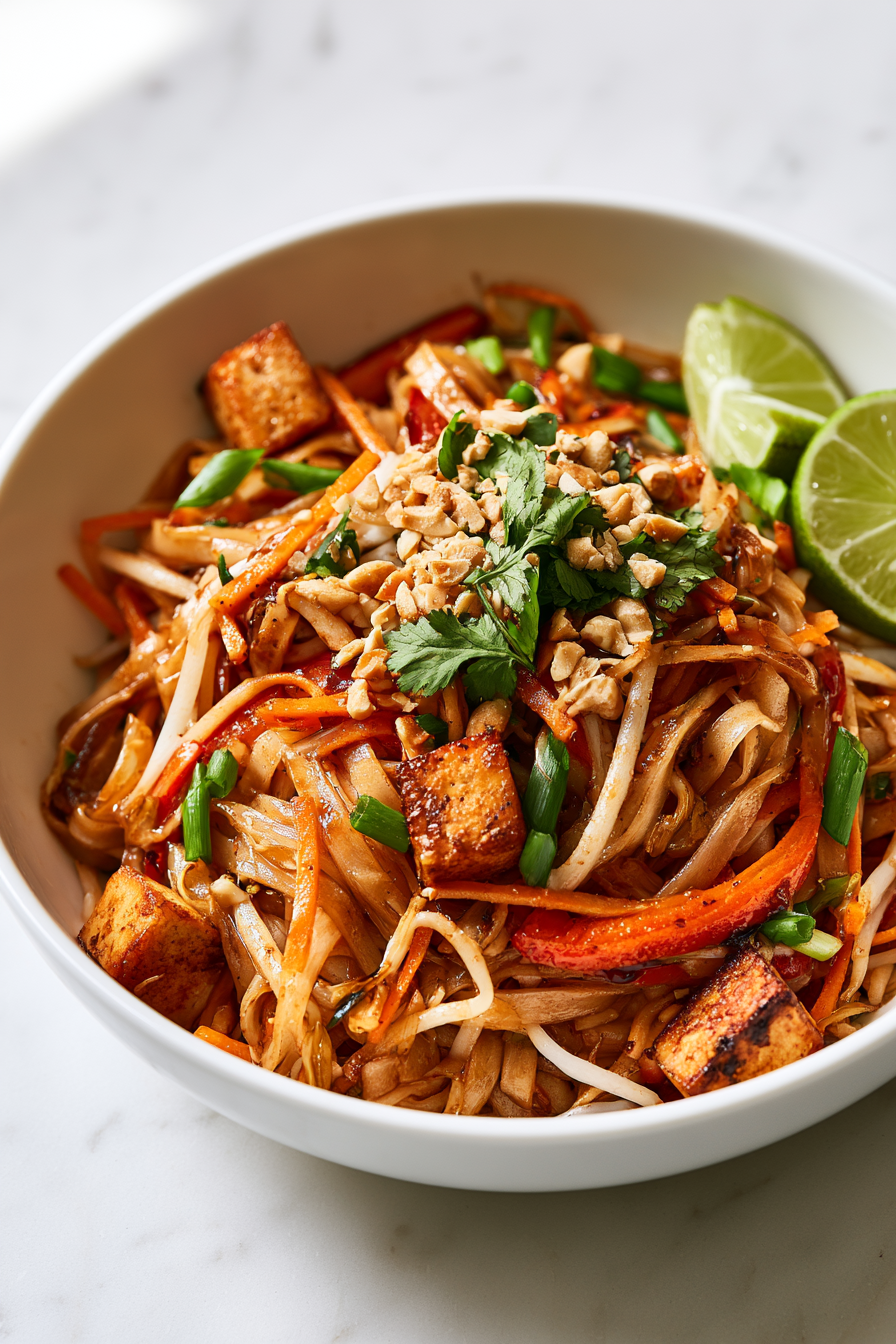
Vegan Pad Thai
Equipment
- Large bowl for soaking noodles
- Large wok or skillet
- Small Mixing Bowl
- Colander
- Chef's Knife
Ingredients
For the Pad Thai
- 8 ounces flat rice noodles
- 2 tablespoons vegetable oil divided
- 14 ounces extra-firm tofu pressed and cut into cubes
- 1 cup shredded carrots
- 1 red bell pepper thinly sliced
- 1 cup bean sprouts
- 3 green onions sliced
- ¼ cup chopped roasted peanuts
- ¼ cup fresh cilantro chopped
- Lime wedges for serving
For the Pad Thai Sauce
- ¼ cup low-sodium soy sauce or tamari
- 3 tablespoons maple syrup
- 2 tablespoons fresh lime juice
- 2 tablespoons rice vinegar
- 1 tablespoon tamarind paste optional
- 2 teaspoons sriracha or chili garlic sauce
- 2 garlic cloves minced
- ½ teaspoon red pepper flakes optional
Instructions
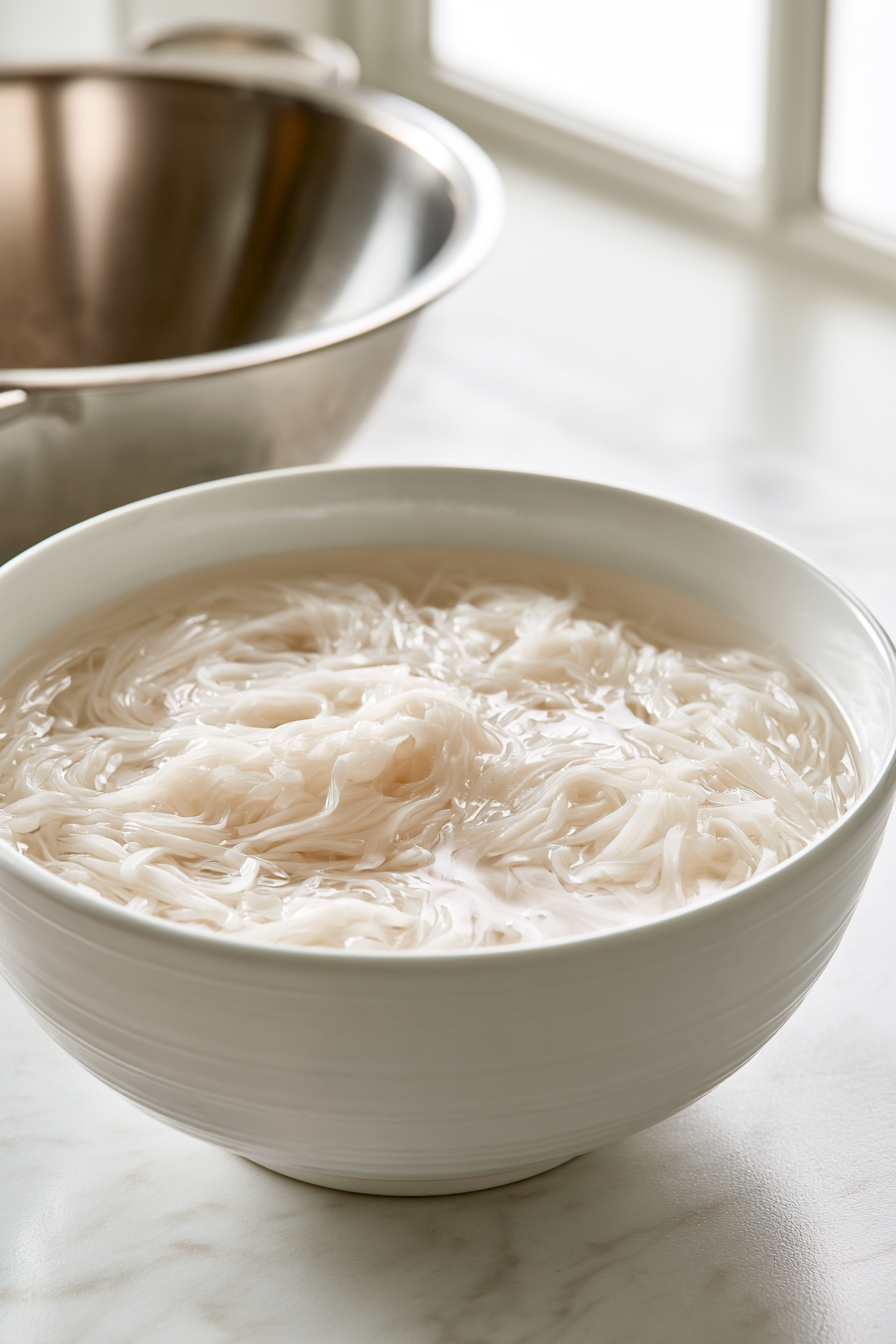
- Place the rice noodles in a large bowl and cover them with warm water. Let them soak according to the package instructions until softened but still slightly firm. Drain well and set aside. Avoid over-soaking the noodles, as they will continue cooking in the pan.
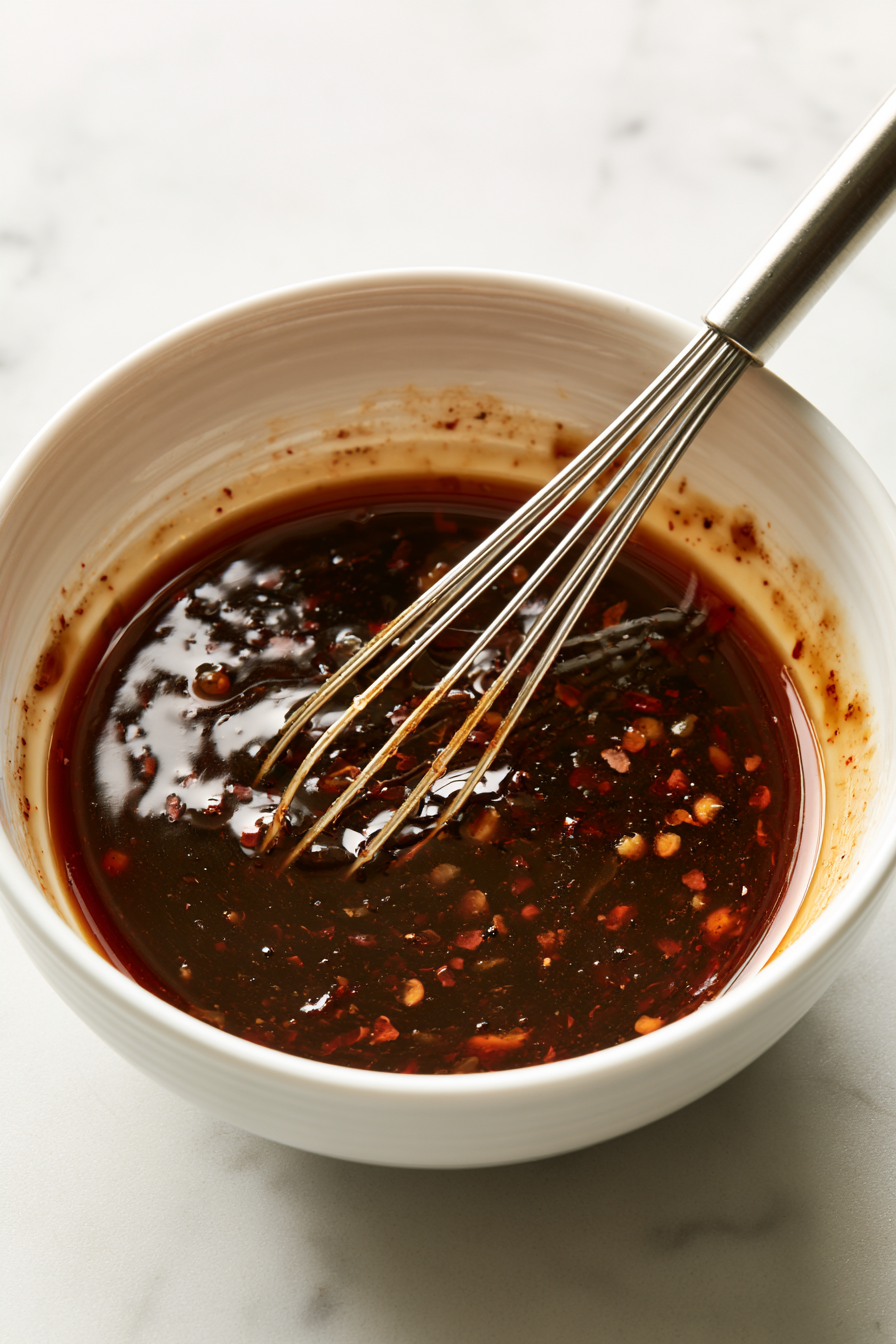
- Prepare the Pad Thai sauce by whisking together soy sauce, maple syrup, lime juice, rice vinegar, tamarind paste if using, sriracha, garlic, and red pepper flakes in a small bowl. Set aside.
- Heat 1 tablespoon of oil in a large wok or skillet over medium-high heat. Add the tofu cubes and cook for 6–8 minutes, turning occasionally, until golden and lightly crispy on the outside.
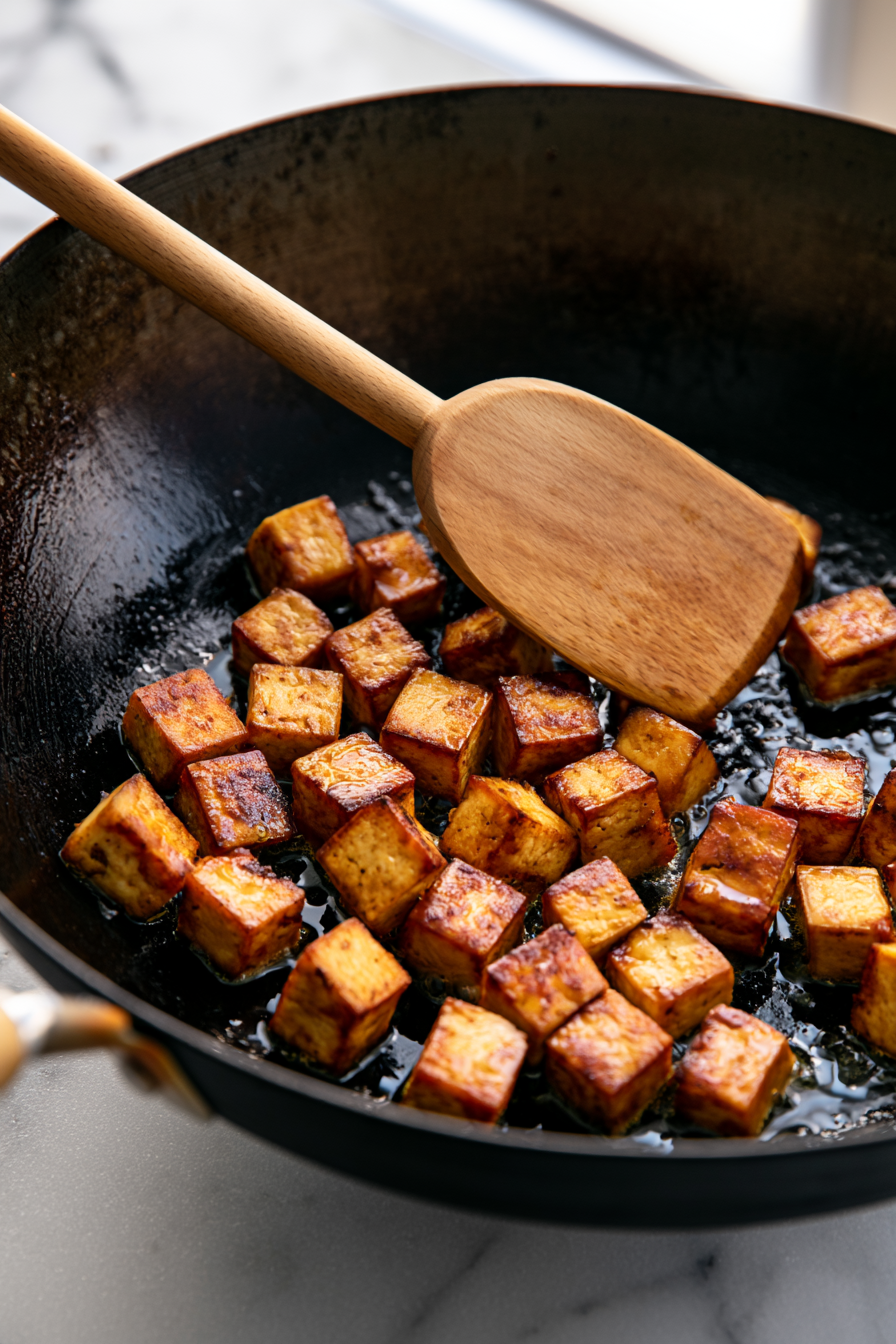
- Transfer the tofu to a plate and add the remaining tablespoon of oil to the skillet.
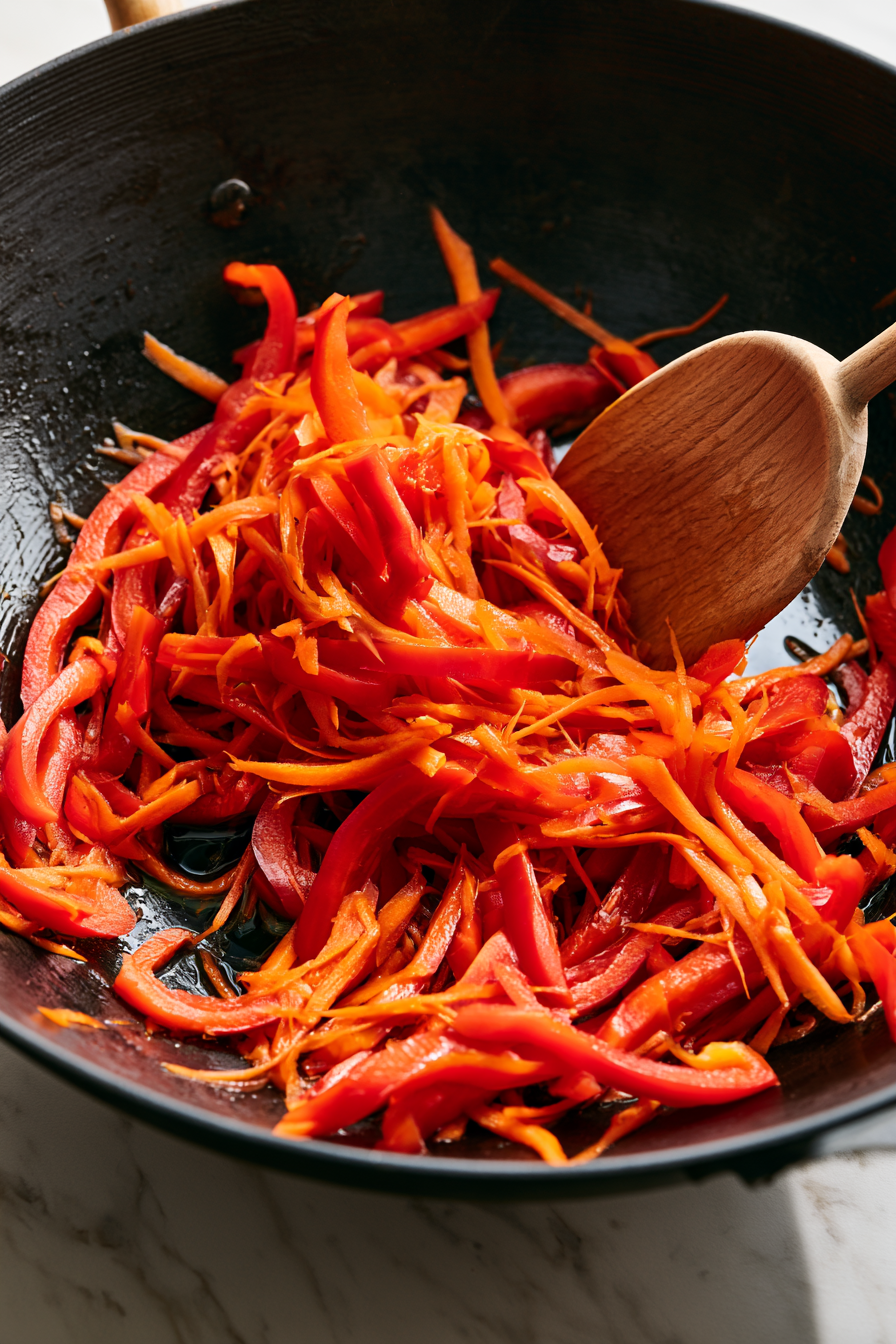
- Add the bell pepper and carrots to the hot pan and stir-fry for 2–3 minutes until slightly tender while keeping some crunch.
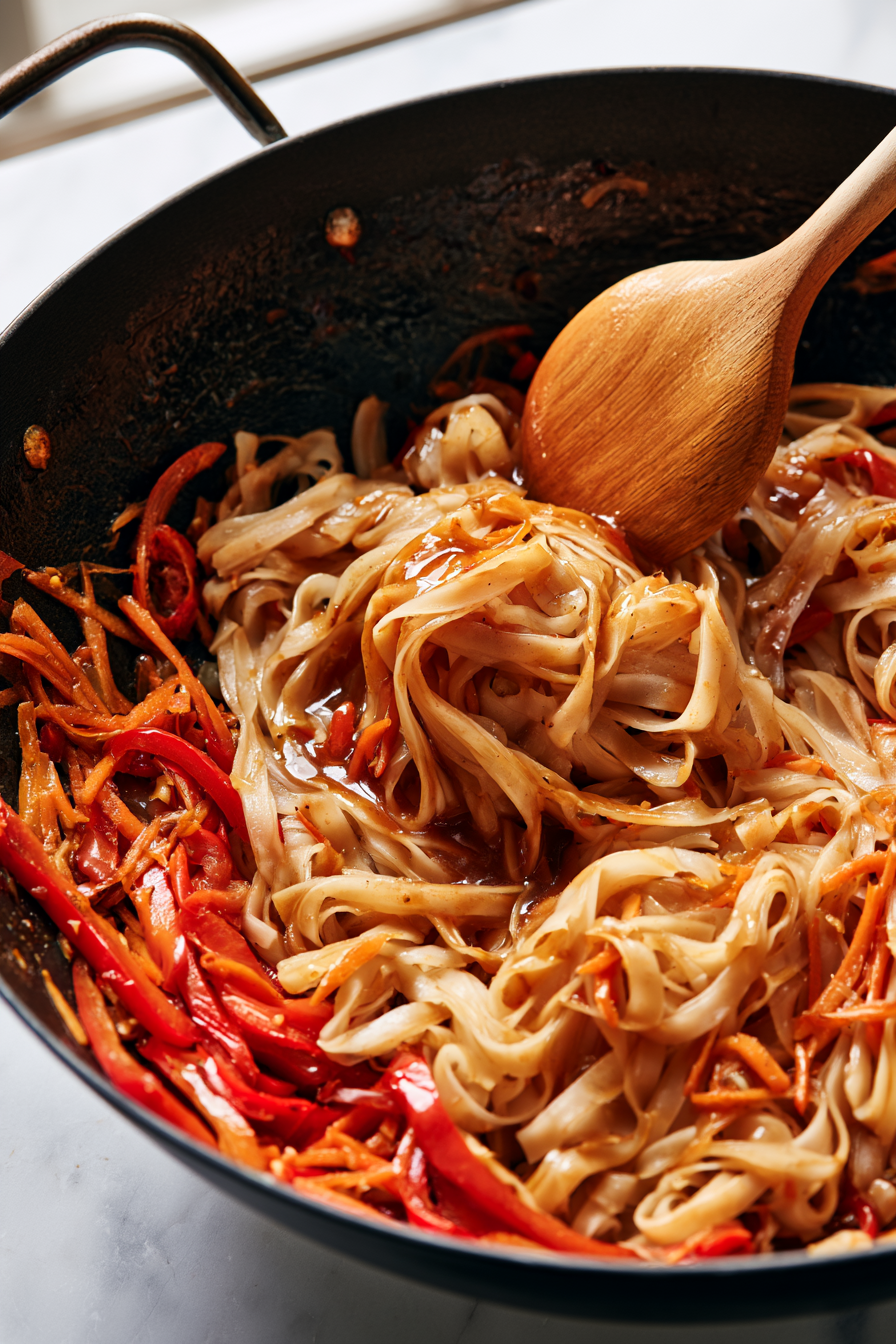
- Add the softened rice noodles and pour the prepared Pad Thai sauce over them. Toss continuously for 2–3 minutes until the noodles absorb the sauce and become glossy.
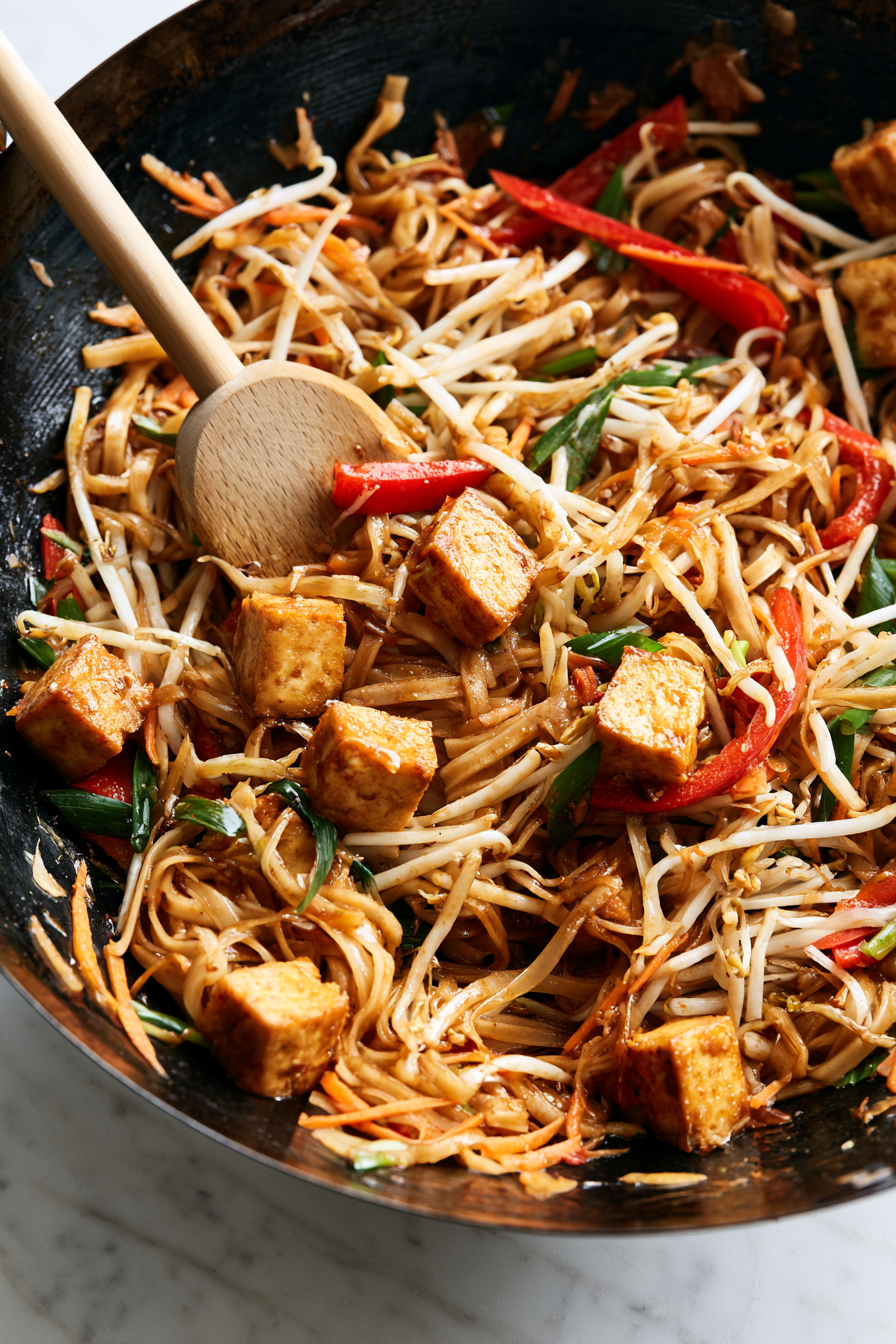
- Return the crispy tofu to the skillet and add the bean sprouts and green onions. Toss everything together until evenly combined and heated through.
- Taste the noodles and adjust the flavor if needed. Add extra lime juice for brightness, soy sauce for saltiness, or chili sauce for more heat.
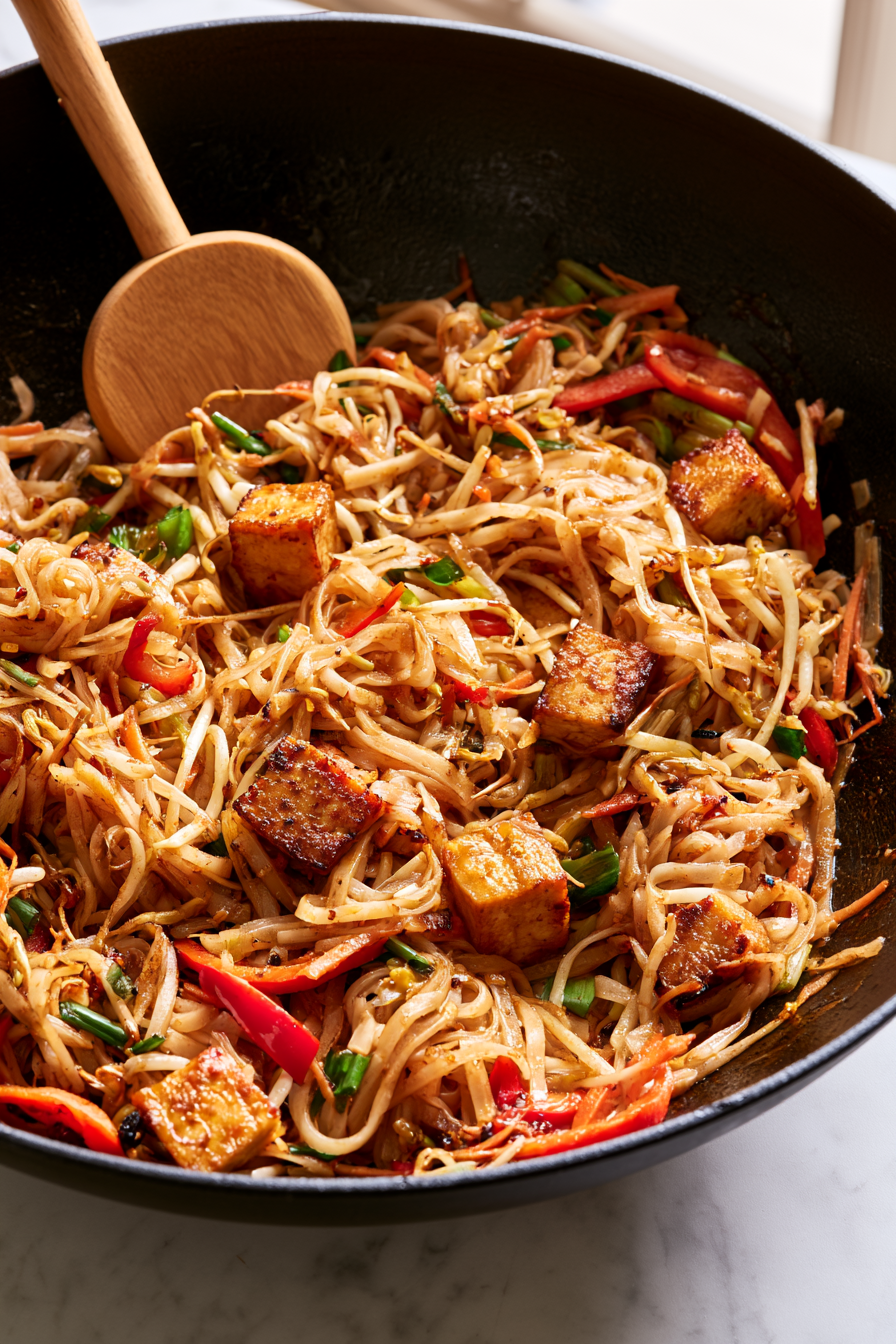
- Serve immediately topped with chopped peanuts, fresh cilantro, additional green onions, and lime wedges.
Notes
- Do not overcook the noodles: Rice noodles can become mushy quickly. They should be softened but still slightly firm before adding them to the stir-fry.
- Press the tofu first: Removing excess moisture helps the tofu become golden and crispy instead of soft.
- Balance the sauce: A great Pad Thai should have a balance of sweet, salty, sour, and spicy flavors. Adjust the ingredients according to your preference.
- Tamarind adds authenticity: Traditional Pad Thai uses tamarind for its signature tangy flavor. If you cannot find it, lime juice and rice vinegar create a good substitute.
- Make it gluten-free: Use gluten-free tamari instead of soy sauce and confirm that all packaged ingredients are gluten-free.
- Add more vegetables: Broccoli, mushrooms, snap peas, zucchini, cabbage, or baby corn are great additions.
- For extra protein: Add more tofu, edamame, or vegan chicken-style pieces.
- Storage: Store leftover Pad Thai in an airtight container in the refrigerator for up to 3 days. Add a splash of water when reheating to loosen the noodles.
- Meal prep tip: Prepare the sauce, tofu, and chopped vegetables ahead of time for a faster weeknight meal.
Nutrition Information
| Nutrient | Amount |
|---|---|
| Calories | 500 kcal |
| Carbohydrates | 68g |
| Protein | 17g |
| Fat | 19g |
| Fiber | 5g |
| Sugar | 14g |
| Sodium | 750mg |
Nutrition information is an estimate and will vary depending on the noodles, tofu, sauces, and toppings used.
Common Mistakes to Avoid
- Over-Soaking Rice Noodles: Soft noodles can become mushy when stir-fried. Keep them slightly firm before cooking.
- Skipping Tofu Pressing: Extra moisture prevents tofu from becoming crispy.
- Adding Sauce Too Late: Mix the sauce before cooking so it evenly coats the noodles.
- Overcrowding the Pan: Too many ingredients at once can steam the tofu instead of crisping it.
- Ignoring Flavor Balance: Pad Thai should have a balance of sweet, salty, sour, and spicy flavors.
- Overcooking Vegetables: Keep vegetables slightly crisp for better texture.
Delicious Variations You Should Try
- Vegetable Pad Thai: Add broccoli, mushrooms, zucchini, cabbage, or snap peas.
- Spicy Pad Thai: Increase sriracha or add chili crisp for extra heat.
- Peanut Pad Thai: Add a spoonful of peanut butter to the sauce for a richer flavor.
- Tempeh Pad Thai: Replace tofu with crispy tempeh for another plant-based protein option.
- Coconut Pad Thai: Add a splash of coconut milk for a creamier sauce.
- High-Protein Pad Thai: Add extra tofu, edamame, or vegan chicken-style pieces.
- Fresh Herb Pad Thai: Add Thai basil, mint, or extra cilantro for a brighter flavor.
What to Serve with Vegan Pad Thai?
Serve this Vegan Pad Thai with extra lime wedges, crushed peanuts, and fresh cilantro for a bright and flavorful finish.
Pair it with Thai-inspired sides like fresh spring rolls, cucumber salad, or vegetable dumplings.
For a heartier meal, add edamame, or roasted vegetables.
Top with chili crisp, crushed red pepper flakes, or extra sriracha if you enjoy a spicy kick.
A refreshing iced tea or coconut drink makes a delicious pairing for this flavorful noodle dish.
Storage and Meal Prep Tips
- Refrigerator Storage: Store leftover Pad Thai in an airtight container for up to 3 days.
- Reheating: Add a splash of water before reheating to loosen the noodles and refresh the sauce.
- Separate Components: Store tofu separately if possible to maintain its crispy texture.
- Meal Prep: Prepare the sauce, chop vegetables, and cook tofu ahead for faster assembly.
- Fresh Toppings: Add peanuts, cilantro, and lime just before serving for the best flavor.
Frequently Asked Questions
- Can I make Vegan Pad Thai gluten-free?
Yes. Use gluten-free tamari instead of soy sauce and confirm that all packaged ingredients are gluten-free. - What can I use instead of tamarind paste?
A combination of lime juice and rice vinegar works well as a substitute, although tamarind provides the most traditional flavor. - Can I use another protein instead of tofu?
Yes. Tempeh, edamame, chickpeas, or vegan chicken alternatives can be used. - Why are my rice noodles mushy?
The noodles were likely soaked too long or overcooked. They should remain slightly firm before adding them to the stir-fry. - Can I prepare Pad Thai ahead of time?
Yes. Prepare the sauce and vegetables ahead, then cook and combine everything when ready to serve. - How can I make Pad Thai spicier?
Add extra sriracha, chili garlic sauce, crushed red pepper flakes, or chili crisp. - What vegetables work best in Pad Thai?
Carrots, bell peppers, bean sprouts, cabbage, mushrooms, broccoli, zucchini, and snap peas all work well.

Hi, I’m Austin. Every recipe you’ll find here is carefully tested, photographed, and created to help you cook with confidence…..
know more