Vegan Pesto Pasta Recipe
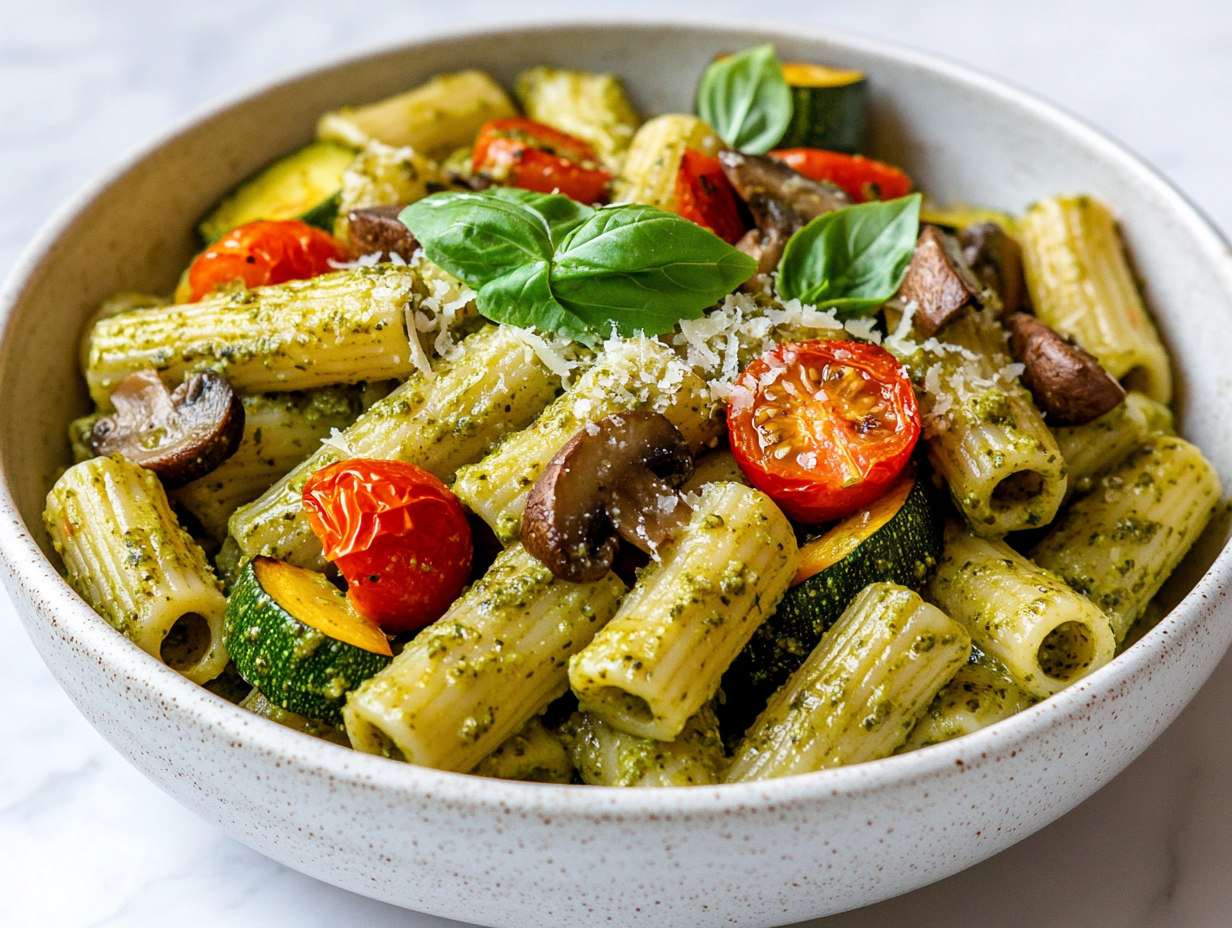
This Vegan Pesto Pasta Recipe combines tender pasta, homemade basil pesto, roasted vegetables, and juicy cherry tomatoes in one colorful, satisfying meal. The pesto is made without dairy, using fresh basil, walnuts or pine nuts, nutritional yeast, garlic, lemon juice, and extra-virgin olive oil.
Roasting the vegetables brings out their natural sweetness while adding lightly browned edges to the finished dish. The pesto coats the pasta with a creamy consistency, and a splash of reserved pasta water helps bring everything together into a smooth, glossy sauce.
Why You’ll Reach for This Recipe Again
- Straightforward Preparation: The pesto and roasted vegetables can be prepared while the pasta cooks.
- One Complete Meal: Pasta and a generous mix of vegetables make this a substantial main dish.
- Fresh Ingredients: Basil, lemon, garlic, and vegetables give the recipe a fresh ingredient profile.
- Easy to Customize: Change the vegetables or nuts based on what you have available.
- Make-Ahead Pesto: The pesto can be prepared several days ahead and refrigerated.
- Weeknight Friendly: The cooking process uses simple techniques without complicated steps.
Ingredient Insights and Easy Substitutions
- Fresh Basil: Fresh basil is the foundation of the pesto, so choose bright green leaves without dark spots or bruising. Handle them gently to preserve their fresh character.
- Walnuts or Pine Nuts: Either nut works well in the pesto. Walnuts provide a slightly earthy flavor, while pine nuts give the sauce a more traditional pesto profile.
- Nutritional Yeast: Nutritional yeast provides savory depth in place of Parmesan. It also helps give the pesto a fuller consistency.
- Short Pasta: Rigatoni, penne, rotini, fusilli, and cavatappi are particularly useful here because their ridges and curves hold onto the pesto.
- Roasted Vegetables: Zucchini, mushrooms, bell pepper, and cherry tomatoes provide variety in the finished dish. Broccoli, asparagus, cauliflower, spinach, or eggplant can also be used.
- Reserved Pasta Water: Starchy pasta water helps loosen the pesto while allowing it to cling to the noodles. Add it gradually until the sauce reaches the consistency you want.
Chef’s Tip: Do not drain all of the pasta water before reserving some. Even a small splash can transform thick pesto into a smoother sauce that coats the pasta more evenly.
Vegan Pesto Pasta
Equipment
- Food Processor
- Large Baking Sheet
- Colander
- Large mixing bowl
- Chef's Knife
Ingredients
For the Vegan Pesto
- 2 cups packed fresh basil leaves
- ⅓ cup raw walnuts or pine nuts
- 3 garlic cloves
- 3 tablespoons nutritional yeast
- 2 tablespoons fresh lemon juice
- ½ teaspoon fine sea salt
- ¼ teaspoon freshly ground black pepper
- ⅓ cup extra-virgin olive oil
For the Pasta and Vegetables
- 12 ounces rigatoni penne, or rotini
- 1 medium zucchini sliced into half-moons
- 8 ounces mushrooms sliced
- 1 red bell pepper chopped
- 10 ounces cherry tomatoes halved
- 1 tablespoon olive oil
- ½ teaspoon fine sea salt
- ¼ teaspoon freshly ground black pepper
- ¼ cup reserved pasta water as needed
- Fresh basil for serving
- Vegan Parmesan optional
Instructions
- Preheat the oven to 400°F. Add the zucchini, mushrooms, bell pepper, and cherry tomatoes to a large baking sheet. Toss with olive oil, salt, and black pepper until evenly coated.
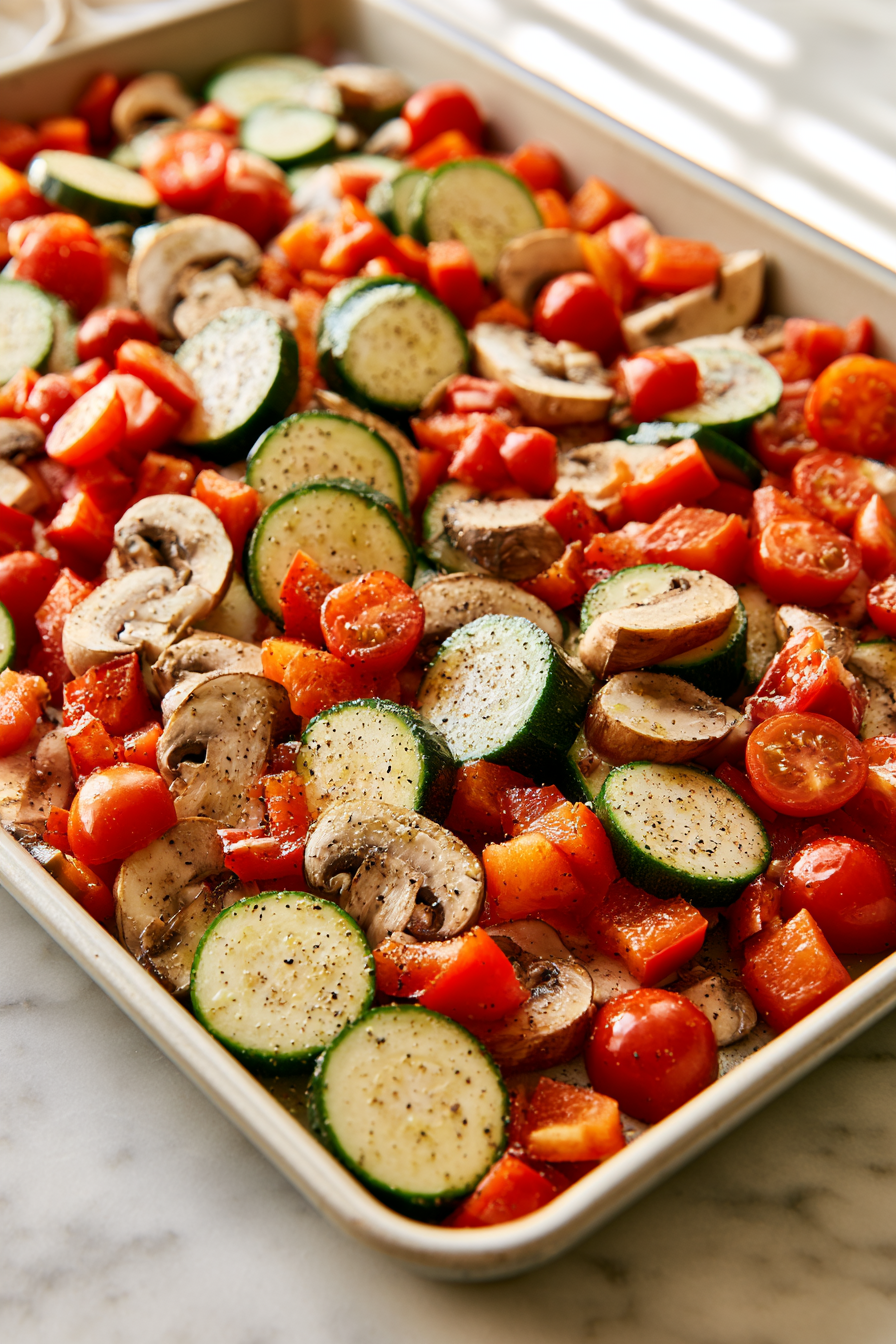
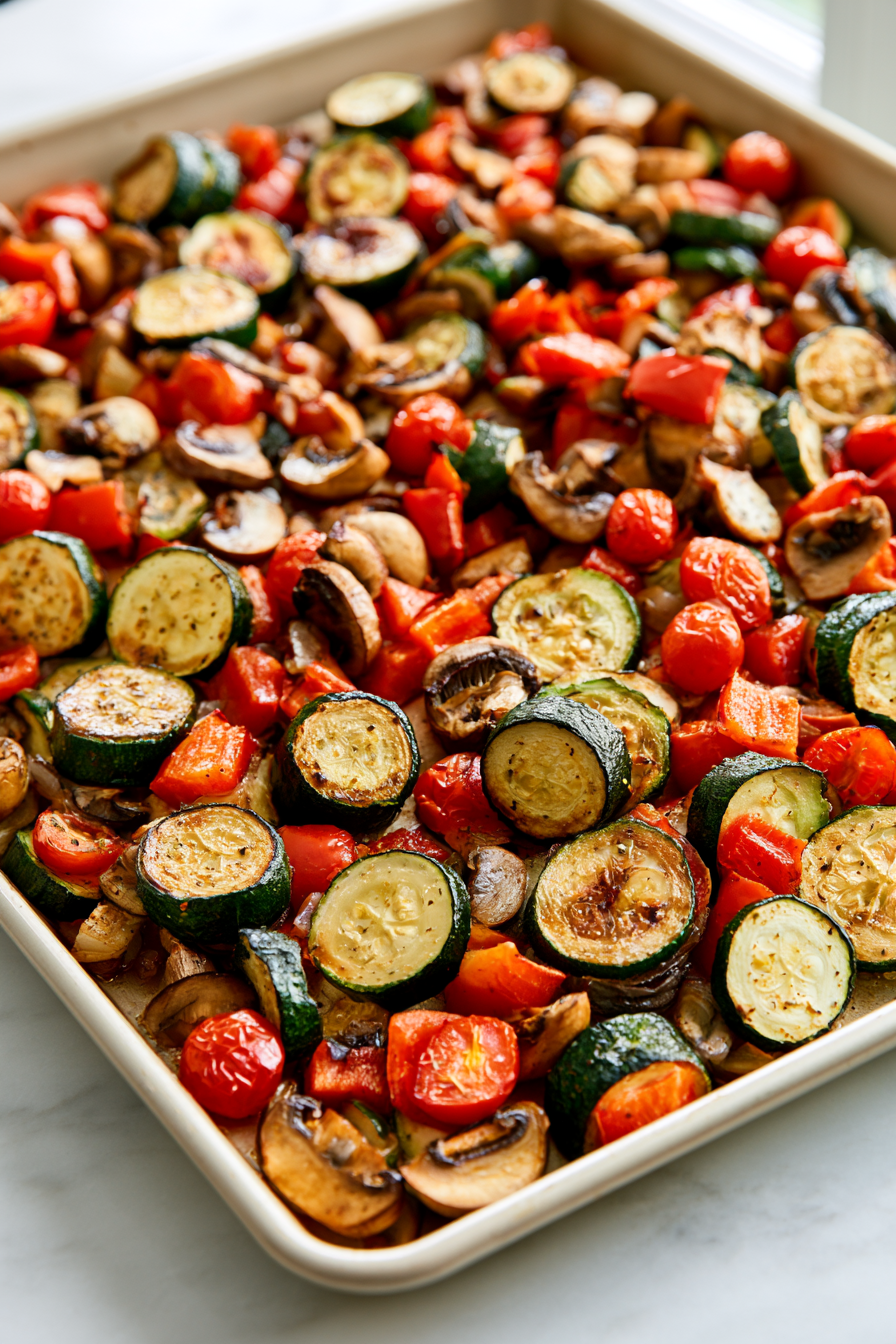
- Spread the vegetables into a single layer and roast for 20–25 minutes, stirring once halfway through, until tender and lightly browned around the edges.
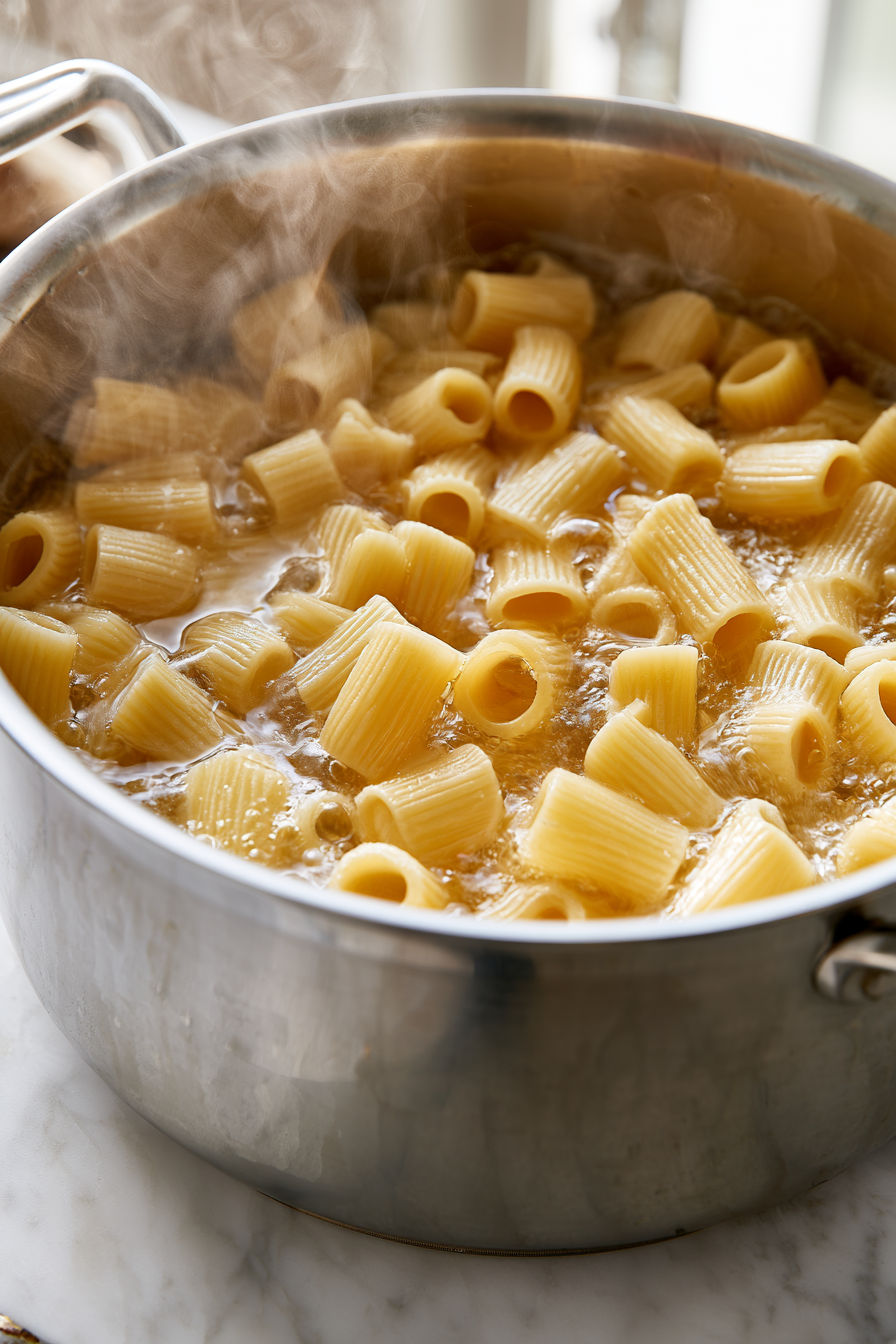
- While the vegetables roast, bring a large pot of generously salted water to a boil. Cook the pasta according to the package directions until al dente.
- While the pasta cooks, prepare the pesto. Add the basil, walnuts, garlic, nutritional yeast, lemon juice, salt, and black pepper to a food processor.
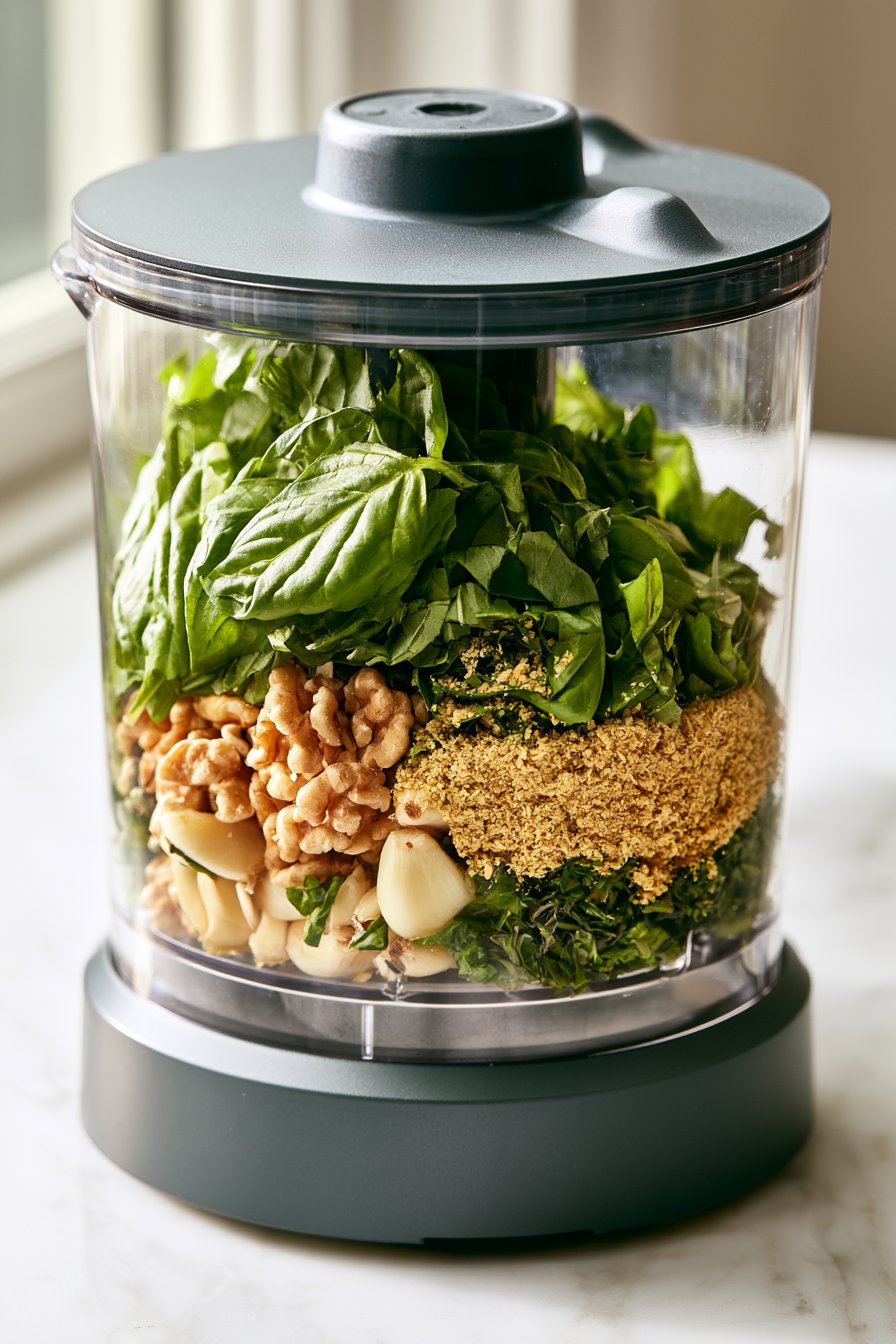
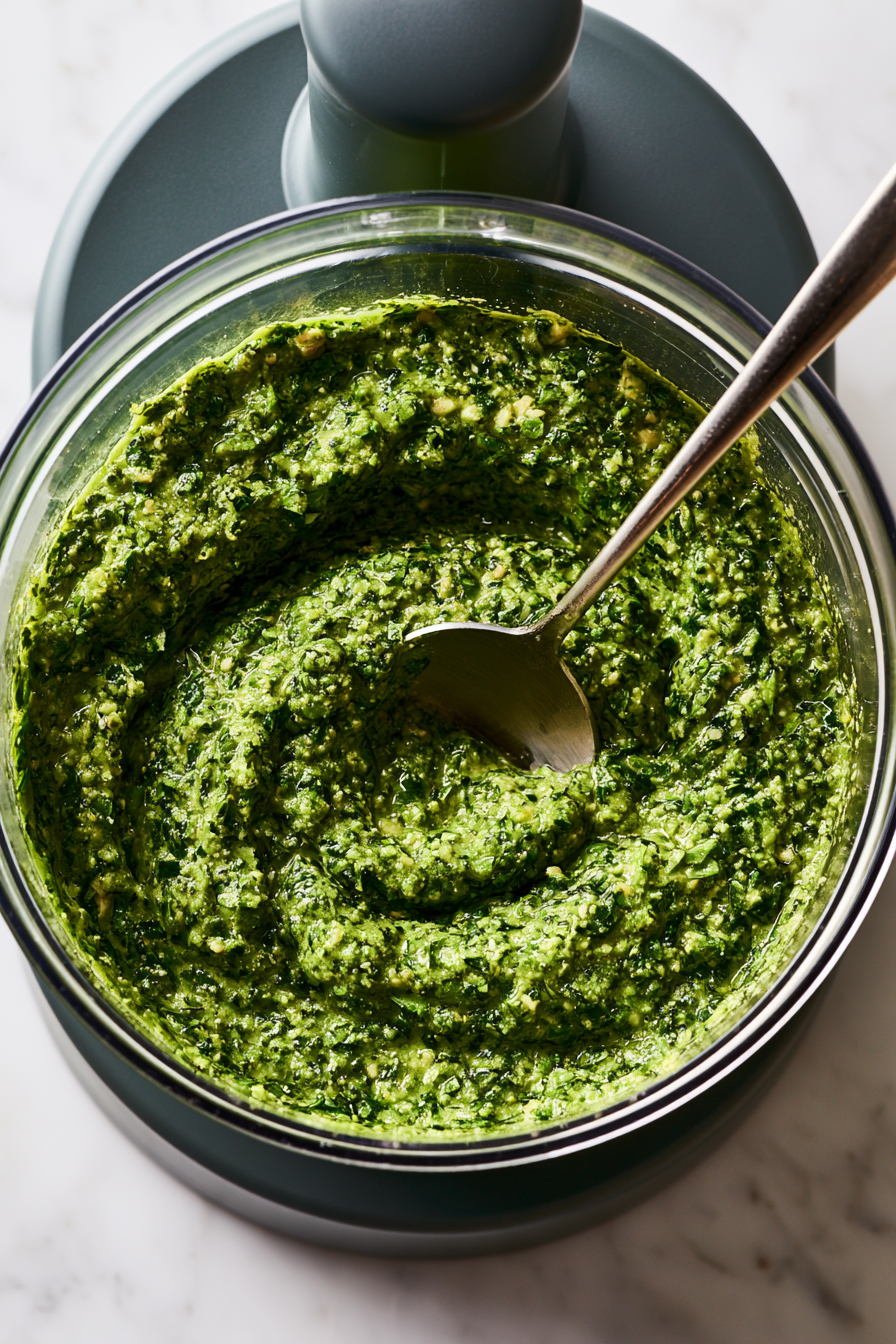
- Pulse several times until the ingredients are finely chopped. With the processor running, slowly drizzle in the olive oil until the pesto reaches a thick but spoonable consistency.
- Taste the pesto and adjust the salt, lemon juice, or black pepper as needed. For a thinner pesto, add another tablespoon or two of olive oil.
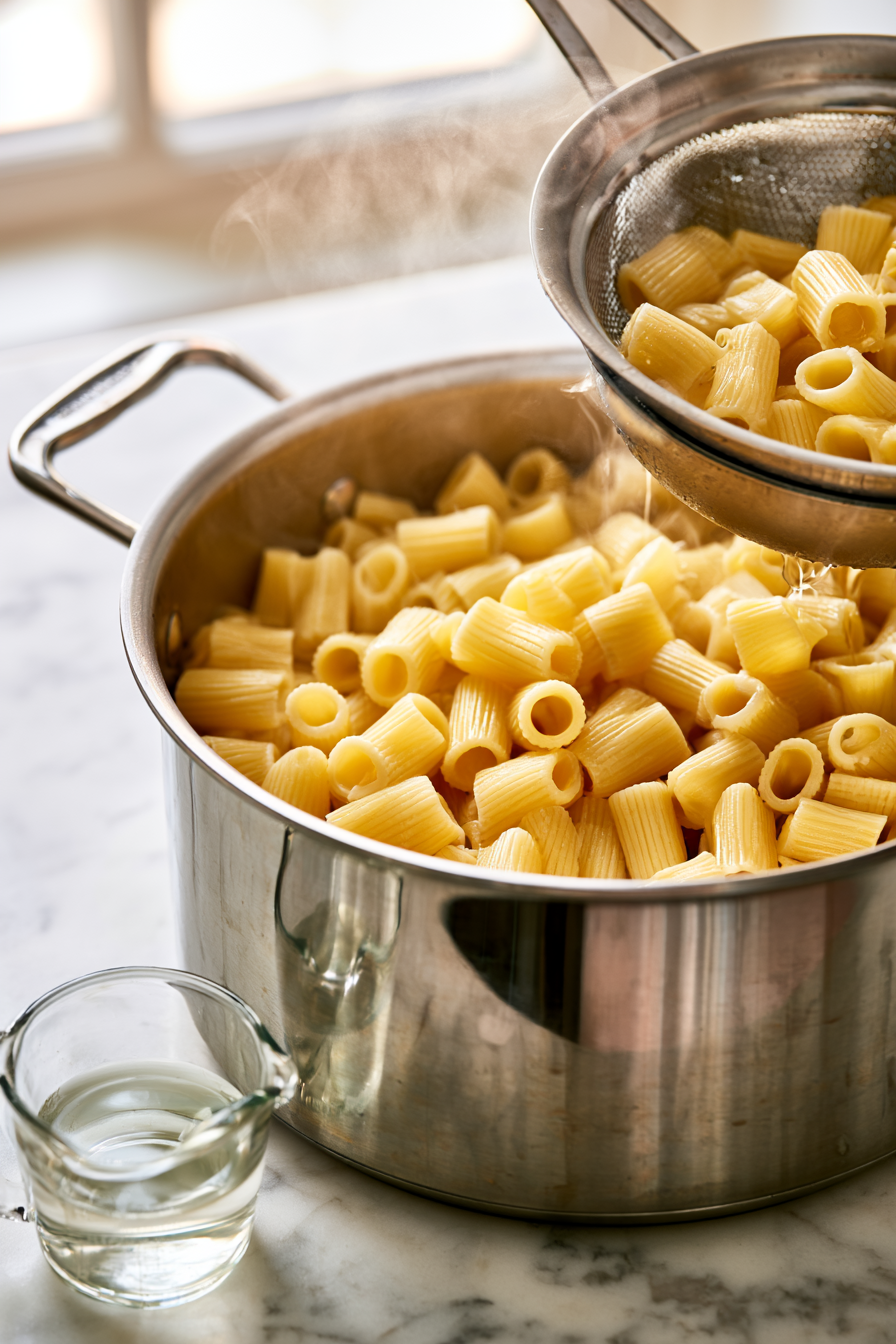
- Before draining the pasta, reserve about ¼ cup of the cooking water. Drain the pasta well and return it to the warm pot.
- Add the pesto and roasted vegetables to the pasta. Toss gently until the noodles are evenly coated and the vegetables are distributed throughout.
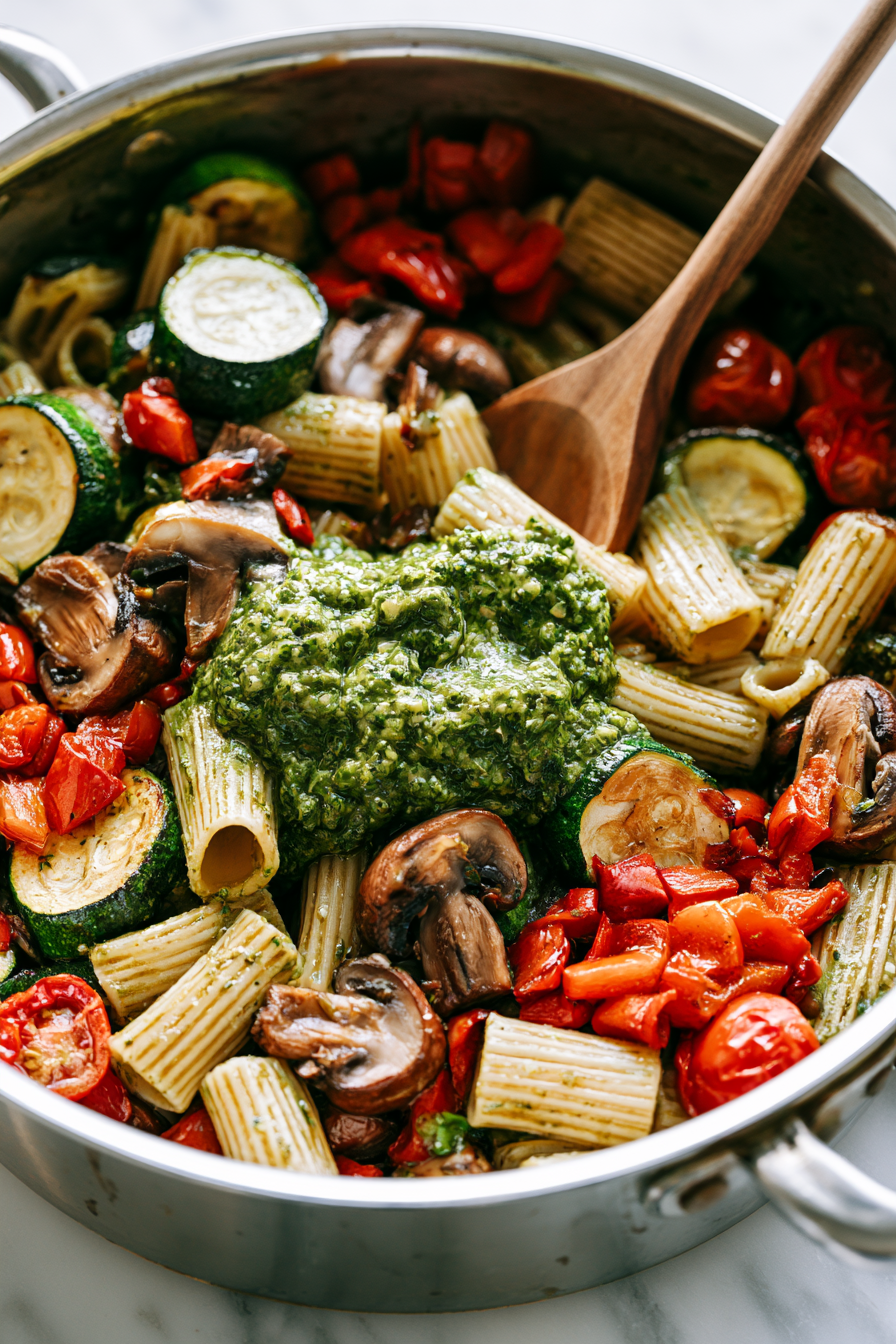
- Add a splash of reserved pasta water if the pesto seems too thick. Continue tossing until the sauce becomes glossy and clings to the pasta.
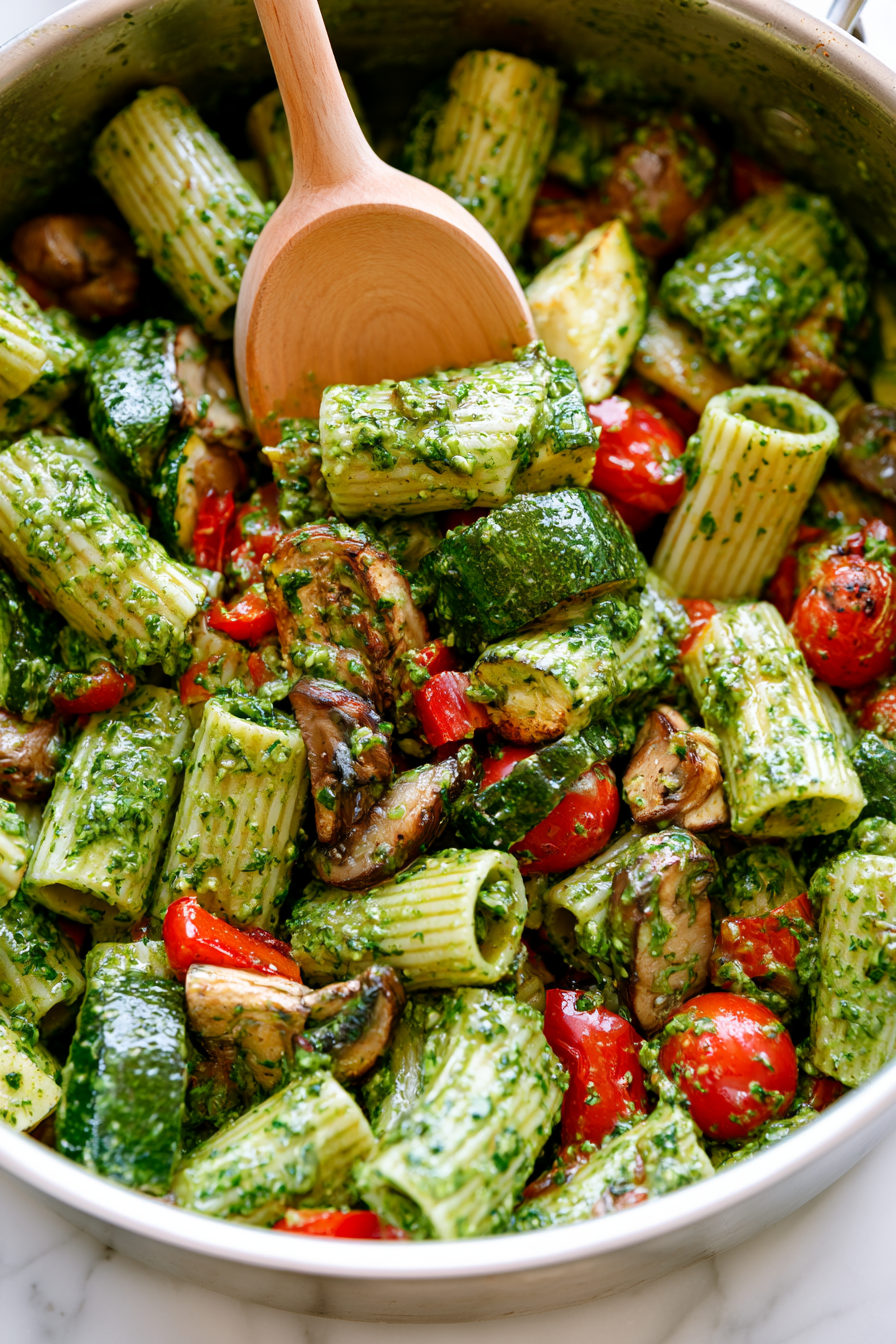
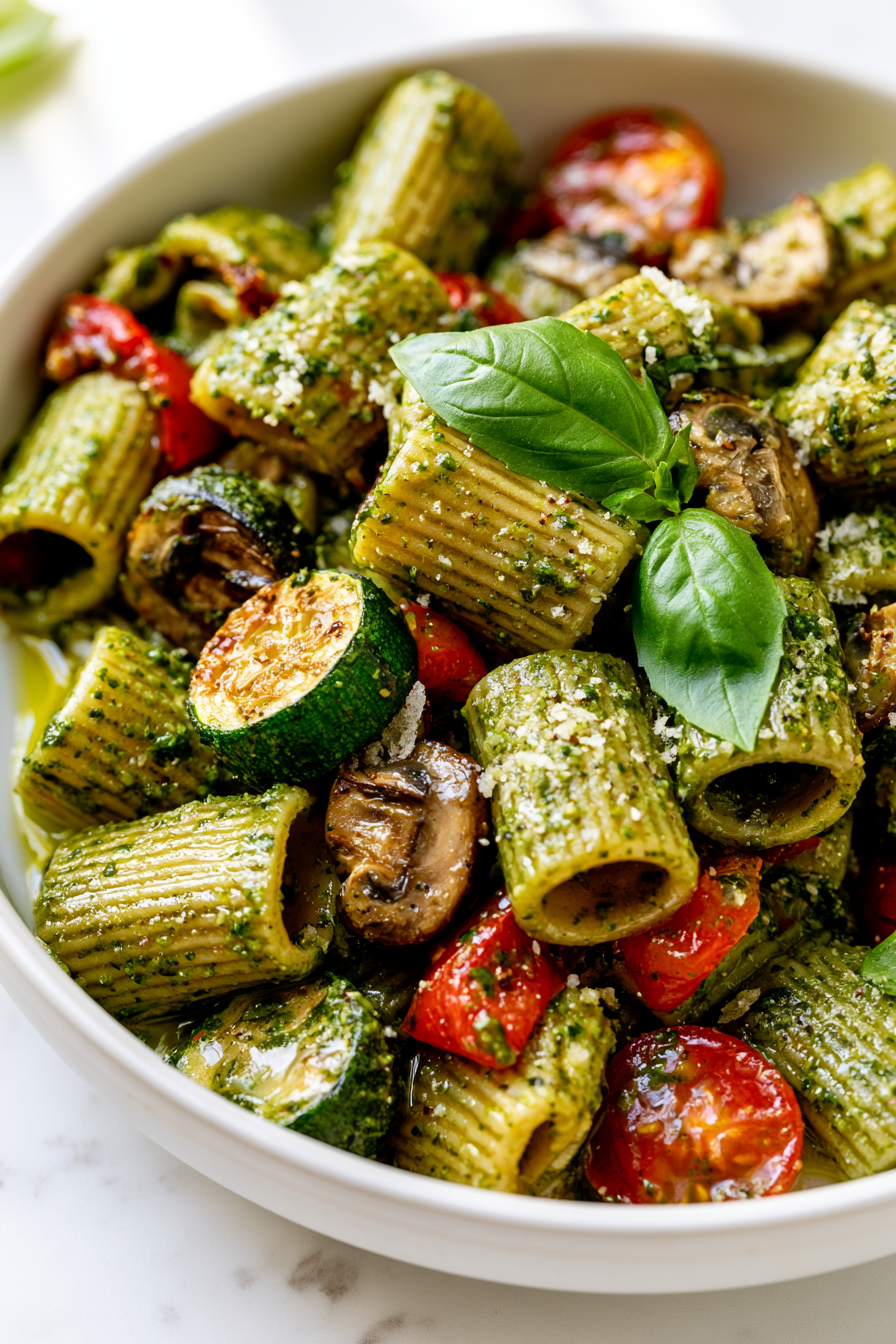
- Serve warm with fresh basil, vegan Parmesan, and an extra drizzle of olive oil if desired.
Notes
- Use fresh basil: Fresh, vibrant basil gives the pesto its best flavor. Avoid leaves that are wilted, dark, or bruised.
- Don’t over-process the pesto: A food processor creates the ideal texture. Pulse until the ingredients are finely chopped and creamy rather than blending the pesto into a completely smooth paste.
- Toast the nuts: For deeper flavor, lightly toast the walnuts or pine nuts in a dry skillet for a few minutes before making the pesto. Let them cool before processing.
- Choose the right pasta: Short shapes such as rigatoni, penne, rotini, fusilli, and cavatappi work especially well because the pesto settles into the ridges and curves.
- Customize the vegetables: Broccoli, asparagus, cauliflower, spinach, or roasted eggplant can be substituted for any of the vegetables in the recipe.
- Nut-free option: Replace the nuts with sunflower seeds or hemp seeds for a nut-free pesto.
- Make ahead: The pesto can be prepared up to 3 days ahead and stored in an airtight container in the refrigerator. Keep a thin layer of olive oil over the surface to help preserve its fresh color.
- Storage: Refrigerate leftover pesto pasta in an airtight container for up to 3 days. Reheat gently in a skillet with a splash of water or plant-based milk.
Nutrition Information
| Nutrient | Amount |
|---|---|
| Calories | 520 kcal |
| Carbohydrates | 68g |
| Protein | 17g |
| Fat | 22g |
| Fiber | 7g |
| Sugar | 8g |
| Sodium | 430mg |
Nutrition information is an estimate and will vary depending on the pasta, pesto ingredients, and vegetables used.
Common Mistakes to Avoid
- Overcrowding the Baking Sheet: Vegetables need space to roast properly rather than steam.
- Over-Processing the Pesto: Excessive processing can turn the pesto into a completely smooth paste and affect its texture.
- Overcooking the Pasta: Cook until al dente so the noodles maintain enough structure for tossing.
- Adding All the Oil at Once: Slowly adding the olive oil helps create a cohesive pesto.
- Skipping the Pasta Water: Without it, thick pesto can be harder to distribute evenly through the pasta.
- Over-Roasting the Vegetables: Cook until tender and lightly browned rather than letting smaller pieces become overly soft.
Easy Ways to Change It Up
- Nut-Free Pesto: Replace the walnuts or pine nuts with sunflower seeds or hemp seeds.
- Creamy Pesto Pasta: Stir a small amount of unsweetened plant-based cream into the finished pesto.
- Broccoli Pesto Pasta: Replace some of the roasted vegetables with broccoli florets.
- Spicy Version: Add red pepper flakes to the pesto or finished pasta.
- White Bean Pesto Pasta: Toss in drained white beans for additional plant-based protein.
- Lemon Herb Version: Add extra fresh lemon zest just before serving.
- Greens Addition: Stir fresh spinach into the warm pasta so it gently wilts before serving.
More Vegan Recipes You’ll Enjoy
Best Ways to Store Leftovers
- Refrigerator Storage: Store leftover pesto pasta in an airtight container for up to 3 days.
- Pesto Storage: Keep prepared pesto refrigerated in an airtight container if making it separately.
- Reheating: Warm the pasta gently in a skillet rather than using high heat.
- Loosen the Sauce: Add a splash of water or plant-based milk if the pesto has thickened.
- Fresh Finish: Add fresh basil or a small drizzle of olive oil after reheating to refresh the dish.
Frequently Asked Questions
- Can I make the pesto without a food processor?
Yes. A mortar and pestle can be used to crush the basil, nuts, garlic, and other ingredients, although it will take more time and effort. - Why does my pesto turn dark?
Basil can darken when exposed to air or excessive heat. Using fresh leaves and storing prepared pesto in an airtight container can help preserve its color. - Should pesto be heated before adding it to pasta?
It does not need to be cooked separately. Tossing the pesto with hot pasta allows it to warm gently while preserving the fresh character of the basil. - Can I use dried basil for the pesto?
Fresh basil is strongly recommended because dried basil does not provide the same texture, aroma, or fresh herbal character needed for this type of pesto. - Why are my roasted vegetables watery?
Vegetables can release moisture if the baking sheet is overcrowded. Spread them in a single layer with enough space around each piece for proper roasting. - Can I use a different type of pasta?
Yes. Short pasta shapes work particularly well, but spaghetti, linguine, or other pasta varieties can also be used. - How can I make the pesto more vibrant?
Fresh basil, fresh lemon juice, and good-quality extra-virgin olive oil all contribute to a brighter pesto. Avoid using wilted or heavily bruised basil leaves.

Hi, I’m Austin. Every recipe you’ll find here is carefully tested, photographed, and created to help you cook with confidence…..
know more