Authentic Four-Meat Ragu Recipe

While many modern meat sauces rely on a single protein, traditional Italian cooking often celebrates using different cuts of meat to build deeper flavor, texture, and richness.
To achieve a ragù with genuine structural integrity, the key is balancing different cuts of meat, each contributing its own combination of fat, tenderness, and flavor.
This recipe moves beyond the basics, layering collagen-rich pork shoulder, slow-rendering pork belly, herbal Italian sausage, and the concentrated salt of prosciutto.
This isn’t a quick-simmered sauce; it is a slow-braised masterpiece that honors the techniques of Marcella Hazan while delivering a bold, Southern-inspired intensity.
By allowing the pork belly to melt into the tomato base and the shoulder to break into silken ribbons, the dish achieves a depth that defies modern shortcuts.
The Four-Meat Logic: Why This Combination Works
A professional ragù relies on the interaction between fat, protein, and collagen. Using these four specific cuts ensures the sauce has a complex texture and a balanced flavor profile that single-meat sauces cannot achieve.
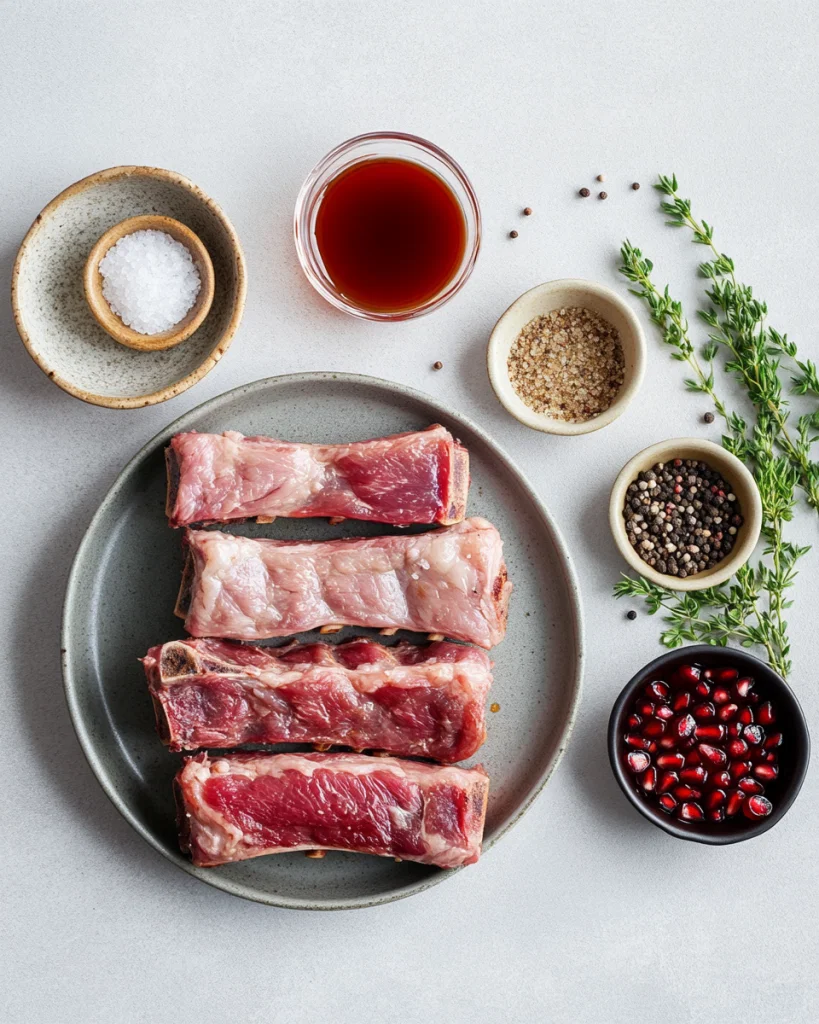
- Pork Shoulder (Richness & Structure): Since it contains plenty of connective tissue, slow cooking allows collagen to break down into gelatin, creating a tender texture and fuller-bodied sauce.
- Pork Belly (Lipids & Emulsification): Pork belly provides the essential fat content. As it renders, the fat emulsifies with the tomato base, creating a rich, glossy coating. This ensures the sauce stays “bound” to the pasta rather than sliding off.
- Italian Sausage (Herbal Foundation): Bulk sausage is used as a shortcut to flavor. Depending on the variety, it can add herbs, spices, garlic, and seasoning that build extra layers of flavor during browning.
- Prosciutto (Concentrated Umami): As a cured meat, prosciutto adds concentrated savory flavor, saltiness, and subtle umami notes that deepen the overall taste of the sauce.
By layering these four proteins, the dish achieves a balance of fiber, fat, spice, and salt that a single-meat recipe lacks.
4-Meat Ragu Recipe
Equipment
- 6-quart Dutch Oven
- Tongs
- Plate
- Two forks
Ingredients
- 1 lb Pork Shoulder (Boston Butt) cut into 2-inch cubes
- 1 lb Pork Belly cut into 1-inch cubes.
- 1 lb Italian Sausage
- 6 oz Prosciutto ends finely diced.
- 1 tbsp salt
- Black pepper
- 3 tbsp olive oil separated
- 3 cloves garlic minced
- 1 cup onion pulse in a food processor
- 1 cup carrots pulse in a food processor
- 1 cup celery pulse in a food processor
- 800 g / 28oz crushed canned tomatoes
- 3 tbsp tomato paste
- 2 beef bouillon cubes crumbled
- 1 cup / 250ml red wine full bodied (like merlot, cabernet sauvignon), or sub with beef broth/stock
- 2 cups Beef or Chicken Bone Broth
- 3/4 tsp dried thyme or 3 sprigs fresh thyme
- 3 dried bay leaves
- TO SERVE NOT ALL SAUCE IS USED
- 1 lb /500g dried pappardelle or other pasta of choice
- Freshly grated parmesan cheese or parmigiano reggiano
- Fresh parsley finely chopped (optional)
Instructions
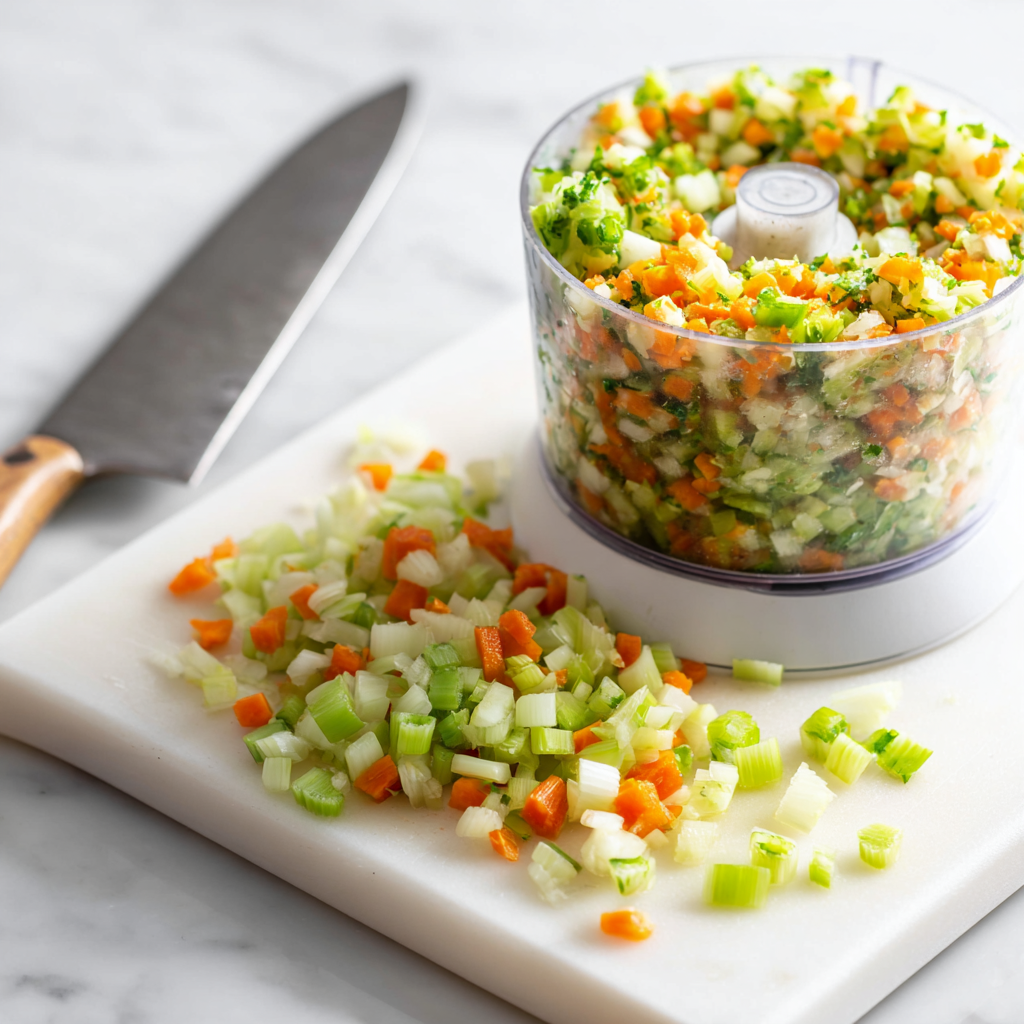
- Pulse the onion, carrot, and celery in a food processor until finely minced.
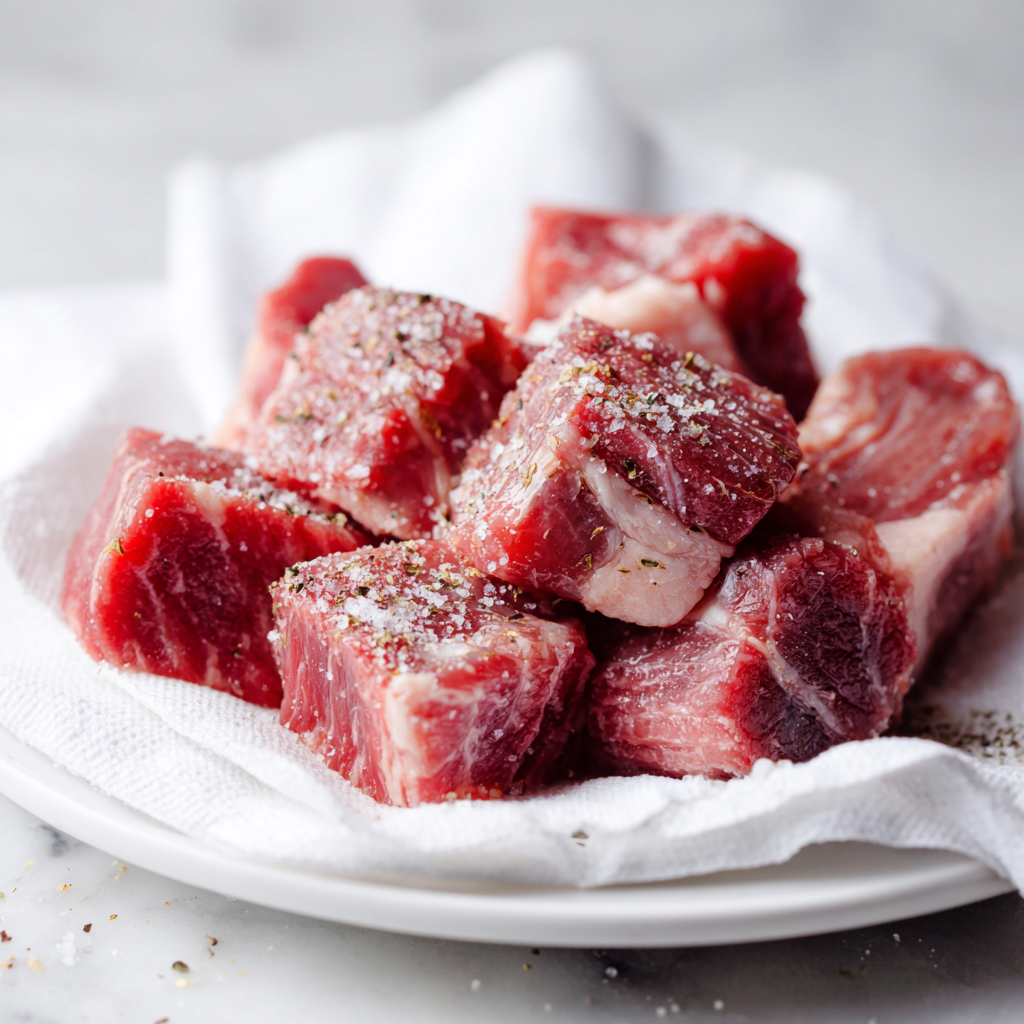
- Pat the pork shoulder and belly dry. Working in batches, sear the meat in the Dutch oven over high heat until a deep mahogany crust develops on all sides.
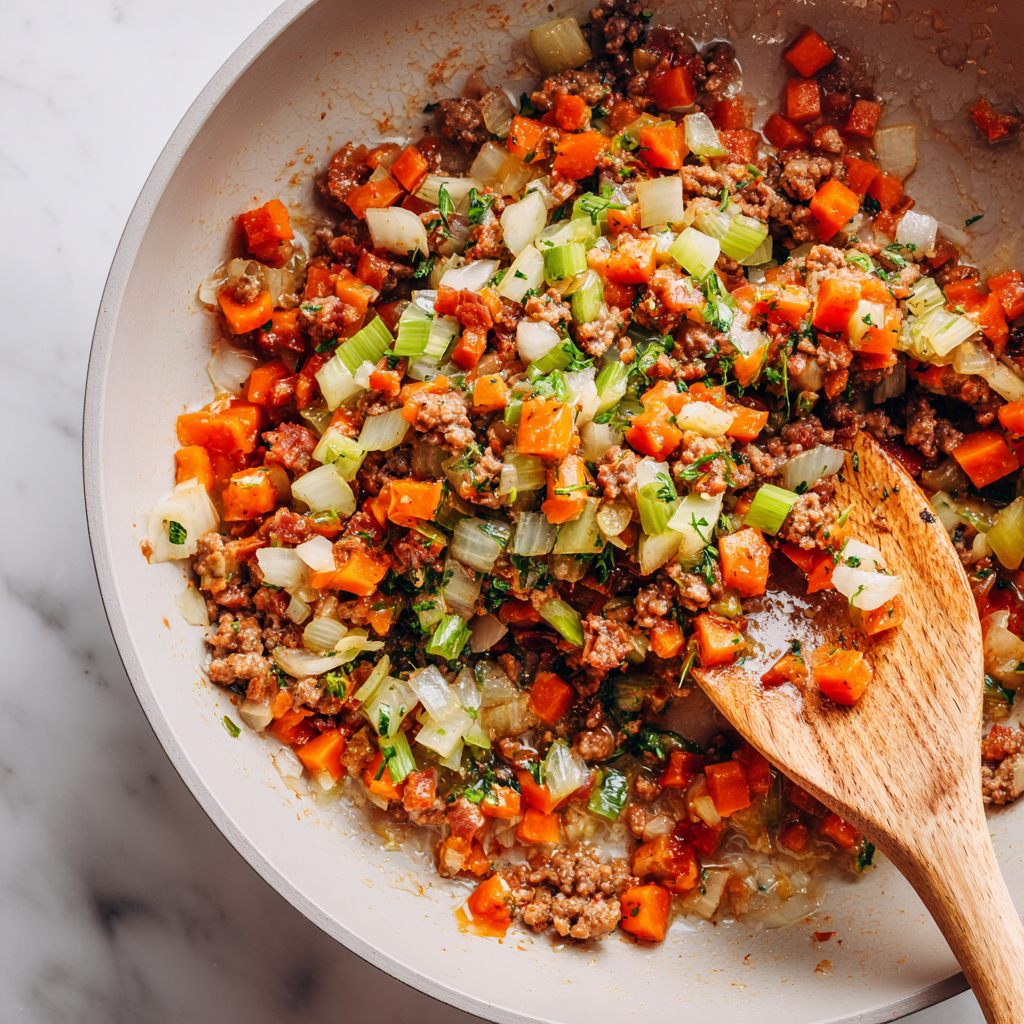
- Reduce the heat to medium. Add the Italian sausage and prosciutto ends, breaking the sausage apart with a wooden spoon. Once the fats have rendered, add the minced vegetables and garlic, sautéing until the onions are translucent and have picked up the browned bits from the meat.
- Stir in the tomato paste and cook for 2 minutes to toast the sugars. Pour in the red wine to deglaze the pot.
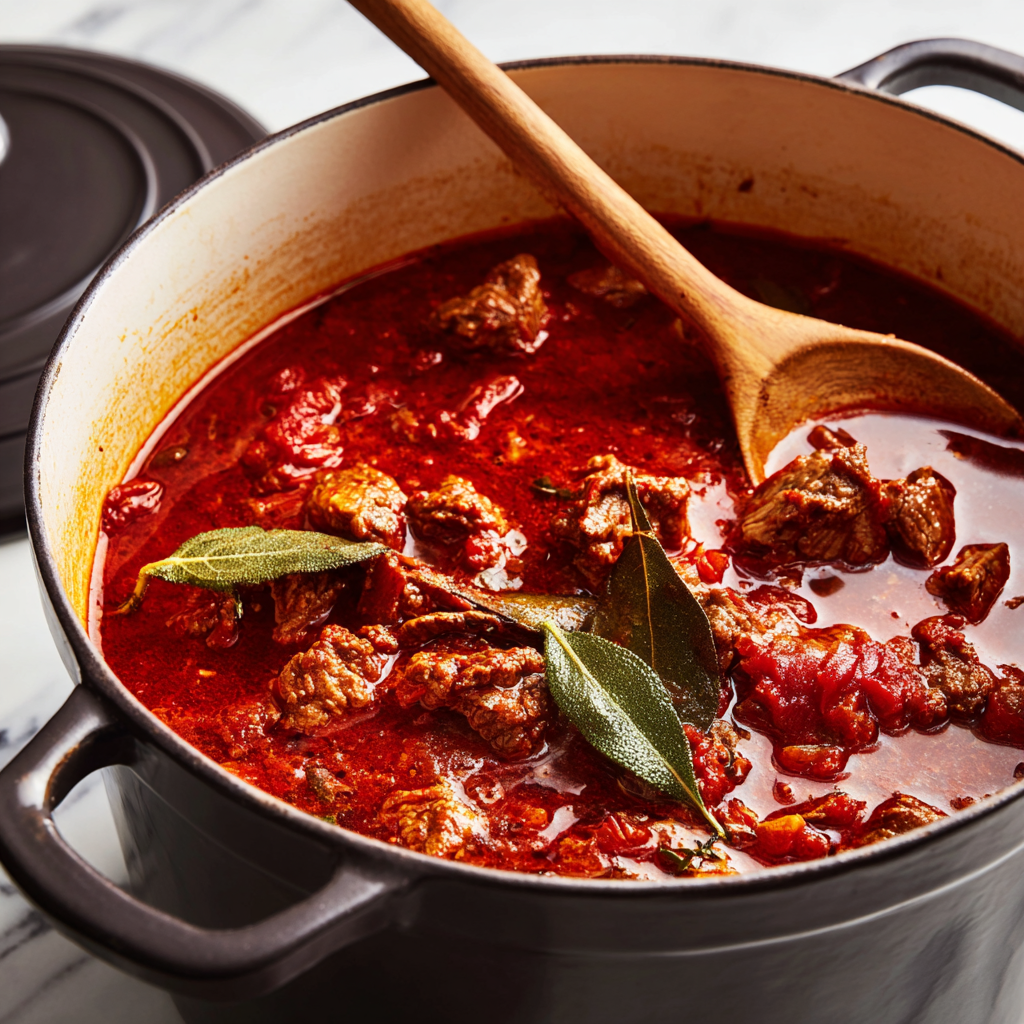
- Add the crushed tomatoes, bone broth, and aromatics. Return the meat and juices to the pot and bring to a bare simmer. Cover with a tight-fitting lid and transfer to a 300°F (150°C) oven for 3 to 3.5 hours.
- Remove the pot and discard the bay leaves. Use a wooden spoon to stir the sauce; the pork shoulder should become extremely tender and break apart easily with a spoon or gentle stirring while the pork belly provides a buttery texture.
- Boil your pappardelle until just shy of al dente. Add the pasta directly into the Dutch oven with a splash of starchy pasta water.
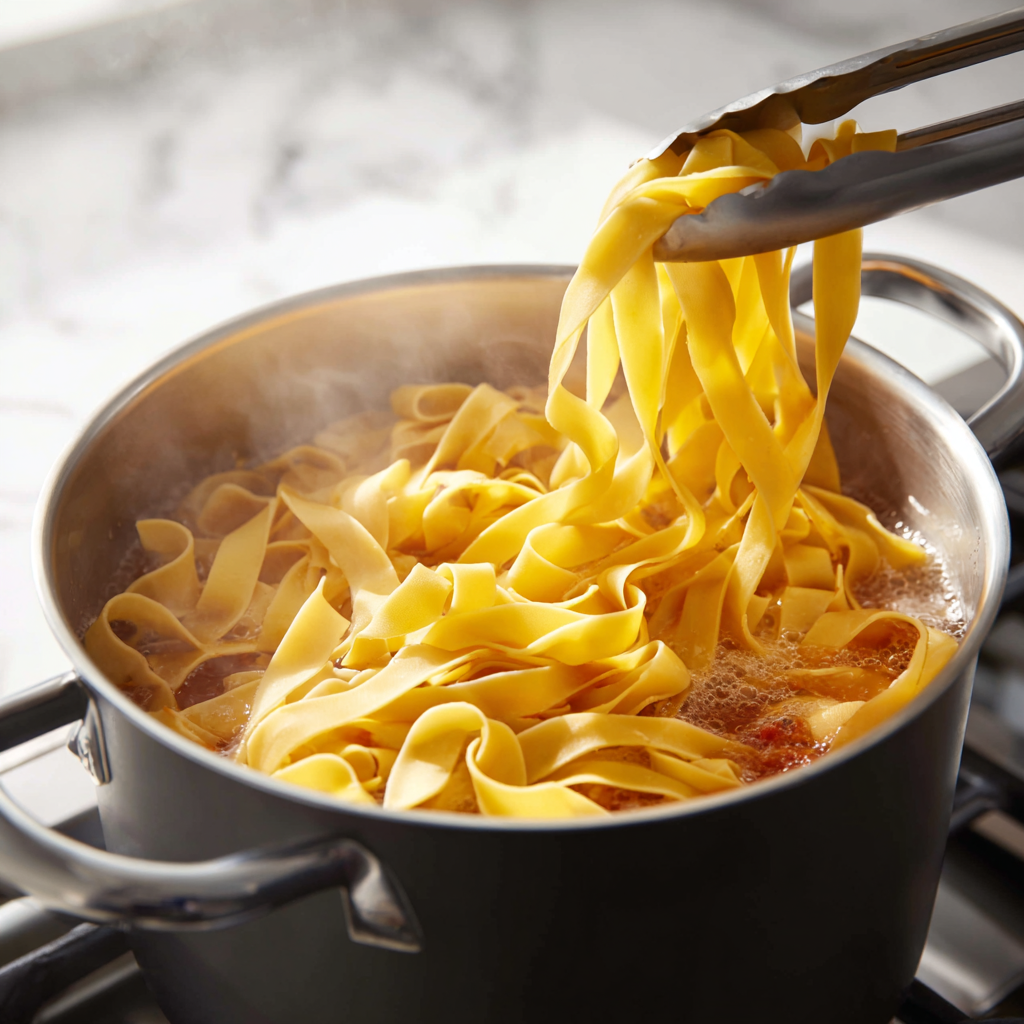
- Once the pasta and sauce are tossed, remove the pot from the heat and let it sit for 2–3 minutes before plating.
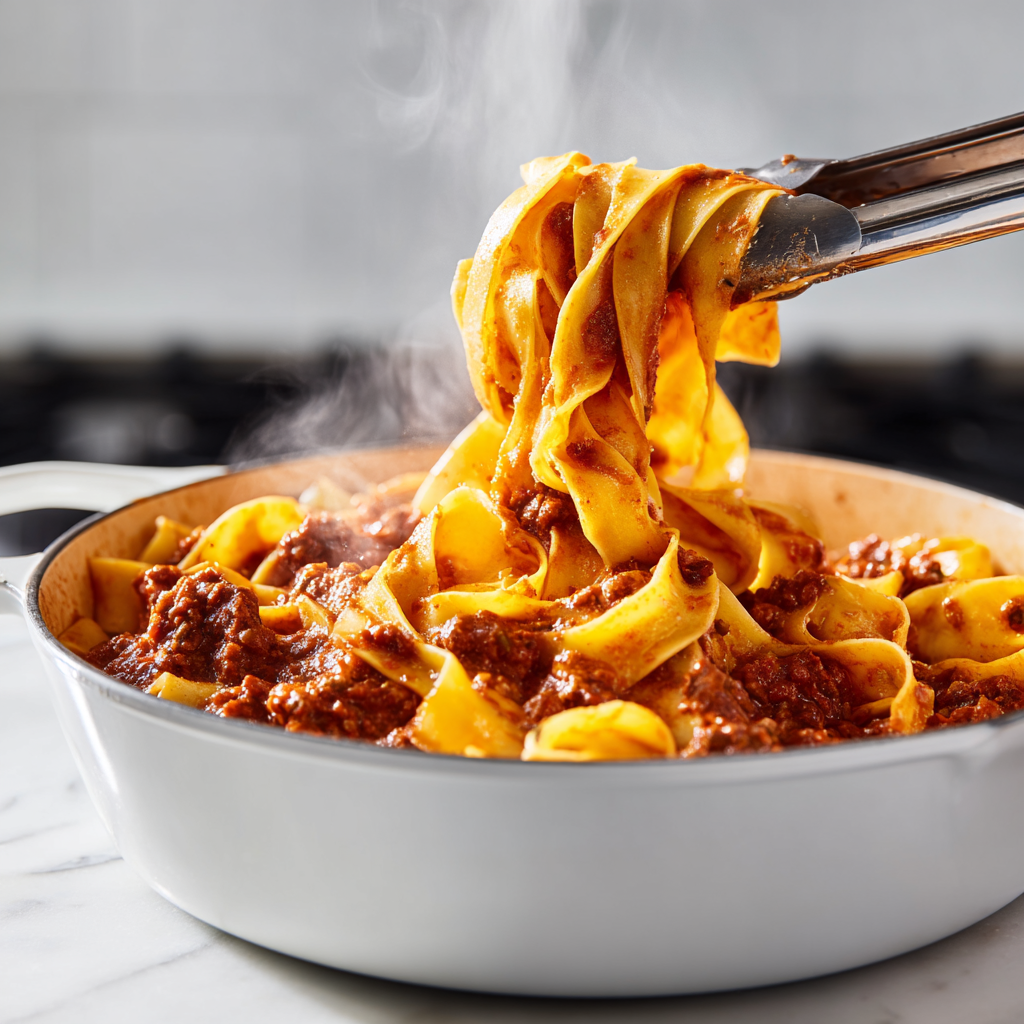
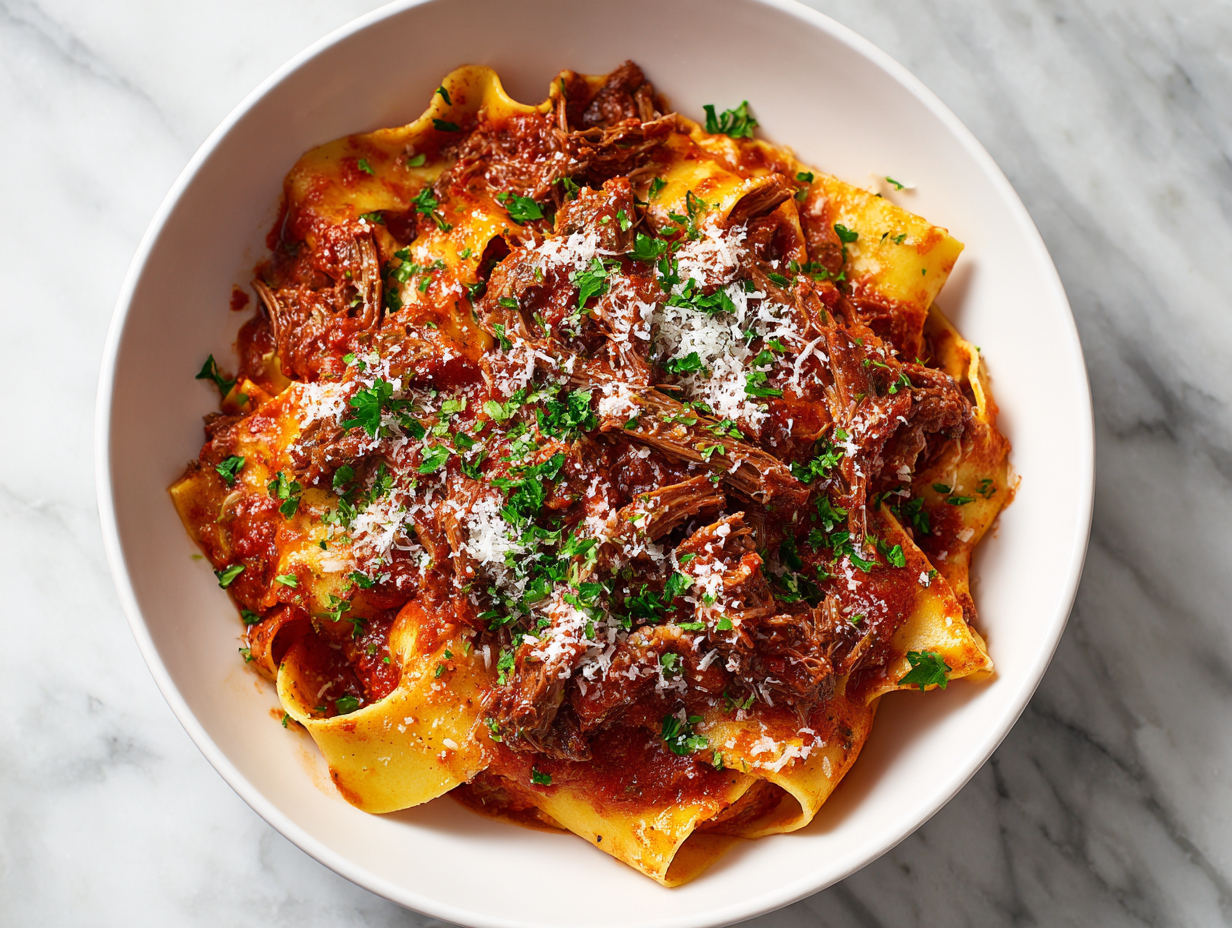
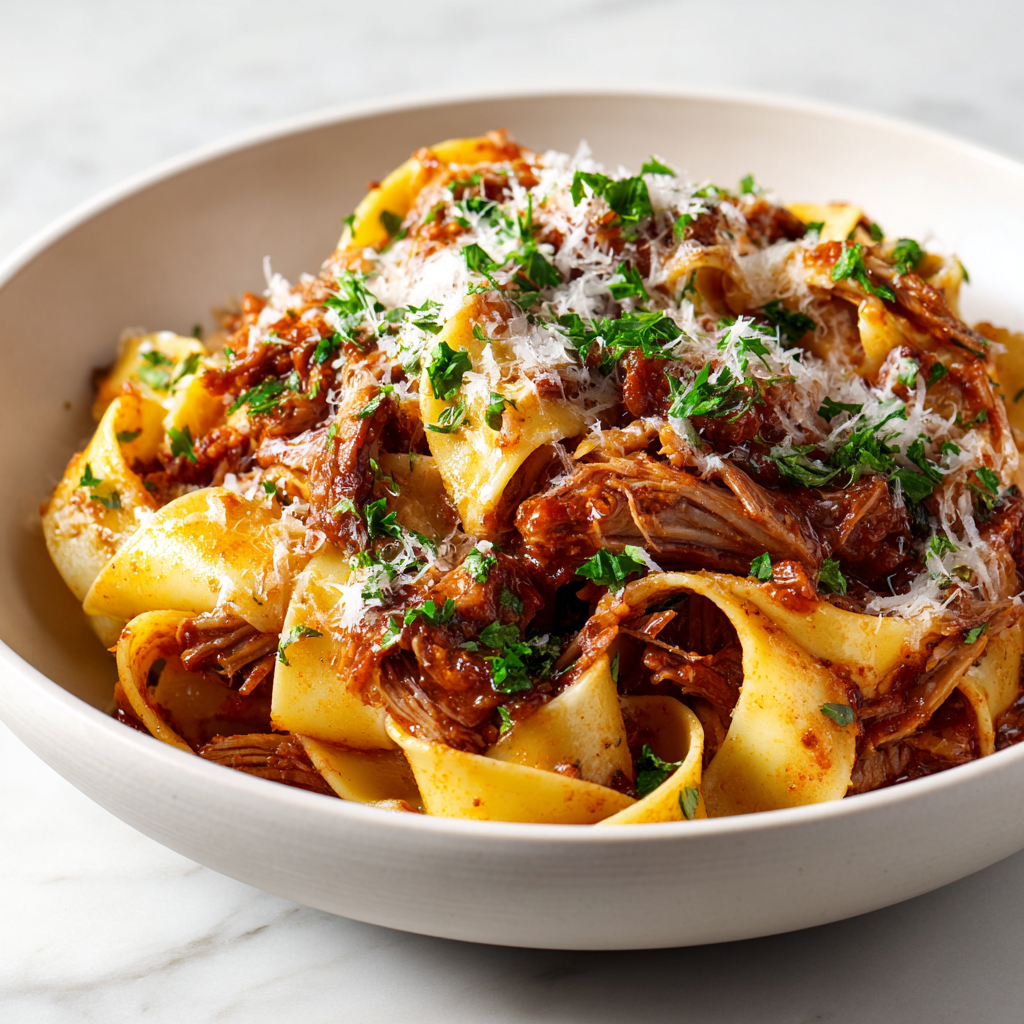
- Plate the ragù and finish with high-quality Parmigiano-Reggiano and a final crack of black pepper.
Nutrition
Pro Tip: For a restaurant-quality finish, toss your pasta directly in the Dutch oven with a splash of starchy pasta water for 60 seconds. This emulsifies the fats and ensures the rich ragù clings to every ribbon of pasta rather than slipping off.
Why I Trust the 3-Hour Rule
Marcella’s philosophy proves that a great ragù is cultivated through patience, not speed. Watch for the exact moment the individual ingredients transform into a single, unified, and velvet-textured sauce.

Why This Isn’t Just Another Beef Ragù
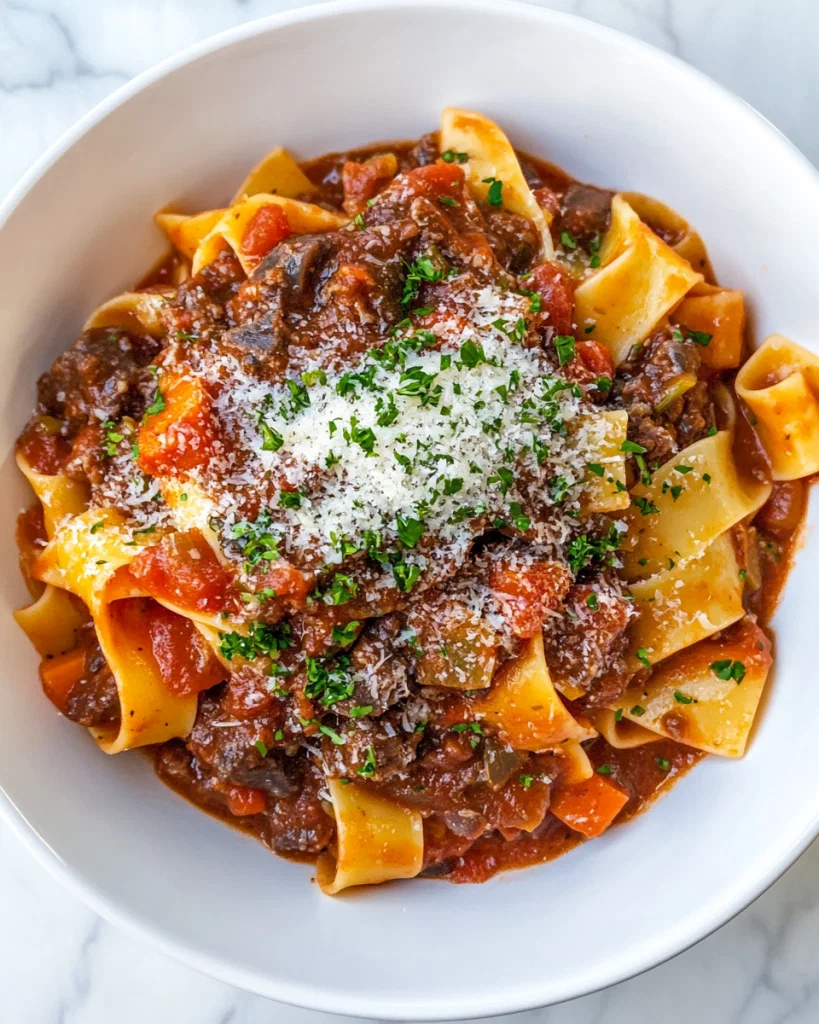
This recipe moves beyond the standard “beef and bouillon” stovetop simmer by focusing on professional culinary techniques that most home-cook versions ignore.
- Pork vs. Beef Texture: While beef chuck can become stringy, the high collagen in pork shoulder transforms into a velvety gelatin at 300°F. This creates a “self-shredding” texture that feels luxurious, not fibrous.
- Micro-Sofrito Base: Most recipes leave vegetables in chunks. By finely mincing our onion, carrot, and celery, they dissolve into the sauce, acting as a natural thickener and providing deep flavor without the unrefined texture.
- 360° Oven Braising: Cooking the ragù in the oven provides gentle, even heat from all directions, allowing the meat to slowly tenderize while the sauce reduces without frequent stirring.
- Finishing the Pasta Properly: Instead of simply spooning sauce over pasta, tossing the noodles directly with the ragù and a splash of pasta water helps the sauce cling to every strand.
What to Serve with Ragu?
Frequently Asked Questions
1. Can I make this in a Slow Cooker or Instant Pot?
Yes. For a Slow Cooker, follow steps 1 through 4 on the stovetop to develop the “fond,” then transfer everything to the slow cooker and cook on Low for 7–8 hours. For an Instant Pot, use the “Sauté” function for the meat and vegetables, then pressure cook on High for 45 minutes with a natural release. Note: The oven remains the preferred method for the best sauce reduction.
2. Why is my ragù greasy?
Because this recipe uses pork belly and Italian sausage, there is a high fat-to-meat ratio. If the sauce looks oily, it usually means the “Mantecatura” (Step 7) was skipped. Tossing the pasta with starchy pasta water is essential because the starch acts as a binder, emulsifying the fat into the tomato base to create a smooth sauce instead of a separated oil.
3. What is the best substitute for Pork Belly?
If you cannot find pork belly, pancetta (Italian cured pork belly) is the best substitute. If you prefer a leaner sauce, you can increase the amount of pork shoulder, though you will lose that specific “buttery” mouthfeel that defines this four-meat blend.
4. Can I omit the wine?
Yes. While wine adds a necessary acidity to cut through the heavy fats of the pork, you can substitute it with an equal amount of beef stock plus one tablespoon of red wine vinegar. This provides the necessary “zip” to balance the richness of the meat.
5. Does the meat really not need shredding with forks?
If you maintain a consistent 300°F (150°C) temperature in the oven for at least 3 hours, the connective tissue in the pork shoulder will completely dissolve into gelatin. A simple stir with a wooden spoon will cause the meat to fracture into ribbons naturally. If it feels tough, it simply needs more time in the oven.
6. Can I freeze the leftover sauce?
Absolutely. This ragù freezes exceptionally well due to its high fat content, which protects the meat fibers from freezer burn. Store in airtight containers for up to 3 months. To serve, thaw overnight and reheat slowly on the stovetop, adding a splash of water to loosen the consistency.

Hi, I’m Austin. Every recipe you’ll find here is carefully tested, photographed, and created to help you cook with confidence…..
know more